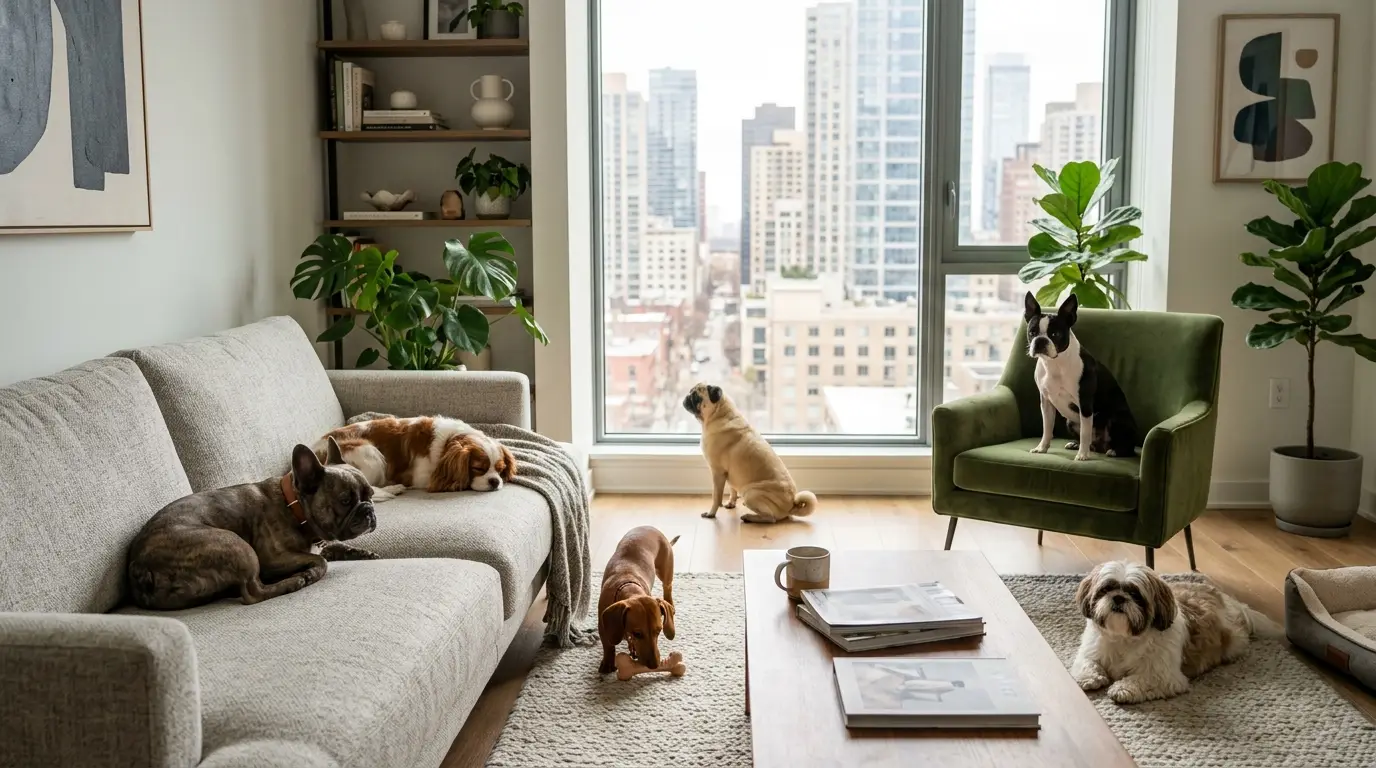

Choosing from the Top 10 dog breeds for apartments is not simply about finding the smallest dog available. Apartment living can work well for dogs of many sizes when their exercise, training, social, and mental stimulation needs are properly managed. A calm large breed may adapt better to an apartment than a small but extremely energetic dog, while an otherwise suitable breed can struggle if it is left bored or alone for long periods.
The right choice depends on your lifestyle, daily schedule, activity level, tolerance for barking, grooming preferences, and ability to provide consistent training. Your apartment itself also matters, including its size, access to outdoor areas, building rules, elevators, neighbors, and noise levels.
This guide explores ten breeds that can adapt well to apartment environments and compares their size, energy level, exercise requirements, barking tendencies, temperament, grooming, and training needs. It also explains how to prepare your apartment and choose a dog whose everyday needs genuinely fit your routine.
What Makes a Dog Good for Apartment Living?
A good apartment dog does not necessarily have to be tiny. Instead, the most important question is whether you can consistently meet the dog’s physical and emotional needs.
Before choosing a breed, consider these factors:
| Factor | What You Should Consider |
| Size | Does the dog have enough room to move comfortably? |
| Energy | Can your daily schedule accommodate its activity level? |
| Exercise | Can you provide sufficient walks and play every day? |
| Barking | Could frequent vocalization disturb neighbors? |
| Temperament | Can the dog relax indoors and handle normal household activity? |
| Grooming | Are you prepared for regular brushing and professional grooming? |
| Training | Can you provide consistent obedience and behavior training? |
| Alone Time | Can the dog comfortably handle your typical schedule? |
Apartment suitability is therefore a combination of breed characteristics and individual circumstances. Two dogs of the same breed can also behave very differently. Age, previous experiences, socialization, training, and individual personality all influence how comfortable a dog will be in an apartment.
1. French Bulldog
The French Bulldog is one of the most popular choices for apartment households because it generally enjoys companionship and does not require the same amount of physical space as highly athletic breeds. Its compact body makes navigating an apartment relatively easy, while its affectionate personality can suit owners who want a dog that enjoys being close to them.
Size and Energy Level
French Bulldogs are small to medium-sized, sturdy dogs. Their energy level is generally moderate, with periods of play followed by considerable amounts of rest.
This balance can work well for apartment owners who can provide regular short activities without needing to spend several hours exercising their dog.
Exercise Requirements
French Bulldogs generally benefit from daily walks and short play sessions. Indoor games can also provide additional activity.
However, owners should be careful with heat and strenuous exercise. Their short muzzle can make breathing and heat regulation more challenging, so exercise should be managed according to weather conditions and the individual dog’s tolerance.
Barking Tendencies
French Bulldogs are not typically considered constant barkers, although individual dogs can become vocal when excited, seeking attention, or reacting to noises.
Teaching calm behavior from an early age can make apartment life easier.
Temperament
They are generally affectionate, playful, social, and people-oriented. Many enjoy spending significant amounts of time with their owners.
Grooming and Training
Their short coat usually requires relatively little grooming. Facial folds should receive appropriate routine care.
Training should be positive and consistent. French Bulldogs can sometimes be stubborn, so short sessions with rewards tend to work better than repetitive or harsh methods.
2. Cavalier King Charles Spaniel
The Cavalier King Charles Spaniel is another strong choice for people who want a small companion dog that can enjoy both outdoor activity and quiet indoor time.
Size and Energy Level
Cavaliers are small dogs with moderate energy. They enjoy walks and games but are generally capable of settling down at home after receiving enough daily activity.
Exercise Requirements
A Cavalier should receive regular walks combined with interactive play. Mental stimulation is also valuable because simply being inside an apartment does not automatically satisfy a dog’s needs.
Games involving basic commands, toys, and scent exploration can make indoor time more engaging.
Barking Tendencies
Barking varies among individuals. Some Cavaliers may alert their owners when they hear unfamiliar sounds or notice visitors.
Because apartments expose dogs to hallway noises, elevators, doors, and neighbors, early exposure and reward-based quiet training are useful.
Temperament
The breed is known for its affectionate and sociable nature. Cavaliers generally enjoy being part of family activities and may be particularly suitable for owners who want a close companion.
Grooming and Training
Their medium-length coat benefits from regular brushing. Training is usually manageable because Cavaliers can respond well to positive reinforcement.
Early socialization should include people, other dogs, different environments, elevators, and common household sounds.
3. Poodle
Poodles deserve a place among apartment-friendly breeds because their intelligence and adaptability can make them successful in smaller homes. However, they should not be selected simply because they come in smaller varieties.
Size and Energy Level
Poodles are available in different sizes, including Toy, Miniature, and Standard varieties. Their energy levels can be moderate to high, and they generally need mental stimulation as much as physical exercise.
Exercise Requirements
Daily walks should be combined with play, training, and problem-solving activities.
A Poodle that receives only a short walk but spends the rest of the day with nothing to do may become bored. Puzzle toys, scent games, obedience exercises, and trick training can help.
Barking Tendencies
Poodles can be alert and vocal. Some may react to people passing outside, hallway noises, or unfamiliar sounds.
Apartment owners should teach alternative behaviors instead of allowing barking to become the default response.
Temperament
Poodles are generally intelligent, attentive, and highly trainable. Their intelligence is an advantage, but it also means they need meaningful engagement.
Grooming and Training
Their curly coat requires regular brushing and grooming. Owners should budget both time and money for proper coat maintenance.
Training is one of the breed’s strengths. Consistent positive reinforcement can establish excellent household manners.
4. Shih Tzu
The Shih Tzu is a small companion breed that can adapt particularly well to indoor environments. Its compact size and generally moderate activity requirements make it convenient for many apartment households.
Size and Energy Level
Shih Tzus are small and generally have low-to-moderate exercise needs. They enjoy play and walks but do not normally require large open spaces for daily activity.
Exercise Requirements
Daily walks combined with indoor play can provide useful physical and mental stimulation.
Owners should still avoid assuming that a small dog does not need exercise. Consistent activity helps support healthy behavior and prevents boredom.
Barking Tendencies
Some Shih Tzus can be alert barkers, particularly when they hear people outside the apartment or notice unusual sounds.
Quiet training can be especially valuable in shared buildings.
Temperament
They are generally affectionate, friendly, and companion-oriented. Many prefer staying close to their owners.
Grooming and Training
A long Shih Tzu coat requires considerable grooming. Regular brushing is important, while a shorter haircut can make maintenance easier.
Training should be patient and reward-based. House training and consistent household rules should begin early.
5. Boston Terrier
Boston Terriers are compact, lively dogs that can fit well into apartment lifestyles when their need for daily activity is taken seriously.
Size and Energy Level
They are small dogs with moderate-to-high bursts of energy. They enjoy playing but can settle comfortably after sufficient activity.
Exercise Requirements
Regular walks and short play sessions are appropriate. Interactive games can provide additional stimulation without requiring a large yard.
Because of their short muzzle, owners should be careful with heat and strenuous activity.
Barking Tendencies
Boston Terriers are not necessarily excessive barkers, but individuals can become vocal when excited or stimulated.
Training should focus on teaching when it is appropriate to alert and when it is time to settle.
Temperament
They are commonly playful, social, and engaging. Their personality can make them entertaining companions for apartment residents.
Grooming and Training
Their short coat is relatively easy to maintain. Training should be positive, consistent, and varied enough to keep the dog interested.
6. Bichon Frise
The Bichon Frise is a small companion breed with a cheerful personality and a size that makes it practical for many apartment homes.
Size and Energy Level
Bichons are small and moderately energetic. They enjoy daily activity but can spend substantial periods relaxing indoors after their needs have been met.
Exercise Requirements
Daily walks and indoor games can provide sufficient activity for many individuals.
Training games are particularly useful because they combine exercise with mental stimulation.
Barking Tendencies
Bichons can bark at visitors, sounds, or changes in their environment. Apartment owners should avoid reinforcing attention-seeking barking.
Rewarding calm behavior can gradually teach the dog that not every sound requires a response.
Temperament
They are generally friendly, playful, and social. Their people-oriented nature means they often enjoy participating in household activities.
Grooming and Training
Their curly coat needs regular brushing and professional grooming. Neglecting coat care can lead to mats and discomfort.
Bichons can respond well to positive reinforcement, making training an important part of successful apartment ownership.
7. Maltese
The Maltese is a tiny companion dog that can live comfortably in an apartment when its social and mental needs are properly addressed.
Size and Energy Level
Maltese dogs are very small and generally have moderate energy. They can play indoors but still benefit from daily outdoor experiences.
Exercise Requirements
Short walks, interactive games, and brief training sessions can provide valuable daily stimulation.
Their small size does not mean they should spend every day indoors without exercise.
Barking Tendencies
Maltese dogs can become vocal when reacting to noises, excitement, boredom, or attention-seeking situations.
This makes early barking management particularly important for apartment owners.
Temperament
They are generally affectionate, lively, and strongly attached to their owners.
Because of this social nature, owners should also teach independence gradually rather than creating a routine in which the dog is never comfortable alone.
Grooming and Training
The Maltese coat can require significant maintenance, especially when kept long.
Training should include basic obedience, house manners, quiet behavior, and gradual alone-time practice.
8. Greyhound
The Greyhound may seem like an unusual apartment recommendation because it is a large breed. However, Greyhounds demonstrate an important point: physical size alone does not determine apartment suitability.
Size and Energy Level
Greyhounds are tall and athletic, but many are calm indoors. They can have short bursts of intense activity followed by long periods of relaxation.
Exercise Requirements
They still require daily walks and appropriate opportunities to move. Owners should consider their chase instinct and provide safe environments for exercise.
A large apartment can be helpful, but the quality and consistency of outdoor activity are often more important than simply having a huge living room.
Barking Tendencies
Many Greyhounds are relatively quiet compared with highly vocal breeds. Individual behavior varies, however, and no breed should be assumed to be completely silent.
Temperament
They are often gentle, sensitive, and calm indoors. Their sensitive nature makes a predictable home routine particularly valuable.
Grooming and Training
Their short coat is easy to maintain. Occasional brushing can help remove loose hair.
Training should be gentle and reward-based. Comfortable bedding is also useful because Greyhounds often enjoy relaxing for extended periods.
9. Havanese
The Havanese is a small, sociable companion dog that can adapt well to apartment environments when owners provide sufficient interaction and structured daily activity.
Size and Energy Level
Havanese dogs are small and moderately energetic. They enjoy games, walks, and interaction without requiring a large outdoor space.
Exercise Requirements
Daily walks combined with indoor games can provide useful activity.
Training exercises can also serve as mental stimulation and help prevent boredom.
Barking Tendencies
Some Havanese dogs can bark in response to hallway activity, unfamiliar sounds, visitors, or attention-seeking situations.
Apartment owners should teach quiet behavior rather than waiting until excessive barking becomes established.
Temperament
They are generally affectionate, playful, and social. They often enjoy staying close to their families.
Grooming and Training
Their coat requires regular brushing and grooming, particularly if maintained long.
Havanese dogs can respond well to positive reinforcement, making them suitable for owners who are willing to use consistent training.
10. Dachshund
The Dachshund is a small but energetic and determined breed that can live successfully in an apartment if owners understand its behavioral and physical needs.
Size and Energy Level
Dachshunds are compact but can have plenty of energy. They enjoy exploring, sniffing, playing, and interacting with their owners.
Their small size makes them convenient in limited spaces, but they should not be treated as completely low-maintenance pets.
Exercise Requirements
Regular walks and controlled play are important.
Owners should also consider the breed’s long back and avoid activities that place unnecessary strain on the spine.
Barking Tendencies
Dachshunds can be relatively vocal. This is an important consideration for apartment residents.
Owners can manage barking by rewarding quiet behavior, limiting exposure to unnecessary triggers, and providing sufficient mental stimulation.
Temperament
They are often confident, curious, alert, and devoted. Their independent streak can make training challenging at times.
Grooming and Training
Grooming depends on whether the Dachshund has a smooth, long, or wire-haired coat.
Training should be consistent and reward-based, with special attention to barking, recall, leash manners, and household rules.
Where Should You Get Your Apartment Dog?
Finding the right dog involves more than choosing a breed. The source should also be evaluated carefully.
Whether you are considering a responsible breeder, rescue organization, shelter, or pet retailer, take time to ask questions and review the information provided about the dog.
A Dog store online can be convenient for researching available dogs and learning about different breeds, but buyers should still verify important information before making a decision. Avoid rushing into a purchase because of attractive photographs, limited-time pressure, or vague claims.
Responsible sellers should be willing to answer reasonable questions and provide relevant information about the animal.
Comparing the Top 10 Apartment-Friendly Dogs
The following table provides a quick overview of how these breeds compare.
| Breed | Size | Energy | Exercise | Barking | Grooming | Training |
| French Bulldog | Small-medium | Moderate | Low-moderate | Low-moderate | Low-moderate | Moderate |
| Cavalier King Charles Spaniel | Small | Moderate | Moderate | Moderate | Moderate | Easy-moderate |
| Poodle | Varies | Moderate-high | Moderate-high | Moderate | High | Easy |
| Shih Tzu | Small | Low-moderate | Low-moderate | Moderate | High | Moderate |
| Boston Terrier | Small | Moderate-high | Moderate | Low-moderate | Low | Moderate |
| Bichon Frise | Small | Moderate | Moderate | Moderate | High | Easy-moderate |
| Maltese | Small | Moderate | Low-moderate | Moderate-high | High | Moderate |
| Greyhound | Large | Moderate | Moderate | Low | Low | Moderate |
| Havanese | Small | Moderate | Moderate | Moderate | High | Easy-moderate |
| Dachshund | Small | Moderate-high | Moderate | High | Low-moderate | Moderate |
This table should be viewed as a general comparison rather than a guarantee. Individual dogs can behave differently even within the same breed.
How to Choose the Right Apartment Dog
If you are comparing Dog breeds for apartments, start with your own daily routine instead of beginning with appearance or size.
Ask yourself how much time you can realistically spend walking, playing with, and training a dog every day. Consider your working hours, commute, social schedule, and how often the dog will be left alone.
You should also consider your building. Some apartments have restrictions involving dog size, breed, number of pets, or noise. Before bringing a dog home, check the rules and understand what your landlord or building management requires.
Questions to Ask Yourself
- How much exercise can I provide every day?
- How many hours will my dog normally spend alone?
- Can I manage regular grooming?
- How tolerant are my neighbors likely to be of barking?
- Do I have safe walking areas nearby?
- Can I afford routine and unexpected pet-care expenses?
- Am I willing to continue training throughout the dog’s life?
- Can I provide mental stimulation inside the apartment?
- Does the dog’s temperament fit my household?
- Can I commit to the dog for its entire lifetime?
These questions can prevent a common mistake: choosing a dog because it looks suitable for an apartment without considering what it actually needs every day.
How to Make an Apartment More Comfortable for Your Dog
Even the most apartment-friendly breed needs an environment designed around its physical and mental needs.
Establish a Consistent Routine
Dogs generally benefit from predictable schedules. Try to maintain relatively consistent times for walks, meals, play, training, and rest.
A predictable routine can make it easier for a dog to understand what happens throughout the day.
Provide Daily Exercise
Exercise should be appropriate for the breed, age, health, and individual personality.
A combination of walking, sniffing, playing, and training can be more beneficial than simply trying to make a dog physically tired.
Use Mental Enrichment
Limited space does not mean limited stimulation.
Consider:
- Puzzle feeders
- Scent games
- Basic obedience exercises
- Trick training
- Interactive toys
- Hide-and-seek games
- Food-search activities
Mental stimulation can be particularly useful on days when outdoor activity is limited.
Create a Quiet Resting Area
Your dog should have a comfortable place where it can sleep without constant interruption.
This can be a bed, crate, or designated resting corner depending on the dog’s preferences and your training approach.
Manage Noise Triggers
Apartment dogs hear many unusual sounds. Elevators, doors, footsteps, voices, and neighboring pets can all trigger reactions.
Rather than punishing barking, identify the trigger and teach a preferred alternative behavior. Rewarding calm responses can gradually make these situations easier.
Puppy or Adult Dog: Which Is Better for an Apartment?
Both puppies and adult dogs can adapt to apartments, but they present different challenges.
Puppies usually require more frequent bathroom breaks, supervision, socialization, and foundational training. They may also wake during the night and need time to develop reliable household manners.
Adult dogs can sometimes offer a clearer indication of their established temperament and energy level. However, an adult dog may also arrive with habits that require modification.
When considering Small dogs for sale, do not assume that a smaller puppy will automatically be easier to manage. Evaluate the individual dog’s temperament, activity requirements, socialization, and expected adult behavior.
The goal should be finding a dog whose needs match your lifestyle rather than simply finding the smallest available option.
Looking Beyond Breed Size
One of the biggest misconceptions about apartment ownership is that small automatically means suitable.
Consider the Greyhound from this list. It is much larger than a Maltese or Shih Tzu, yet its calm indoor behavior can make it a viable apartment companion for an owner who can meet its exercise needs.
Conversely, a tiny dog with high energy, strong barking tendencies, or significant separation difficulties may create more challenges than expected.
This is why the best approach is to evaluate:
- Energy level
- Exercise requirements
- Barking tendencies
- Temperament
- Training needs
- Grooming
- Alone-time tolerance
- Individual personality
The same principle applies when researching Best Indian dog breeds or breeds from any other region. A dog’s origin may be interesting, but what matters for apartment living is how the breed’s needs fit your environment and daily routine.
Preparing Your Apartment Before the Dog Arrives
Preparation can make the transition easier for both you and your dog.
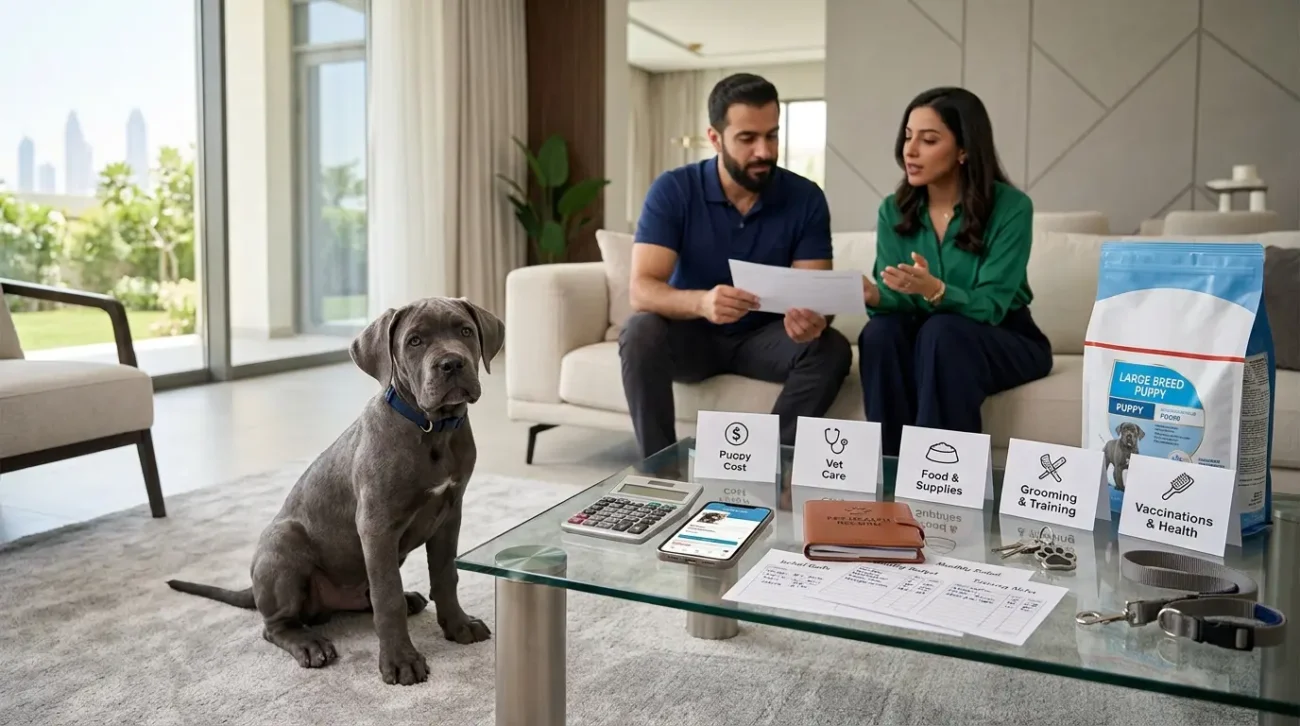
Before bringing your new companion home, consider setting up:
- A comfortable sleeping area
- Food and water bowls
- Appropriate food
- A leash and properly fitted collar or harness
- Safe toys
- Grooming supplies
- Cleaning supplies
- Training rewards
- A secure place for important documents
- A plan for bathroom breaks and walks
Also inspect your apartment from the dog’s perspective. Secure electrical cords, remove unsafe objects, keep cleaning chemicals inaccessible, and check balconies and windows for potential hazards.
Common Apartment Dog Mistakes to Avoid
Even owners who choose an appropriate breed can create problems through everyday habits.
Mistake 1: Assuming Small Means Low Energy
A small dog can still require substantial daily exercise and mental stimulation.
Mistake 2: Ignoring Barking
Allowing a dog to repeatedly bark at hallway sounds can quickly become a serious apartment problem.
Mistake 3: Skipping Training
Training is not only for large dogs. Every apartment dog benefits from learning basic commands and household manners.
Mistake 4: Leaving the Dog Alone Too Long
A dog that receives excellent walks but spends excessive amounts of time isolated may still develop unwanted behaviors.
Mistake 5: Choosing Appearance Over Compatibility
A breed may look adorable but still be a poor match for your lifestyle.
Mistake 6: Ignoring Grooming Requirements
Long or curly coats can require considerably more time and money than owners initially expect.
What About Extremely Small Dogs?
Very small dogs are often marketed as ideal for apartments because they take up little physical space. However, physical size should never be the only selection criterion.
When researching Teacup puppies for sale, focus on responsible sourcing and the dog’s overall welfare rather than the marketing label. Ask appropriate questions about age, health information, vaccinations, socialization, parental information where available, and the conditions in which the puppy was raised.
A tiny dog can still have significant exercise, grooming, training, and social needs.
Final Checklist Before Choosing Your Dog
Before making your decision, review the following:
- Confirm that your building allows dogs.
- Check size, breed, and pet restrictions.
- Calculate how much daily exercise you can provide.
- Consider the dog’s barking tendencies.
- Evaluate grooming requirements.
- Consider how long the dog will be alone.
- Prepare a daily walking schedule.
- Plan indoor enrichment activities.
- Prepare a comfortable sleeping area.
- Purchase essential supplies.
- Research responsible sources.
- Ask detailed questions before purchasing or adopting.
- Choose temperament and lifestyle compatibility over appearance.
Frequently Asked Questions
What are the best dog breeds for apartment living?
Some of the breeds that can adapt well to apartments include French Bulldogs, Cavalier King Charles Spaniels, Poodles, Shih Tzus, Boston Terriers, Bichon Frises, Maltese, Greyhounds, Havanese, and Dachshunds. However, suitability depends on the individual dog’s needs and the owner’s lifestyle.
What is the best small dog for an apartment?
There is no single best small dog for every apartment. A Shih Tzu may suit someone looking for a relatively relaxed companion, while a Poodle may be better for an owner who enjoys training and mental activities. Your schedule and preferences should guide the decision.
Can a large dog live comfortably in an apartment?
Yes. Size alone does not determine apartment suitability. Some large dogs, such as Greyhounds, can be calm indoors when their daily exercise and other needs are properly met.
Do apartment dogs need daily walks?
Most dogs benefit from regular outdoor activity. The amount varies according to breed, age, health, and individual energy level. Walks also provide valuable opportunities for sniffing, exploration, and environmental stimulation.
How can I stop my dog from barking at apartment noises?
Start by identifying what triggers the barking. Reduce unnecessary exposure to triggers when possible, reward calm behavior, and teach an alternative response. Consistent training is usually more effective than punishment.
Is a puppy or adult dog better for apartment living?
Both can work. Puppies require more frequent bathroom breaks, supervision, and training, while adult dogs may have more established habits and personalities. The better choice depends on your schedule and experience.
Are small dogs easier to keep in apartments?
Not necessarily. Small dogs can still have high energy, strong barking tendencies, or significant social needs. Apartment suitability should be based on the complete picture rather than physical size.
How much exercise does an apartment dog need?
There is no universal amount. Exercise requirements depend on the breed, age, health, and individual personality. A dog’s daily routine should combine appropriate physical activity with mental stimulation.
What should I look for when choosing an apartment dog?
Look at energy level, exercise needs, barking tendencies, temperament, grooming requirements, training needs, and tolerance for being alone. Also consider your building’s rules and your own daily schedule.
Can dogs be happy in apartments?
Absolutely. Dogs can live happily in apartments when their physical, mental, social, and emotional needs are consistently met. A well-structured routine, appropriate exercise, enrichment, training, and companionship are more important than having a large house alone.
Final Thoughts
The best apartment dog is not necessarily the smallest dog or the breed with the lowest exercise requirements. The best match is the dog whose needs you can realistically meet every day.
The ten breeds in this guide demonstrate the range of dogs that can adapt to apartment life. Small companion breeds such as the Maltese, Shih Tzu, and Bichon Frise can be practical choices, while breeds such as the Poodle may suit owners who want more training and mental stimulation. Even the much larger Greyhound can potentially thrive indoors when its exercise needs are properly addressed.
Before choosing, evaluate your schedule, building rules, activity level, budget, grooming commitment, and tolerance for barking. Prepare your home, establish a consistent routine, and prioritize training and enrichment from the beginning.
With the right match and responsible care, an apartment can be a comfortable, stimulating, and happy home for a dog.