The Cavalier King Charles Spaniel is a small, affectionate, and elegant companion dog with a fascinating history that goes back to the royal courts of Britain. Known for its gentle personality, beautiful feathered coat, and strong bond with people, the Cavalier King Charles has become a popular family companion around the world. If you are searching for Cavalier King Charles dogs for sale, understanding the breed’s history, origin, personality, nutrition, grooming, and training can help you decide whether it is the right dog for your home. For families looking for a Cavalier King Charles Spaniel Dubai, the breed can adapt well to life in the UAE when it is provided with proper indoor care, appropriate exercise, good nutrition, regular grooming, and protection from Dubai’s hot climate.
Cavalier King Charles Spaniel at a Glance
| Feature | Information |
| Breed | Cavalier King Charles Spaniel |
| Common Short Name | Cavalier King Charles |
| Origin | United Kingdom |
| Breed Type | Toy / Companion Spaniel |
| Size | Small |
| Coat | Long, silky, feathered |
| Personality | Affectionate, friendly, gentle, adaptable |
| Energy Level | Moderate |
| Intelligence | Good and responsive to training |
| Grooming | Regular |
| Exercise | Daily walks and play |
| Social Needs | High |
| Apartment Living | Generally suitable |
| Family Compatibility | Generally excellent with proper socialization |
| UAE Climate | Suitable with careful heat management |
The History of the Cavalier King Charles Spaniel
The history of the Cavalier King Charles Spaniel is strongly connected to the history of toy spaniels in Britain.
Small spaniels were popular companion dogs among European aristocratic families for centuries. They were valued not only for their appearance but also for their affectionate temperament and ability to live closely with people.
Paintings from earlier centuries show small spaniel-type dogs accompanying members of European royalty and aristocracy.
The breed’s name is particularly connected with King Charles II of England, who was famously associated with small spaniels.
However, the modern Cavalier King Charles Spaniel developed much later from these historical toy spaniels.
Where Did the Cavalier King Charles Spaniel Originate?
The breed originated in the United Kingdom.
Its ancestors were small spaniels that became fashionable as companion dogs among wealthy European and British families.
These dogs were often seen:
- Sitting beside their owners
- Traveling with aristocratic families
- Appearing in royal portraits
- Living inside large households
- Providing companionship
Unlike working spaniels bred primarily for field work, these small toy spaniels became increasingly associated with companionship.
Cavalier King Charles and King Charles II
The name Cavalier King Charles comes from the breed’s connection with King Charles II.
King Charles II was known for his affection toward small spaniels, and these dogs appear in historical portraits from the period.
The dogs associated with him were not the same as today’s Cavalier King Charles Spaniel.
The modern breed developed through later breeding efforts that sought to recreate the older type of long-nosed toy spaniel seen in historical paintings.
King Charles Spaniel vs Cavalier King Charles Spaniel
These two names are sometimes confused.
The King Charles Spaniel, also called the English Toy Spaniel in some countries, and the Cavalier King Charles Spaniel are separate breeds.
They share historical ancestry, but they have different breed standards and physical characteristics.
The Cavalier generally has:
- A longer muzzle
- A flatter skull
- Larger-looking eyes
- A more athletic body
- A slightly larger overall structure
The King Charles Spaniel generally has a shorter muzzle and a more compact appearance.
Understanding this difference is useful when searching for a Cavalier King Charles because online listings may sometimes use the names incorrectly.
How the Modern Cavalier King Charles Spaniel Developed
The Cavalier King Charles Spaniel has a history closely connected to the old toy spaniels that appeared in paintings and royal portraits centuries ago.
These small spaniels were valued as companion dogs and were often seen alongside members of European royal families. Over time, their appearance changed as breeders developed different preferences for head shape and body structure.
In the twentieth century, some breeders became interested in bringing back the appearance of the older spaniels shown in historical artwork.
Roswell Eldridge, an American who attended Crufts, played an important role in this effort. In the 1920s, he offered a prize for breeders who could produce dogs resembling the older long-nosed toy spaniels seen in paintings.
This encouraged breeders to focus on characteristics that eventually became associated with the modern Cavalier King Charles Spaniel.
| Historical Development | What Happened |
| Older Toy Spaniels | Small spaniels were popular companion dogs and appeared in historical paintings. |
| Changing Appearance | Breeding preferences gradually changed the appearance of these dogs. |
| Roswell Eldridge | He encouraged breeders to recreate the older long-nosed appearance. |
| 1920s Crufts Effort | A prize was offered for dogs resembling the spaniels shown in historical artwork. |
| Modern Breed Development | Breeders continued selecting for the desired characteristics. |
| Official Recognition | The breed was eventually recognized by the Kennel Club in Britain. |
| International Popularity | The Cavalier later became popular in many countries as a companion dog. |
Cavalier King Charles Spaniel Recognition
Today, the Cavalier King Charles Spaniel is recognized by major kennel organizations around the world.
Although it is generally classified as a toy or companion breed, its spaniel heritage remains easy to see in its appearance, movement, and personality.
The breed became popular because it offers a combination that many families find appealing.
It is small enough for indoor living, but it still enjoys walking, playing, exploring, and learning.
| Characteristic | Why Families May Like It |
| Small Size | Suitable for many different homes. |
| Friendly Temperament | Often enjoys meeting and spending time with people. |
| Trainability | Can learn basic commands and household routines. |
| Adaptability | Can adjust to apartments and houses when properly exercised. |
| Companionship | Usually enjoys being involved in family life. |
| Playfulness | Can enjoy toys, walks, and interactive games. |
Cavalier King Charles Spaniel Appearance
The appearance of the Cavalier King Charles Spaniel is one of its most recognizable characteristics.
A typical Cavalier has large dark eyes, long feathered ears, a soft expression, and a silky coat.
Although it is a small dog, it should not look excessively fragile. Its appearance still reflects its spaniel ancestry.
| Feature | Typical Description |
| Eyes | Large, dark, and expressive |
| Ears | Long and covered with feathering |
| Expression | Soft and friendly |
| Muzzle | Medium-length |
| Body | Compact but functional |
| Coat | Long, soft, and silky |
| Legs | Feathered |
| Tail | Feathered |
Cavalier King Charles Spaniel Size
The Cavalier is a small dog, but it is not one of the tiniest toy breeds.
Its size makes it practical for many living environments, including apartments and smaller homes.
However, small size does not mean that the dog has no exercise needs.
A Cavalier may still enjoy going for walks, playing with toys, exploring new places, and learning through training.
| Lifestyle | What a Cavalier May Need |
| Apartment Living | Daily walks, indoor play, training, and mental stimulation |
| House With a Garden | Outdoor activity combined with regular family interaction |
| Active Family | Walks, games, exploration, and training |
| Quiet Household | Companionship, gentle play, and short daily walks |
Cavalier King Charles Spaniel Coat
The Cavalier has a long, soft, silky coat with feathering around several parts of the body.
The longer hair is particularly noticeable around the ears, chest, legs, feet, and tail.
Because the coat can become tangled, brushing should become part of the dog’s normal routine.
| Coat Area | What to Expect |
| Ears | Long feathering that can become tangled |
| Chest | Soft feathering |
| Legs | Feathered coat |
| Feet | Longer hair around the feet |
| Tail | Feathered appearance |
| Overall Coat | Long, silky, and requires regular maintenance |
Cavalier King Charles Spaniel Colors
The Cavalier King Charles Spaniel has four commonly recognized color varieties.
| Color | Main Appearance |
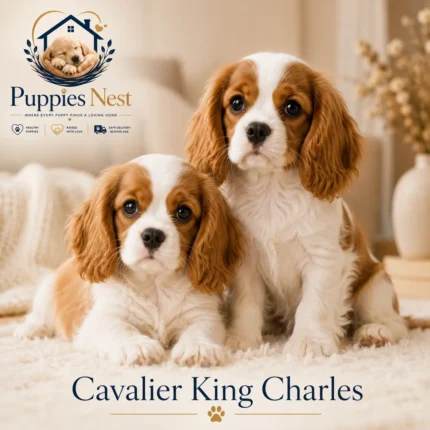
| Blenheim | White coat with rich chestnut markings |
| Tricolor | Black, white, and tan |
| Black and Tan | Black coat with tan markings |
| Ruby | Rich red or chestnut-colored coat |
Blenheim Cavalier King Charles Spaniel
The Blenheim is one of the most recognizable Cavalier color patterns.
The coat has a white base with rich chestnut markings. These markings commonly appear around the ears, face, back, and body.
Many Blenheim Cavaliers also have a noticeable chestnut marking on the forehead.
Tricolor Cavalier King Charles Spaniel
The Tricolor Cavalier combines three colors:
- Black
- White
- Tan
Tan markings can appear around the eyebrows, cheeks, chest, legs, and underside of the tail.
The combination creates a distinctive appearance.
Black and Tan Cavalier
The Black and Tan Cavalier has a predominantly black coat with tan points.
These tan markings may appear around the eyebrows, muzzle, chest, legs, and tail.
The strong contrast between the black and tan creates a striking appearance.
Ruby Cavalier King Charles Spaniel
Ruby Cavaliers have a rich red or chestnut-colored coat.
The ideal appearance is generally a deep, even color, although individual dogs can vary slightly in their markings.
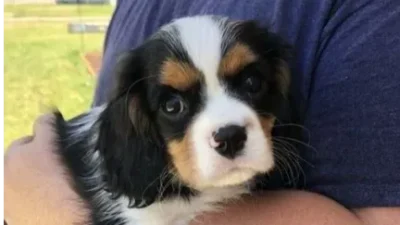
Cavalier King Charles Spaniel Dubai | Cavalier King Charles dogs for sale
Cavalier King Charles Spaniel Personality
The personality of the Cavalier King Charles Spaniel is one of the main reasons people choose this breed.
Cavaliers are generally known for being friendly, affectionate, playful, and people-oriented.
They often enjoy being involved in normal household activities rather than spending most of their time alone.
| Personality Trait | How It May Appear |
| Friendly | Enjoys interacting with familiar people and, when socialized, new people. |
| Affectionate | Often seeks attention and physical closeness. |
| Gentle | Can be a pleasant family companion with appropriate socialization. |
| Playful | Enjoys toys, games, and interactive activities. |
| Social | Often appreciates the company of people and other suitable dogs. |
| Intelligent | Can learn commands and household routines. |
| Adaptable | Can adjust to different homes when its needs are met. |
| People-Oriented | Often prefers staying close to its family. |
Is the Cavalier King Charles a Good Family Dog?
A properly socialized Cavalier King Charles can be an excellent family companion.
The breed generally enjoys human interaction, but its small size means children should learn how to handle the dog safely.
Children should understand that a dog is not a toy.
They should never pull the dog’s ears or tail, disturb it while sleeping, take its food, or play too roughly.
| Children Should Learn | Reason |
| Do not pull the ears. | Prevents pain and injury. |
| Do not pull the tail. | Encourages respectful handling. |
| Do not disturb the dog while sleeping. | Gives the dog uninterrupted rest. |
| Do not take food from the dog. | Helps prevent conflicts around meals. |
| Do not climb on the dog. | Protects the dog’s body. |
| Do not play too roughly. | Reduces the risk of accidental injury. |
Young children should always be supervised around dogs.
Cavalier King Charles With Other Dogs
Many Cavaliers are social and can live successfully with other dogs.
However, a good relationship should not be forced.
If you already have another dog, introduce them gradually and supervise their early interactions.
Give each dog its own food bowl and resting space so neither dog feels that its resources are being threatened.
| Step | What to Do |
| 1. Introduce Gradually | Allow the dogs to meet calmly rather than forcing immediate interaction. |
| 2. Keep First Meetings Short | End the interaction while both dogs are still comfortable. |
| 3. Supervise Play | Watch body language and intervene if play becomes inappropriate. |
| 4. Separate Food | Give each dog its own feeding area. |
| 5. Provide Separate Rest Areas | Each dog should have somewhere quiet to relax. |
| 6. Allow Time | Let the relationship develop naturally. |
Cavalier King Charles With Cats
A Cavalier may also live successfully with cats, particularly when introductions are handled carefully.
However, individual dogs can have different levels of interest in chasing moving animals.
A cat should always have access to a safe area where it can move away from the dog.
During the early stages, never leave the dog and cat together without supervision.
Cavalier King Charles and Human Companionship
One of the most noticeable characteristics of the Cavalier King Charles Spaniel is its desire to stay close to people.
Your Cavalier may follow you from room to room, sit beside you while you work, or sleep near you.
It may also become interested in whatever the family is doing.
For people who want a companion dog that participates in everyday family life, this can be a major advantage.
| Your Cavalier May | What This Shows |
| Follow you around the house | Desire for companionship |
| Sit beside you | Affection and social connection |
| Sleep near family members | Preference for being close to familiar people |
| Watch household activities | Interest in family life |
| Join family activities | Social and companion-oriented nature |
| Seek attention | Strong human bond |
Can Cavalier King Charles Dogs Be Left Alone?
Cavaliers generally enjoy human companionship, so alone time should be introduced gradually.
A young puppy should not suddenly be expected to stay alone for an entire workday.
Start with short periods and gradually increase the amount of time.
The exact pace should depend on how comfortable the individual puppy appears.
| Stage | Goal |
| First Practice | Leave the puppy alone for a very short period. |
| Short Absence | Gradually increase the time if the puppy remains comfortable. |
| Longer Periods | Continue increasing time slowly rather than making a sudden jump. |
| Daily Routine | Build predictable periods of independence into the dog’s routine. |
Provide a safe environment and suitable enrichment while the puppy is alone.
Cavalier King Charles Spaniel Training
Training a Cavalier King Charles Spaniel can be an enjoyable part of owning the breed.
The dog can learn basic commands and household behaviors when training is consistent and positive.
Start with simple commands before moving to more complicated behaviors.
| Command | Purpose |
| Sit | Introduces basic obedience. |
| Stay | Builds patience and self-control. |
| Come | Develops recall. |
| Wait | Teaches the puppy to pause before receiving permission. |
| Leave It | Helps prevent the puppy from picking up inappropriate objects. |
| Drop It | Teaches the puppy to release toys or objects. |
| Place | Teaches the dog to settle on a bed or mat. |
| Name Recognition | Helps the puppy learn to respond to its name. |
Positive reinforcement can include small treats, praise, toys, play, and gentle affection.
Avoid harsh punishment. The goal is to help your Cavalier King Charles Spaniel understand what behavior you want, while building trust and confidence.
Why Positive Training Works Well for Cavaliers
Cavaliers are generally people-oriented dogs. They often respond well when training feels like a positive interaction with their owner rather than a confrontation.
For example, ask your Cavalier to sit. When the dog sits, immediately give a small reward. Repeating this process helps the dog understand which behavior earns a positive response.
| Training Principle | How to Apply It |
| Keep It Positive | Reward behaviors you want to see again. |
| Use Small Rewards | Use tiny treats, praise, toys, or play. |
| Keep Sessions Short | Young puppies have limited attention spans. |
| Repeat Regularly | Practice the same behavior consistently. |
| Avoid Harsh Punishment | Focus on teaching rather than frightening the dog. |
| Reward Quickly | Give the reward immediately after the desired behavior. |
Cavalier King Charles Puppy Training
If you are considering Cavalier King Charles dogs for sale, training should begin when your puppy comes home.
You do not need to teach everything at once. A gradual program makes learning easier for both the puppy and the owner.
| Week | Main Training Focus | Examples |
| Week 1 | Name and household rules | Name recognition, sleeping area, bathroom area |
| Week 2 | Basic commands | Sit, come, leash introduction |
| Week 3 | Self-control | Stay, wait, leave it |
| Week 4 | Building consistency | Longer attention, better leash manners, continued socialization |
Do not expect perfection from a young puppy. Accidents, distractions, chewing, and inconsistent responses are normal parts of puppy development.
Cavalier King Charles House Training
House training depends heavily on consistency.
Take your puppy to its designated bathroom area after important daily events.
| When | What to Do |
| After Waking | Take the puppy to the bathroom area immediately. |
| After Meals | Give the puppy another opportunity to go. |
| After Drinking | Monitor the puppy and provide a bathroom break. |
| After Playing | Take the puppy to its designated area. |
| After Naps | Offer another bathroom opportunity. |
| Before Bedtime | Take the puppy out before settling down for the night. |
When the puppy succeeds, reward it immediately.
If an accident happens, clean the area properly and continue the routine. Avoid punishment, especially for accidents discovered later.
Cavalier King Charles Leash Training
Cavaliers can enjoy daily walks, but they should learn how to walk calmly on a leash.
Start indoors or in another quiet environment where there are few distractions.
| Step | What to Do |
| 1. Introduce the Harness | Allow your puppy to become comfortable wearing it. |
| 2. Add the Leash | Let the puppy experience the leash for short periods. |
| 3. Walk a Few Steps | Reward calm movement. |
| 4. Stop When Pulling Begins | Avoid rewarding pulling by continuing forward. |
| 5. Continue When Relaxed | Resume walking once the leash becomes loose. |
| 6. Increase Distance Slowly | Gradually move from short indoor sessions to outdoor walks. |
The goal is to teach the puppy that a relaxed leash makes walking continue.
Cavalier King Charles Socialization
Socialization should begin early and continue throughout the dog’s life.
The objective is not to force your puppy to interact with everything. Instead, introduce new experiences gradually and positively.
| Experience | Example |
| People | Adults, visitors, and people with different appearances |
| Dogs | Friendly, appropriately vaccinated dogs |
| Household Sounds | Vacuum cleaners, doors, appliances, and normal family sounds |
| Car Rides | Short, positive trips |
| Grooming | Brushing, ear checks, nail handling |
| Veterinary Visits | Calm exposure to the veterinary environment |
| Different Surfaces | Carpet, tile, grass, and other safe surfaces |
| New Rooms | Gradually explore different parts of the home |
| Outdoor Environments | Safe areas appropriate for the puppy’s age and health status |
If your puppy becomes frightened, give it space. Do not force it into an interaction it is clearly uncomfortable with.
Cavalier King Charles Spaniel Exercise
The Cavalier is small, but it is not an inactive breed.
Regular, age-appropriate activity helps support physical health and provides mental stimulation.
Good activities include:
- Short walks
- Indoor play
- Fetch
- Training
- Sniffing games
- Puzzle toys
- Controlled outdoor exploration
Young puppies should not be pushed into excessive or high-impact exercise while their bodies are developing.
| Activity | Benefit |
| Short Walks | Physical activity and environmental exploration |
| Fetch | Combines movement and play |
| Training | Provides mental stimulation |
| Sniffing | Encourages natural exploration |
| Puzzle Toys | Challenges the dog’s brain |
| Indoor Play | Useful when outdoor temperatures are unsuitable |
Cavalier King Charles and Outdoor Activities
Adult Cavaliers can enjoy longer walks and a variety of suitable outdoor activities.
Depending on the individual dog, activities may include walking, suitable hiking, fetch, scent games, obedience training, and swimming when introduced safely.
However, outdoor activity should always be adjusted according to the dog’s age, fitness, health, and weather conditions.
Cavalier King Charles Spaniel Dubai: Living in the UAE
A Cavalier King Charles Spaniel Dubai can live comfortably in the UAE when owners carefully manage the climate.
Dubai’s extreme summer temperatures mean that outdoor activities should be planned around cooler parts of the day.
| UAE Care | Recommendation |
| Walks | Choose early morning or later evening. |
| Midday Activity | Avoid unnecessary outdoor exercise during peak heat. |
| Water | Keep fresh drinking water available. |
| Indoor Environment | Keep the home comfortably air-conditioned during extreme heat. |
| Pavement | Check surfaces before walking. |
| Car Safety | Never leave your dog alone in a parked car. |
| Summer Exercise | Replace outdoor exercise with indoor activities when conditions are too hot. |
Cavalier King Charles and Dubai Heat
Cavaliers have a medium-length coat, and extreme heat can become dangerous.
Watch your dog carefully during warm weather.
| Possible Warning Sign | What It May Indicate |
| Heavy Panting | Possible heat stress |
| Excessive Drooling | Possible overheating |
| Weakness | A concerning heat-related sign |
| Unusual Tiredness | May indicate that the dog is struggling with the heat |
| Vomiting | Requires prompt attention |
| Difficulty Walking | Potentially serious heat-related problem |
| Confusion | Serious warning sign |
| Collapse | Emergency |
If your dog develops serious heat-related symptoms, seek veterinary attention immediately.
Cavalier King Charles and Hot Pavement
Hot pavement can burn a dog’s paw pads.
Before taking your Cavalier outside, consider the surface temperature, time of day, shade, and walking duration.
If the pavement is too hot, move the activity indoors.
Indoor alternatives include:
- Fetch
- Appropriate tug games
- Hide-and-seek
- Scent games
- Obedience games
- Puzzle toys
Cavalier King Charles in an Apartment
A Cavalier can adapt well to apartment living.
A large garden is not essential if the dog’s daily needs are properly met.
| Apartment Need | What It Includes |
| Companionship | Regular interaction with family members |
| Exercise | Walks and indoor activities |
| Training | Basic obedience and household manners |
| Mental Stimulation | Puzzle toys, games, and training |
| Climate Control | A comfortable indoor temperature |
| Routine | Consistent feeding, bathroom, exercise, and sleeping schedules |
Cavalier King Charles Food
Nutrition is an important part of maintaining a healthy Cavalier King Charles Spaniel.
Choose a complete and balanced diet appropriate for the dog’s age, size, activity level, life stage, and individual health.
Puppies should receive an appropriate puppy diet, while adult dogs should transition to food formulated for adult maintenance.
What Should a Cavalier King Charles Puppy Eat?
A growing Cavalier needs a balanced diet that provides appropriate levels of protein, healthy fats, vitamins, minerals, essential fatty acids, and energy.
The exact nutritional requirements depend on the puppy’s individual needs.
| Nutritional Factor | Importance |
| Protein | Supports normal growth and muscle development. |
| Healthy Fats | Provide energy and support normal development. |
| Vitamins | Support normal body functions. |
| Minerals | Important for normal development and body function. |
| Essential Fatty Acids | Support normal skin, coat, and development. |
| Energy | Provides fuel for growth and daily activity. |
Avoid changing food suddenly. If you need to change your puppy’s diet, introduce the new food gradually.
Cavalier King Charles Feeding Schedule
Young puppies generally benefit from several meals throughout the day.
A sample routine could look like this:
| Time | Activity |
| 7:00 AM | Breakfast |
| 11:00 AM | Meal |
| 3:00 PM | Meal |
| 7:00 PM | Dinner |
| Evening | Water, bathroom routine, and quiet time |
This is only a general example. The appropriate number of meals and amount of food should depend on the puppy’s age, weight, food, growth, activity, and veterinary recommendations.
How Much Food Does a Cavalier Need?
There is no single portion size that works for every Cavalier.
Food requirements can depend on:
- Age
- Weight
- Activity level
- Metabolism
- Health
- Type of food
- Growth stage
Use the feeding instructions on the food packaging as a starting point and ask your veterinarian for guidance when adjusting portions.
Cavalier King Charles Treats
Treats can be useful during training, but portion control is important.
Cavaliers can gain excess weight if treats are given too frequently.
| Treat Approach | Recommendation |
| Training Treats | Use very small pieces. |
| Regular Food | Reserve some of the dog’s normal food for training. |
| Frequency | Avoid constant treating throughout the day. |
| Calories | Include treats in the dog’s overall daily calorie intake. |
| Weight Monitoring | Reduce unnecessary treats if weight begins increasing. |
Foods Cavaliers Should Avoid
Some human foods can be dangerous for dogs.
| Food | Safety |
| Chocolate | Unsafe for dogs |
| Grapes | Potentially toxic |
| Raisins | Potentially toxic |
| Onions | Harmful to dogs |
| Garlic | Harmful to dogs |
| Xylitol | Dangerous for dogs |
| Alcohol | Toxic and unsafe |
| Caffeine | Can be dangerous |
| Macadamia Nuts | Can cause toxicity |
| Cooked Bones | Can splinter and cause injuries |
If your Cavalier consumes a potentially toxic substance, contact a veterinarian immediately.
Cavalier King Charles Grooming
The beautiful coat of the Cavalier King Charles Spaniel requires regular maintenance.
Regular brushing helps reduce tangles, mats, and loose hair.
Pay particular attention to the longer feathering around the ears, chest, legs, and tail.
| Grooming Area | What to Do |
| Brushing | Brush regularly to reduce tangles and loose hair. |
| Ears | Check regularly because the long feathering can trap moisture and debris. |
| Chest | Check for knots and tangles. |
| Legs | Brush the feathering carefully. |
| Tail | Keep the longer hair free of mats. |
| Skin | Check the skin during grooming for unusual changes. |
Cavalier King Charles Ear Care
The breed’s long ears can trap moisture and reduce airflow, which can contribute to ear problems.
Check the ears regularly for:
- Redness
- Unpleasant odor
- Discharge
- Excessive wax
- Scratching
- Frequent head shaking
If you notice persistent or unusual symptoms, consult your veterinarian.
Cavalier King Charles Dental Care
Dental care should begin early.
Gradually teach your puppy to accept gentle mouth handling, a dog toothbrush, and dog-specific toothpaste.
| Dental Routine | Purpose |
| Mouth Handling | Helps the puppy become comfortable with oral care. |
| Tooth Brushing | Helps reduce plaque accumulation. |
| Dog-Specific Toothpaste | Provides a product designed for canine use. |
| Veterinary Checks | Allows the veterinarian to assess oral health. |
Your veterinarian can advise whether professional dental cleaning is necessary.
Cavalier King Charles Nail Care
Check your dog’s nails regularly.
Overgrown nails can become uncomfortable and may affect normal movement.
If you are not confident trimming them yourself, ask a veterinarian or professional groomer to help.
Cavalier King Charles Bathing
A Cavalier does not need frequent bathing unless the coat becomes dirty.
When bathing your dog:
- Use dog-specific shampoo.
- Keep shampoo away from the eyes.
- Rinse the coat thoroughly.
- Dry the coat completely.
- Brush the coat after drying.
Professional grooming can also help maintain the longer coat.
Cavalier King Charles Health
Like every breed, the Cavalier King Charles Spaniel can be predisposed to certain health conditions.
Potential concerns include heart disease, syringomyelia, eye conditions, patellar luxation, hip dysplasia, and certain neurological conditions.
This does not mean that every Cavalier will develop these conditions. It simply means prospective owners should understand the breed’s health profile and maintain appropriate veterinary care.
| Health Concern | What Owners Should Know |
| Mitral Valve Disease | A significant heart concern in the breed that warrants appropriate veterinary monitoring. |
| Syringomyelia | A neurological condition that can affect some Cavaliers. |
| Eye Conditions | Several eye problems can occur and should be assessed when symptoms appear. |
| Patellar Luxation | A condition involving movement of the kneecap. |
| Hip Dysplasia | Can affect the hip joint and movement. |
| Neurological Conditions | Some neurological problems may occur in individual dogs. |
Regular veterinary examinations are an important part of responsible ownership.
Cavalier King Charles Heart Health
Heart health deserves particular attention in Cavaliers because degenerative mitral valve disease is an important breed concern.
Regular veterinary examinations allow the veterinarian to listen to the heart and monitor changes over time.
| Heart Care | Why It Matters |
| Routine Examination | Allows the veterinarian to monitor heart sounds and general health. |
| Heart Auscultation | Helps identify abnormal heart sounds. |
| Monitoring Symptoms | Helps owners recognize changes that require veterinary attention. |
| Veterinary Screening | The veterinarian can recommend appropriate testing when indicated. |
Potential warning signs include persistent coughing, reduced exercise tolerance, breathing difficulty, or unusual tiredness.
If these signs occur, seek veterinary advice.
Cavalier King Charles and Eye Care
The breed can experience different eye conditions, so regular observation is useful.
| Eye Sign | What to Do |
| Excessive Tearing | Monitor and seek veterinary advice if persistent. |
| Redness | Contact your veterinarian if it does not resolve normally. |
| Cloudiness | Arrange veterinary assessment. |
| Squinting | May indicate discomfort and should be evaluated. |
| Discharge | Persistent or unusual discharge requires veterinary attention. |
| Eye Rubbing | Monitor closely and seek advice if frequent. |
Cavalier King Charles and Weight
Maintaining a healthy body weight is important for the breed.
Excess weight can place additional stress on the joints and may affect mobility and overall health.
| Weight Management Habit | What to Do |
| Measure Food | Avoid guessing portion sizes. |
| Control Treats | Keep treats small and limited. |
| Monitor Body Condition | Regularly assess your dog’s overall body shape. |
| Provide Exercise | Use regular age-appropriate activity. |
| Adjust Diet When Needed | Discuss changes with your veterinarian. |
Cavalier King Charles Puppy: First Week at Home
The first week should be calm and predictable.
Your puppy has just entered a completely new environment, so there is no need to introduce everything at once.
| Day | Suggested Focus |
| Day 1 | Allow quiet exploration and establish a comfortable sleeping area. |
| Day 2 | Introduce a simple feeding and bathroom routine. |
| Day 3 | Begin name recognition. |
| Day 4 | Introduce very short training sessions. |
| Day 5 | Practice gentle grooming and handling. |
| Day 6 | Introduce one new safe experience. |
| Day 7 | Review the routine and continue positive training. |
The goal during the first week is not perfect obedience.
The goal is to help your puppy feel safe, understand the household routine, and begin building trust with its new family.
Cavalier King Charles Puppy: First Month
During the first month, your puppy can gradually become familiar with important parts of everyday life.
| Area | What the Puppy Can Begin Learning |
| Name | Responding when called |
| Sleeping Area | Where to rest |
| Feeding Routine | When and where meals are provided |
| Bathroom Routine | Where it should go |
| Basic Commands | Sit, come, wait, and other simple behaviors |
| Leash | Comfortable introduction to a harness and leash |
| Grooming | Brushing, gentle handling, and basic care |
| Family Members | Positive interaction with household members |
| Household Sounds | Normal sounds around the home |
| Socialization | Gradual exposure to safe new experiences |
The objective is not to create a perfectly trained dog within four weeks. It is to establish a strong foundation that can be built upon as your Cavalier King Charles Spaniel grows.
You can learn more about the French Bulldog dog breed
How to Choose the Right Cavalier King Charles
Consider your lifestyle.
Ask yourself:
Do I have enough time for companionship?
Cavaliers generally enjoy being around people.
Can I provide regular grooming?
The coat needs consistent maintenance.
Can I provide daily activity?
Yes, even a small companion dog needs exercise.
Can I afford veterinary care?
Healthcare is an essential part of responsible ownership.
Can I protect the dog from Dubai’s heat?
Outdoor activities need careful scheduling.
Cavalier King Charles in Dubai: A Practical Daily Routine
A Dubai-friendly routine can look like:
Early Morning
Bathroom and short walk before temperatures rise.
Breakfast
Feed the dog and provide fresh water.
Morning
Indoor play and training.
Midday
Rest in an air-conditioned room.
Afternoon
Indoor mental stimulation.
Evening
Walk or outdoor activity when the temperature becomes more comfortable.
Night
Dinner, family time, bathroom, and sleep.
During extreme summer temperatures, outdoor activity may need to be reduced.
Yoy can learn more about the cockapoo dog and corgi dog breed
Common Mistakes When Raising a Cavalier
Avoid these mistakes:
Too Many Treats
Small dogs can gain weight quickly.
Ignoring Grooming
Long hair can become tangled.
Skipping Training
A small dog still needs manners.
Too Much Heat Exposure
Dubai temperatures can be dangerous.
Leaving the Dog Alone for Too Long
Cavaliers are highly people-oriented.
Ignoring Health Checks
Regular veterinary care is important for this breed.
Overlooking Dental Care
Small companion breeds benefit from early dental hygiene.
Is the Cavalier King Charles Spaniel Right for You?
The breed can be an excellent choice if you want a dog that is:
- Affectionate
- Friendly
- Small
- Adaptable
- Playful
- Intelligent
- Family-oriented
- Comfortable with indoor living
It may be less suitable if you want:
- An independent dog that rarely needs companionship
- A dog that can stay alone for very long periods
- A completely maintenance-free coat
- A dog that needs almost no exercise
Understanding the breed before purchasing is the best way to make the right decision.
Why Choose Puppies Nest?
Choosing a puppy is a long-term commitment, so Puppies Nest focuses on making the process simple and clear for families.
With Puppies Nest, you can:
- Browse different puppy breeds and sizes.
- Ask about the puppy’s current availability.
- Check age and gender information.
- Ask about vaccination documentation.
- Get information about the puppy before purchase.
- Arrange delivery within the UAE.
- Contact the team directly through WhatsApp.
- Ask questions about preparing your home for your new puppy.
You can also find Chihuahua puppy and Cavapoo puppy in Dubai
FAQs About Cavalier King Charles Spaniel
-
Is the Cavalier King Charles Spaniel a good family dog?
Yes. The Cavalier King Charles Spaniel is generally affectionate, friendly, and people-oriented, making it a popular choice for families. It can live well with children and other pets when properly socialized. Because it is a relatively small dog, young children should always be supervised and taught to handle it gently.
-
Can a Cavalier King Charles Spaniel live comfortably in Dubai?
Yes, a Cavalier King Charles Spaniel Dubai can live comfortably indoors, but the UAE’s hot climate requires extra care. Walks should be scheduled early in the morning or after sunset, while the dog should stay in a cool, air-conditioned environment during the hottest hours. Fresh water should always be available, and hot pavement should be avoided.
-
What food is best for a Cavalier King Charles puppy?
A young Cavalier should eat a complete and balanced puppy food suitable for its age and size. Puppies generally need several small meals throughout the day. Avoid sudden changes in diet because they can cause digestive problems. Your veterinarian can recommend the appropriate food and portion size based on your puppy’s age, weight, and development.
-
How much grooming does a Cavalier King Charles need?
The Cavalier has a long, silky coat with feathering around the ears, chest, legs, and tail. Regular brushing helps prevent tangles and mats and keeps the coat healthy. You should also regularly check the ears, trim the nails, and maintain dental hygiene. Professional grooming can be useful when needed.
-
How can I find Cavalier King Charles dogs for sale from Puppies Nest?
If you are looking for Cavalier King Charles dogs for sale, you can contact Puppies Nest through WhatsApp to ask about currently available puppies. The team can provide information about the puppy’s age, gender, size, vaccination documentation, current availability, price, and delivery options within the UAE.