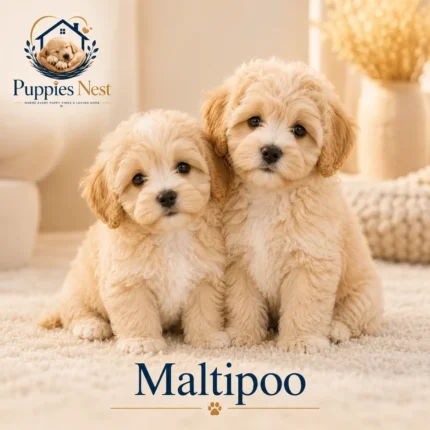
Maltipoo, Maltipoo Dubai, Maltipoo puppies, and Maltipoo price are popular search terms for people considering this small companion dog. A Maltipoo is a cross between a Maltese and a Toy or Miniature Poodle. The combination can produce a small, affectionate, intelligent, and playful companion with a soft coat that may shed less than many other dogs.
However, owning a Maltipoo involves much more than choosing an attractive puppy. Grooming, training, exercise, socialization, nutrition, veterinary care, companionship, and long-term financial responsibility should all be considered before bringing one home.
For people researching Maltipoo Dubai, climate and lifestyle are especially important. Dubai’s hot weather means outdoor activity must be planned carefully, while indoor cooling, hydration, and safe exercise times become part of the dog’s routine.
If you are considering a Maltipoo through Puppies Nest, it is useful to understand the breed first and then evaluate the individual puppy based on your lifestyle, budget, home environment, and ability to provide lifelong care.
What Is a Maltipoo?
A Maltipoo is a companion dog created by crossing a Maltese with a Toy or Miniature Poodle. Because it is a mixed breed rather than a single standardized breed with one strict appearance, Maltipoos can vary considerably in size, coat, color, body structure, and temperament.
The Maltese contributes characteristics associated with a small companion dog, including an affectionate and people-oriented nature. The Poodle contributes intelligence, trainability, athletic ability, and a distinctive coat.
The result can be a highly engaging family companion, but genetics do not produce an exact 50/50 combination of traits. One Maltipoo may resemble the Maltese more strongly, while another may show more obvious Poodle characteristics.
This individual variation is important when choosing a puppy. General breed descriptions are useful for understanding what to expect, but the personality and needs of a particular dog should always be considered.
Maltipoo History and Origin
The Maltipoo has a much more recent history than either of its parent breeds. It developed as part of the growing popularity of small companion crosses rather than as an ancient standardized breed.
Maltese History
The Maltese is an ancient companion dog associated with the Mediterranean. Its earliest origins are debated, but the breed has a long history as a valued household companion.
The Maltese became known for its small size, elegant appearance, affectionate personality, and long coat. Unlike many working breeds, its primary historical role was companionship.
Poodle History
The Poodle has a different historical background. Although strongly associated with France, its early development is connected with continental Europe, particularly Germany. Poodles were historically used for retrieving from water.
Their dense coat and swimming ability made them effective working dogs, while selective breeding eventually produced different size varieties. Smaller Poodles became particularly popular as companion animals.
How the Maltipoo Developed
The Maltipoo emerged much later through intentional crossing of Maltese and Poodle lines. The general appeal was the possibility of combining the Maltese’s small companion-dog characteristics with the Poodle’s intelligence, trainability, and coat qualities.
There is no single universally accepted date marking the creation of the Maltipoo. It is better understood as a modern companion cross whose popularity grew over time.
Why Was the Maltipoo Developed?
Maltipoos became popular among people looking for small, affectionate companion dogs with intelligent and trainable personalities. Their coats may also shed less than those of many other breeds.
However, breeding cannot guarantee a particular coat, temperament, adult size, or health profile. A prospective owner should therefore focus on the individual puppy rather than assuming that every Maltipoo will have identical characteristics.
Maltipoo Appearance
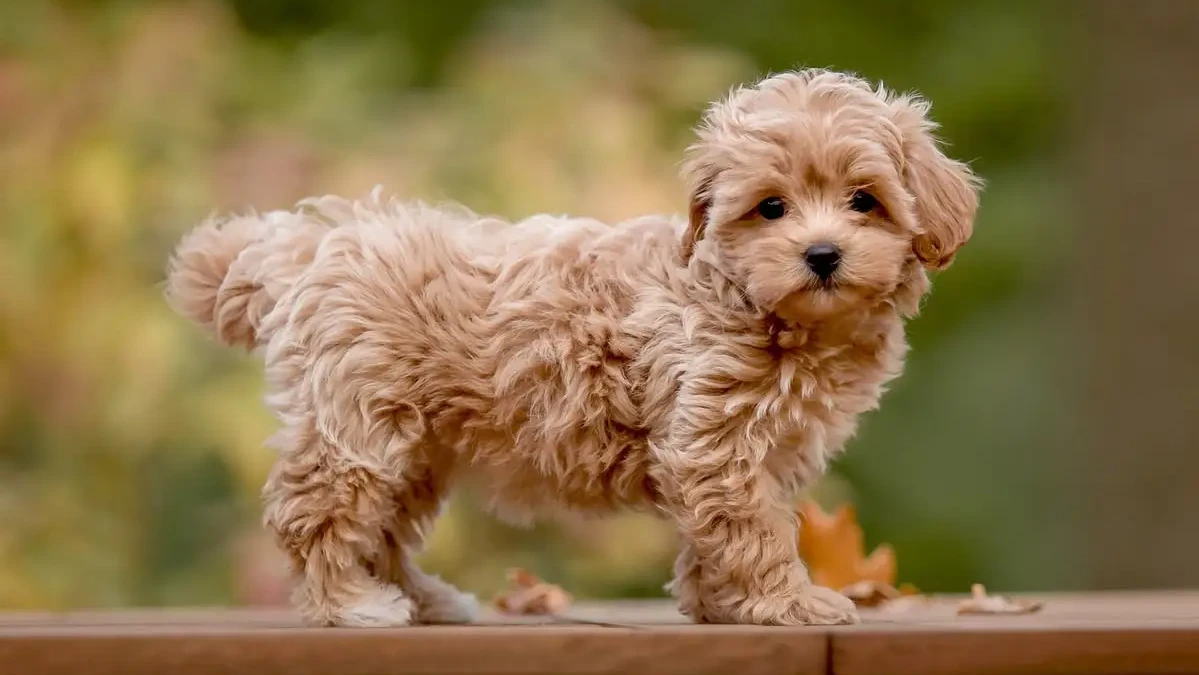
Maltipoos are generally small dogs with expressive faces, dark eyes, drop ears, compact bodies, and relatively fine features. Their appearance can range from strongly Maltese-like to more Poodle-like.
The coat is one of their most recognizable features. Depending on genetics, a Maltipoo may have:
- Soft, silky hair
- Wavy hair
- Curly hair
- A mixture of textures
Coat density and growth also vary. Some Maltipoos require frequent brushing and professional grooming because their hair can become tangled or matted.
There is no single appearance that every Maltipoo must have, which is one reason individual evaluation is important.
Maltipoo Size
Maltipoos are generally small, but adult size can vary significantly. The size of the Poodle parent is an important factor, along with genetics, nutrition, growth, and other individual characteristics.
A Toy Poodle parent may contribute to a particularly small Maltipoo, while Miniature Poodle ancestry can produce a somewhat larger dog.
PetMD commonly describes adult Maltipoos as approximately 8–14 inches tall and 5–20 pounds, although individual dogs can fall outside these broad ranges.
A puppy’s current size should not be treated as a perfect prediction of adult size. Prospective owners should expect some variation.
Maltipoo Coat and Colors
Maltipoo coats can be wavy, curly, silky, or somewhere between the coat types of the parent breeds. Colors can include:
- White
- Cream
- Apricot
- Brown
- Black
- Gray
- Red
- Gold
- Various combinations
Some colors may become lighter as the dog matures.
Color is primarily an appearance characteristic. It should not be used as a reliable indicator of health, intelligence, temperament, or compatibility with a household.
Maltipoo Personality and Temperament
Maltipoos are often described as affectionate, playful, curious, alert, and people-oriented. Many enjoy being close to their owners and participating in family activities.
Their social nature can make them wonderful companions for people who enjoy interacting with their dogs. At the same time, it means that owners should think carefully about how much time the dog will spend alone.
Temperament is influenced by genetics, early experiences, socialization, training, environment, and individual personality. Some Maltipoos may be outgoing and energetic, while others may be quieter or more cautious.
Barking can also vary. A Maltipoo may bark at visitors, unfamiliar sounds, excitement, boredom, or changes in its environment.
Maltipoo Intelligence and Training
The Poodle’s intelligence contributes to the Maltipoo’s reputation for being responsive to training. Many Maltipoos can learn household routines, basic commands, tricks, and appropriate behaviors relatively quickly.
However, intelligence also means that these dogs benefit from mental stimulation. A bored Maltipoo may invent its own activities, including excessive barking, chewing, or attention-seeking.
Positive reinforcement is generally a useful training approach. Rewarding desirable behavior helps the dog understand what is expected without relying on fear or physical punishment.
Important early skills include:
- Name recognition
- Sit
- Stay
- Come
- Leash manners
- Recall
- Waiting calmly
- House training
- Grooming cooperation
- Appropriate interaction with people and pets
Training should be consistent and divided into short, manageable sessions.
Maltipoo Puppies
Maltipoo puppies require more care than their small size might suggest. During early puppyhood, they need frequent toilet opportunities, appropriate nutrition, plenty of sleep, safe exploration, gentle handling, socialization, and consistent training.
Puppyhood is also the time to establish good habits. Behaviors that seem harmless in a tiny puppy can become difficult later. For example, repeatedly rewarding jumping for attention can teach the dog that jumping is an effective way to interact with people.
The first months should therefore focus on confidence, routine, positive experiences, and basic household manners.
Maltipoo Puppy Socialization
Socialization means helping a puppy learn that different people, environments, sounds, surfaces, and experiences can be safe.
Useful experiences may include:
- Meeting calm people
- Meeting suitable, healthy dogs
- Hearing normal household sounds
- Walking on safe surfaces
- Riding in a car
- Being gently handled
- Seeing grooming tools
- Exploring different rooms
- Experiencing new environments gradually
Socialization should be positive and gradual. Overwhelming a puppy with too many unfamiliar experiences at once can create fear rather than confidence.
Maltipoo House Training
House training depends on supervision, routine, and patience. Young puppies have limited bladder control, so they need frequent opportunities to go outside or to an appropriate toilet area.
Useful times include:
- After waking
- After eating
- After playing
- Before sleeping
- At regular intervals during the day
Accidents should be cleaned thoroughly rather than punished. Punishment can create fear without teaching the desired behavior.
A crate or safe resting area can also help when introduced positively and used appropriately.
Maltipoo Exercise Needs
Maltipoos are small, but they still need regular physical activity. Their exercise requirements depend on age, size, health, and temperament.
Suitable activities can include:
- Short walks
- Interactive play
- Fetch
- Indoor games
- Supervised outdoor activity
- Training sessions
- Exploration
- Scent games
Puppies should not be pushed into excessive or repetitive physical activity while they are developing. Rest is equally important.
Adults generally benefit from a consistent combination of movement and mental stimulation.
Maltipoo Mental Stimulation
Mental enrichment is particularly useful for an intelligent and social dog.
Owners can use:
- Puzzle toys
- Scent games
- Hide-and-find activities
- Trick training
- Obedience exercises
- Interactive feeders
- Short training sessions
Mental stimulation can help reduce boredom-related behaviors such as excessive barking, chewing, or constant attention-seeking.
The same principle applies when researching other companion breeds. A Shiba inu puppy may have very different behavioral, exercise, training, and socialization requirements from a Maltipoo, so prospective owners should compare the actual responsibilities of each breed rather than choosing based only on appearance or popularity.
Maltipoo Grooming
Grooming is one of the most important ongoing responsibilities of Maltipoo ownership.
A longer or curlier coat can easily develop tangles and mats if it is not brushed regularly. Mats can become uncomfortable and may pull on the skin.
A typical grooming routine can include:
| Grooming Task | General Approach |
|---|---|
| Brushing | Regularly |
| Bathing | As needed |
| Hair trimming | Regular grooming schedule |
| Nail care | Monitor and maintain regularly |
| Ear checks | Check regularly |
| Dental care | Frequent routine |
| Coat inspection | Regularly |
The exact schedule depends on coat type, length, lifestyle, and professional advice.
Brushing
Brushing helps prevent tangles and gives owners an opportunity to notice skin irritation, debris, or unusual changes.
Pay particular attention to areas that commonly tangle, such as:
- Behind the ears
- Under the legs
- Around the collar
- Around the face
- Beneath the body
Brushing should be gentle, especially when the coat contains small tangles.
Professional Grooming
Many Maltipoos benefit from professional grooming. A groomer can maintain the coat, trim sensitive areas, and help keep the dog comfortable.
A shorter haircut may make daily maintenance easier, but it does not eliminate the need for grooming. Ears, nails, teeth, and skin still require regular attention.
Maltipoo Dental Health
Dental care should be part of the routine from an early age. Small dogs can be particularly vulnerable to dental problems.
Owners can gradually introduce tooth brushing using dog-safe products and should arrange regular veterinary dental assessments.
Bad breath, inflamed gums, visible buildup, loose teeth, chewing difficulty, or changes in eating should be discussed with a veterinarian.
Maltipoo Ear and Skin Care
Owners should regularly check the ears for:
- Redness
- Unusual odor
- Discharge
- Excessive wax
- Repeated scratching
- Head shaking
The ear canal should not be aggressively probed.
The skin and coat should also be checked for redness, bumps, persistent itching, bald patches, unusual odor, or tightly matted areas.
Any persistent or concerning symptoms should be evaluated by a veterinarian.
Maltipoo Nutrition
Maltipoos should receive a nutritionally complete diet appropriate for their age and individual needs.
Puppies have different nutritional requirements from adults, while senior dogs may eventually need different dietary considerations.
Portion control is important because even a small amount of extra food can represent a significant percentage of a small dog’s daily calorie needs.
Fresh water should always be available, and treats should be included within the overall feeding plan.
For specific nutritional questions, especially during growth or illness, veterinary guidance is appropriate.
Maltipoo Health
Responsible ownership includes preventive veterinary care rather than waiting until a problem becomes serious.
Routine care may include:
- Veterinary examinations
- Vaccinations
- Parasite prevention
- Weight monitoring
- Dental care
- Skin and coat checks
- Ear checks
- Eye monitoring
Potential health concerns reported in Maltipoos and their parent breeds can include dental disease, patellar luxation, and certain eye problems.
These are possible concerns, not predictions for every Maltipoo.
Owners should contact a veterinarian if they notice persistent pain, limping, major appetite changes, unusual discharge, breathing difficulties, collapse, or significant behavioral changes.
Maltipoo Lifespan
Maltipoo lifespan varies depending on genetics, healthcare, nutrition, weight, environment, and overall health.
PetMD currently describes a general lifespan of approximately 12–16 years. This is a broad expectation rather than a guarantee for an individual dog.
Good preventive care, appropriate nutrition, healthy weight management, and regular veterinary attention can all support long-term well-being.
Maltipoos With Children
Maltipoos can live successfully with children when interactions are supervised and children are taught to handle the dog respectfully.
Because Maltipoos are small, rough play, accidental falls, or being stepped on can cause serious injury.
Children should learn not to:
- Pull the dog’s ears or tail
- Chase the dog
- Disturb it while sleeping
- Take food away
- Force physical contact
- Climb on the dog
Every dog should have a quiet place where it can rest undisturbed.
Maltipoos With Other Dogs and Cats
Maltipoos can potentially live with other dogs or cats, but introductions should be gradual and supervised.
Useful practices include:
- Controlled introductions
- Separate feeding areas
- Individual resting spaces
- Supervision during early interactions
- Safe retreat areas
- Careful management of toys and other valuable resources
With cats, it is particularly important to provide elevated or inaccessible areas where the cat can escape if needed.
Individual temperament matters more than breed labels alone.
Can Maltipoos Live in Apartments?
Yes. Many Maltipoos can adapt well to apartment living.
However, a small home does not mean the dog has no exercise or enrichment requirements. Apartment owners should plan for:
- Daily activity
- Mental stimulation
- Toilet routines
- Grooming
- Social interaction
- Barking management
A large garden is not automatically better than an apartment. What matters is whether the household can consistently meet the dog’s needs.
Maltipoo Separation and Alone Time
Maltipoos can form strong attachments to their owners. Gradual alone-time training can help them become more comfortable when their people are away.
Owners can start with short separations and gradually increase the duration while providing appropriate enrichment.
Signs of serious distress, destructive behavior, or persistent anxiety may require assistance from a veterinarian or qualified behavior professional.
A dog should not be expected to suddenly tolerate very long periods alone without preparation.
Maltipoo Daily Routine
A predictable routine can make life easier for both dog and owner.
| Time | Example Activity |
|---|---|
| Morning | Toilet break, breakfast, activity |
| Midday | Rest, enrichment, or play |
| Afternoon | Training or interactive activity |
| Evening | Walk, play, dinner, calm interaction |
The routine should be adjusted according to age, health, household schedule, and individual needs.
Puppies need more frequent toilet breaks and more sleep, while senior dogs may need slower activity and additional rest.
Breed comparison is also useful when deciding whether a small companion dog fits a particular household. Someone considering a Yorkshire terrier puppy should think about temperament, grooming, exercise, training, size, and compatibility with children or other pets before making a long-term decision.
Maltipoo Home Safety
Because Maltipoos are small, owners should carefully puppy-proof the home.
Important precautions include:
- Secure electrical cords
- Store medicines and chemicals safely
- Remove small objects that could be swallowed
- Secure balconies and windows
- Keep unsafe foods inaccessible
- Check plants for toxicity
- Prevent escapes through doors
- Block dangerous gaps
A safe environment allows the puppy to explore without unnecessary risks.
Maltipoo Travel
Maltipoos can learn to travel comfortably when introduced to travel gradually.
When traveling, owners should consider:
- Secure restraint or an appropriate carrier
- Fresh water
- Regular breaks
- Temperature control
- Familiar bedding or toys
- Toilet opportunities
- Signs of stress or overheating
Dogs should never be left unattended in a hot vehicle.
Maltipoo in Dubai
People searching for Maltipoo Dubai should consider all normal Maltipoo care requirements while giving special attention to the local climate.
Dubai’s hot weather can make outdoor activity challenging during much of the year. Exercise may need to take place during cooler parts of the day, while much of the dog’s daily life may occur indoors in an air-conditioned environment.
Important considerations include:
- Indoor cooling
- Fresh water
- Safe exercise times
- Paw protection from hot surfaces
- Heat avoidance
- Grooming
- Transportation
- Access to veterinary care
A Maltipoo can potentially live comfortably in Dubai, but responsible heat management is essential.
Maltipoo and Hot Weather
Hot climates require careful planning.
Owners should provide:
- Fresh drinking water
- A cool indoor environment
- Shade outdoors
- Exercise during safer temperatures
- Rest periods
- Protection from hot pavement
Excessive panting, weakness, confusion, vomiting, collapse, or severe distress can indicate a serious heat-related problem requiring immediate veterinary attention.
Grooming can help manage the coat, but shaving or trimming alone does not protect a dog from extreme heat. Proper temperature management remains essential.
Prospective owners may also compare different breeds based on both their initial cost and their ongoing care requirements. Looking at Shih Tzu price can provide another point of comparison, but the most useful decision comes from understanding the breed’s grooming, temperament, exercise, training, and lifestyle requirements rather than focusing only on the purchase amount.
Maltipoo Dubai Lifestyle
A Dubai-based Maltipoo household may combine air-conditioned indoor living, carefully timed outdoor activity, grooming appointments, and car travel.
Apartment living can work well if the dog receives enough exercise, enrichment, toilet opportunities, and companionship.
A villa provides more space but does not eliminate heat risks. Outdoor activity should still be supervised and scheduled appropriately.
The key question is whether the household can provide a safe, cool environment and a consistent routine throughout the year.
Maltipoo Price: How Much Does a Maltipoo Cost?
Maltipoo price can vary substantially depending on location, age, size, coat characteristics, availability, care provided, breeding practices, and seller or store policies.
There is no single universal price for every Maltipoo.
A price should also never be interpreted as a complete measure of quality or health. A very low or very high price by itself does not tell you everything about an individual puppy.
Before purchasing, prospective owners should ask what is included in the current price and what expenses they will face after taking responsibility for the dog.
Maltipoo Price and Total Ownership Cost
The initial purchase price is only one part of the financial commitment.
Ongoing costs may include:
| Cost Category | Examples |
|---|---|
| Food | Puppy and adult nutrition |
| Grooming | Professional grooming and home supplies |
| Veterinary care | Exams, vaccinations, preventive care |
| Training | Classes or professional assistance |
| Supplies | Bed, bowls, leash, toys, grooming tools |
| Dental care | Home care and professional treatment |
| Unexpected costs | Unplanned veterinary expenses |
This is why people researching Maltipoo price should calculate a realistic long-term budget rather than focusing only on the purchase amount.
Exploring Maltipoo Puppies Through Puppies Nest
Puppies Nest is one place where people can explore dogs and puppies, including a Maltipoo when one is currently available.
Availability can change, so prospective owners should confirm current information directly rather than relying on general descriptions.
When considering an individual Maltipoo, useful questions include:
- Is the dog currently available?
- What is the current price?
- What information is available about the puppy?
- What food is the puppy currently eating?
- What care routine is being followed?
- What grooming routine is recommended?
- What socialization has the puppy received?
- What should be prepared before taking the puppy home?
The goal should be to understand the individual dog, not simply to choose based on photographs or price.
What to Consider Before Buying a Maltipoo Puppy
Before contacting a seller or store, prospective owners should evaluate their own circumstances.
Consider:
- Daily schedule
- Home environment
- Grooming commitment
- Exercise opportunities
- Training ability
- Children
- Other pets
- Budget
- Veterinary access
- Long-term commitment
A Maltipoo may be a wonderful choice for one household and a poor fit for another.
Maltipoo Puppy Home Preparation
Before bringing a puppy home, prepare:
- A safe sleeping area
- Age-appropriate food
- Food and water bowls
- Grooming tools
- Suitable toys
- Training rewards
- Collar or harness and leash
- Puppy-proofed rooms
- A veterinary-care plan
The first days should be calm and predictable. Avoid overwhelming the puppy with too many visitors or unfamiliar experiences immediately after arrival.
Location can also influence the cost of owning a small companion dog. Someone researching Pomeranian dog price in UAE, for example, may notice that prices can vary according to availability, age, size, care, and other factors. The same broader comparison approach can be applied when researching a Maltipoo and planning for its long-term needs.
Maltipoo Puppy First Days at Home
The first days should focus on establishing trust and routine.
A puppy benefits from:
- Frequent toilet opportunities
- Consistent feeding
- Plenty of sleep
- Gentle interaction
- Safe exploration
- Short training sessions
- Calm bonding
Young puppies sleep a lot, and sufficient rest is important for healthy development.
Early Maltipoo Grooming Training
Early exposure to grooming can make future appointments much easier.
Owners can gradually introduce:
- Gentle brushing
- Paw handling
- Ear checks
- Face handling
- Grooming sounds
- Standing calmly
- Brief contact with grooming tools
The goal during puppyhood is not to complete a long grooming session. It is to create positive associations with handling and grooming.
Maltipoo Training by Life Stage
Training should evolve as the dog develops.
| Life Stage | Main Focus |
|---|---|
| Early puppyhood | Name, handling, house training |
| Growing puppy | Basic obedience, socialization, leash skills |
| Adolescence | Impulse control and consistency |
| Adult | Maintenance and advanced enrichment |
| Senior | Comfortable routines and appropriate activity |
Positive reinforcement and consistency should remain central throughout the dog’s life.
Maltipoo Exercise by Age
Puppies need appropriate play, exploration, short activity sessions, and plenty of rest rather than strenuous repetitive exercise.
Adolescent Maltipoos may become more energetic and distracted, requiring consistent training and controlled activity.
Adults often benefit from a combination of walks, play, training, and enrichment.
Senior Maltipoos may need gentler activity while still benefiting from movement and mental stimulation.
Exercise should always be adapted to the individual dog.
Maltipoo Health and Preventive Care
Routine veterinary care is an important part of responsible ownership.
Preventive care can include:
- Regular examinations
- Vaccinations
- Parasite prevention
- Dental monitoring
- Weight checks
- Eye and ear examinations
- Skin and coat monitoring
Sudden changes in behavior, appetite, movement, or energy should not automatically be dismissed. Veterinary assessment can help identify problems early.
Maltipoo and First-Time Owners
A Maltipoo can be suitable for some first-time dog owners because its small size and trainability may make certain aspects of management approachable.
However, new owners should not assume that a small dog requires little effort.
Maltipoos still need:
- Regular grooming
- Training
- Exercise
- Socialization
- Mental stimulation
- Dental care
- Veterinary attention
- Companionship
Preparation and consistency are more important than previous dog ownership experience.
Maltipoo and Busy Owners
A busy schedule does not automatically prevent Maltipoo ownership, but it requires realistic planning.
Owners need time for:
- Feeding
- Toilet routines
- Exercise
- Grooming
- Training
- Interaction
- Veterinary appointments
If the owner is away for long periods, arrangements for appropriate care and companionship may be necessary.
A social companion dog should not routinely spend excessive amounts of time alone without adequate preparation and support.
When comparing different small companion dogs, prospective owners may research Beagle price to understand how initial costs can differ between breeds. However, purchase price is only one part of ownership, and factors such as grooming, food, veterinary care, exercise, training, and long-term commitment should also be considered.
Maltipoo and Older Owners
Maltipoos can suit households that prefer small companion dogs, but the dog’s energy, grooming needs, and handling requirements should be considered.
An owner should be able to safely manage the dog, arrange grooming and veterinary appointments, provide suitable activity, and have a backup plan if assistance is needed.
Individual temperament and lifestyle are more important than age alone.
Maltipoo in Multi-Dog Households
Introducing a Maltipoo into a home with other dogs should be gradual.
Owners may need to manage:
- Food
- Beds
- Toys
- Attention
- Rest areas
The goal does not necessarily have to be constant playing. Peaceful coexistence is often the best outcome.
Maltipoo Behavioral Communication
Understanding body language can help owners identify whether a dog is comfortable, excited, uncertain, or stressed.
A relaxed dog may have loose muscles and natural movement. A concerned dog may turn away, avoid interaction, crouch, hide, lick its lips, yawn in stressful situations, or become unusually tense.
Body language should always be interpreted in context.
Maltipoo Bonding
Maltipoos often enjoy close interaction with their owners. Bonding develops through predictable routines, positive training, calm handling, play, and reliable care.
Not every interaction needs to be energetic. Quiet companionship, resting together, grooming, and short training exercises can all strengthen the relationship.
Maltipoo Benefits and Challenges
| Potential Benefits | Potential Challenges |
|---|---|
| Small size | Regular grooming |
| Affectionate companionship | Can require consistent training |
| Intelligent | Needs mental stimulation |
| Playful | May become bored |
| Often responsive to training | Barking can vary |
| Adaptable to many homes | May struggle with excessive isolation |
The best choice depends on whether the owner is comfortable with both the benefits and responsibilities.
Common Maltipoo Ownership Mistakes
Underestimating Grooming
A soft coat can become tangled quickly. Regular brushing and professional maintenance may be necessary.
Assuming Small Dogs Need No Exercise
Small size does not eliminate the need for physical and mental activity.
Choosing Based Only on Appearance
A cute puppy may not automatically have the temperament or needs that suit your household.
Ignoring Socialization
Early positive experiences help puppies become more confident and adaptable.
Overfeeding
Small dogs can gain excess weight from seemingly minor amounts of additional food and treats.
Neglecting Dental Care
Dental hygiene should be part of routine care rather than an afterthought.
Inconsistent Training
If family members use different rules, the dog may become confused.
Leaving the Dog Alone for Excessive Periods
Maltipoos can be highly social and may require gradual alone-time training.
Common Maltipoo Myths
Maltipoos Never Shed
Not necessarily. Shedding varies between individuals.
Maltipoos Are Completely Hypoallergenic
No dog should be assumed to be completely allergen-free. Individual reactions vary.
Maltipoos Need No Exercise
They still require appropriate physical and mental activity.
Every Maltipoo Is Calm
Temperament varies between individuals.
Every Maltipoo Is Easy to Train
Many are responsive, but training still requires consistency and patience.
Grooming Is Optional
Regular grooming is an important part of Maltipoo care.
Maltipoos Can Be Left Alone All Day
Long periods alone may be difficult for a highly social dog.
Coat Color Determines Personality
Color is not a reliable predictor of temperament.
All Maltipoos Look the Same
Their appearance can vary significantly because of genetic differences.
Is a Maltipoo Right for You?
Before choosing a Maltipoo, consider whether the following statements are true:
| Consideration | Good Sign | Potential Challenge |
|---|---|---|
| Time | You can provide daily attention | Long work hours require planning |
| Grooming | You accept regular maintenance | Coat care may be demanding |
| Training | You enjoy consistent training | Inconsistency can cause problems |
| Exercise | You can provide regular activity | Very inactive routines may not fit |
| Budget | You can handle ongoing expenses | Grooming and veterinary costs add up |
| Commitment | You are prepared for long-term care | Impulsive ownership can become difficult |
The right decision is based on your real daily circumstances rather than your expectations of what dog ownership might be like.
Comparing Maltipoos With Other Small Dogs
People considering a Maltipoo may also compare it with other small companion breeds. Important comparison points include:
- Adult size
- Coat type
- Grooming requirements
- Exercise needs
- Trainability
- Barking tendencies
- Social behavior
- Compatibility with children
- Compatibility with other pets
- Total ownership costs
Maltipoo and Family Life
A family should decide in advance who will be responsible for:
- Feeding
- Exercise
- Training
- Grooming
- Veterinary appointments
- Cleaning
- Supervision
Children can participate in age-appropriate tasks, but adults should remain responsible for the dog’s overall welfare.
A predictable household routine can help the dog settle and understand expectations.
Maltipoo Senior Care
As a Maltipoo ages, its needs may change.
Senior dogs may benefit from:
- More frequent veterinary monitoring
- Gentler exercise
- Comfortable bedding
- Easier access to resting areas
- Continued dental care
- Weight management
- Appropriate mental stimulation
New behavioral or physical changes should be discussed with a veterinarian rather than automatically being attributed to aging.
Maltipoo Ownership Costs
Financial responsibility continues throughout the dog’s life.
In addition to the initial Maltipoo price, owners should budget for:
- Food
- Grooming
- Routine veterinary care
- Preventive treatments
- Dental care
- Training
- Toys and supplies
- Unexpected veterinary expenses
This broader perspective is more useful than focusing on the purchase price alone.
Maltipoo Buyer Checklist
Before bringing a Maltipoo home, prospective owners should be prepared to answer the following questions:
- Can I provide daily companionship?
- Can I manage regular grooming?
- Can I afford routine and unexpected veterinary care?
- Can I provide appropriate exercise?
- Can I commit to positive training?
- Can I provide mental stimulation?
- Is my home safe for a small dog?
- Are children and other pets properly considered?
- Can I manage the dog’s needs during travel?
- If I live in Dubai, can I provide appropriate heat management?
- Am I prepared for a commitment that may last well over a decade?
If the answer to these questions is consistently yes, the household may be well positioned for Maltipoo ownership.
Maltipoo FAQs
What is a Maltipoo?
A Maltipoo is a cross between a Maltese and a Toy or Miniature Poodle. It is generally a small, affectionate companion dog with variable coat and temperament characteristics.
What breeds make a Maltipoo?
A Maltipoo is produced from a Maltese and a Poodle. The Poodle parent may be Toy or Miniature, contributing to variation in adult size.
How big does a Maltipoo get?
Maltipoos are generally small. A commonly cited broad range is approximately 8–14 inches and 5–20 pounds, although individual dogs can vary.
Are Maltipoos good family dogs?
They can be excellent family companions when properly socialized and when children are taught respectful handling. Supervision is particularly important because Maltipoos are small.
Are Maltipoos intelligent?
Many are intelligent and responsive to training, reflecting their Poodle heritage. They benefit from both physical exercise and mental enrichment.
Are Maltipoos easy to train?
Many respond well to positive reinforcement, but successful training still requires consistency, patience, and repetition.
Do Maltipoos shed?
Shedding varies. Many may shed relatively little, but no individual Maltipoo should automatically be considered completely non-shedding.
Are Maltipoos hypoallergenic?
Maltipoos should not be considered completely hypoallergenic. People with allergies should spend time around the individual dog when possible.
How often does a Maltipoo need grooming?
The schedule depends on coat texture and length. Regular brushing is important, and many Maltipoos benefit from professional grooming.
How much exercise does a Maltipoo need?
Exercise needs vary according to age, health, size, and temperament. Walks, play, exploration, and training can all contribute to daily activity.
Can Maltipoos live in apartments?
Yes. Many can adapt to apartments when they receive enough exercise, enrichment, training, grooming, and social interaction.
Can Maltipoos live with cats?
They can, provided introductions are gradual and supervised and the cat has safe spaces.
Can Maltipoos live with other dogs?
Yes, many can. Individual temperament and careful introductions are important.
Can Maltipoos be left alone?
They can learn appropriate periods of alone time, but gradual training is important because many are strongly attached to their owners.
How long do Maltipoos live?
PetMD currently gives a general lifespan of around 12–16 years, although individual lifespan varies.
What health problems can Maltipoos have?
Potential concerns can include dental disease, patellar luxation, and certain eye problems. Regular veterinary care helps monitor individual health.
How much does a Maltipoo cost?
There is no universal price. Maltipoo price varies according to location, age, size, coat, care, availability, and seller or store practices.
What affects Maltipoo price?
Location, availability, puppy age, size, coat characteristics, care, breeding practices, and seller or store policies can all affect the price.
Is a Maltipoo suitable for Dubai?
A Maltipoo can potentially live comfortably in Dubai when owners provide air conditioning, hydration, safe outdoor timing, heat protection, and appropriate veterinary care.
How should I exercise a Maltipoo in Dubai?
Outdoor activity should generally be scheduled around safer temperatures, while indoor play and mental enrichment can help during extremely hot periods.
What should I prepare before bringing home a Maltipoo puppy?
Prepare food, bowls, a safe sleeping area, toys, grooming supplies, training rewards, walking equipment, puppy-proofing, and a veterinary-care plan.
Can I find Maltipoo puppies through Puppies Nest?
Puppies Nest may offer a Maltipoo when one is currently available. Availability and pricing can change, so current details should be confirmed directly.
Making an Informed Maltipoo Decision
The Maltipoo can be an affectionate, intelligent, playful, and engaging companion, but its small size does not make ownership effortless.
The breed requires regular grooming, positive training, exercise, socialization, mental stimulation, appropriate nutrition, dental care, veterinary attention, and companionship.
For Maltipoo puppies, the commitment begins even before the dog reaches adulthood. Early socialization, toilet training, grooming exposure, and household routines can strongly influence the dog’s adjustment.
For people researching Maltipoo Dubai, heat management should be treated as an essential part of ownership. A safe, cool indoor environment, fresh water, careful exercise timing, and protection from hot surfaces are especially important.
For people researching Maltipoo price, the initial purchase amount should be viewed as only one part of the financial commitment. Food, grooming, veterinary care, training, supplies, dental care, and unexpected expenses continue throughout the dog’s life.
Exploring a Maltipoo Through Puppies Nest
If your lifestyle appears compatible with the breed, you can explore currently available dogs and puppies through Puppies Nest when a Maltipoo is offered.
Before making a decision, confirm the current availability, price, and information about the individual puppy directly with the store. Do not assume that a general breed description represents every available dog.
The best approach is to evaluate the individual puppy alongside your household’s:
- Daily schedule
- Home environment
- Grooming capacity
- Exercise opportunities
- Budget
- Family situation
- Other pets
- Long-term plans
A responsible purchase decision is about much more than finding a cute puppy or the lowest price.
Final Thoughts
A Maltipoo can be a wonderful companion for the right household. Its small size, affectionate personality, intelligence, playful nature, and appealing coat make it attractive to many prospective owners.
At the same time, responsible ownership requires a realistic understanding of grooming, training, exercise, socialization, dental care, veterinary needs, companionship, and long-term costs.
If you are considering Maltipoo puppies, learn about the breed before choosing an individual dog. If you are researching Maltipoo Dubai, make climate management part of your decision. And if you are comparing Maltipoo price, remember that the purchase amount is only the beginning of the financial commitment.
For those interested in exploring a Maltipoo through Puppies Nest, current availability, pricing, and individual puppy information should be confirmed directly.
Ultimately, the best Maltipoo decision is an informed one: understand the breed, evaluate your lifestyle honestly, prepare your home, consider the long-term costs, and choose an individual dog whose needs you can responsibly meet for many years.