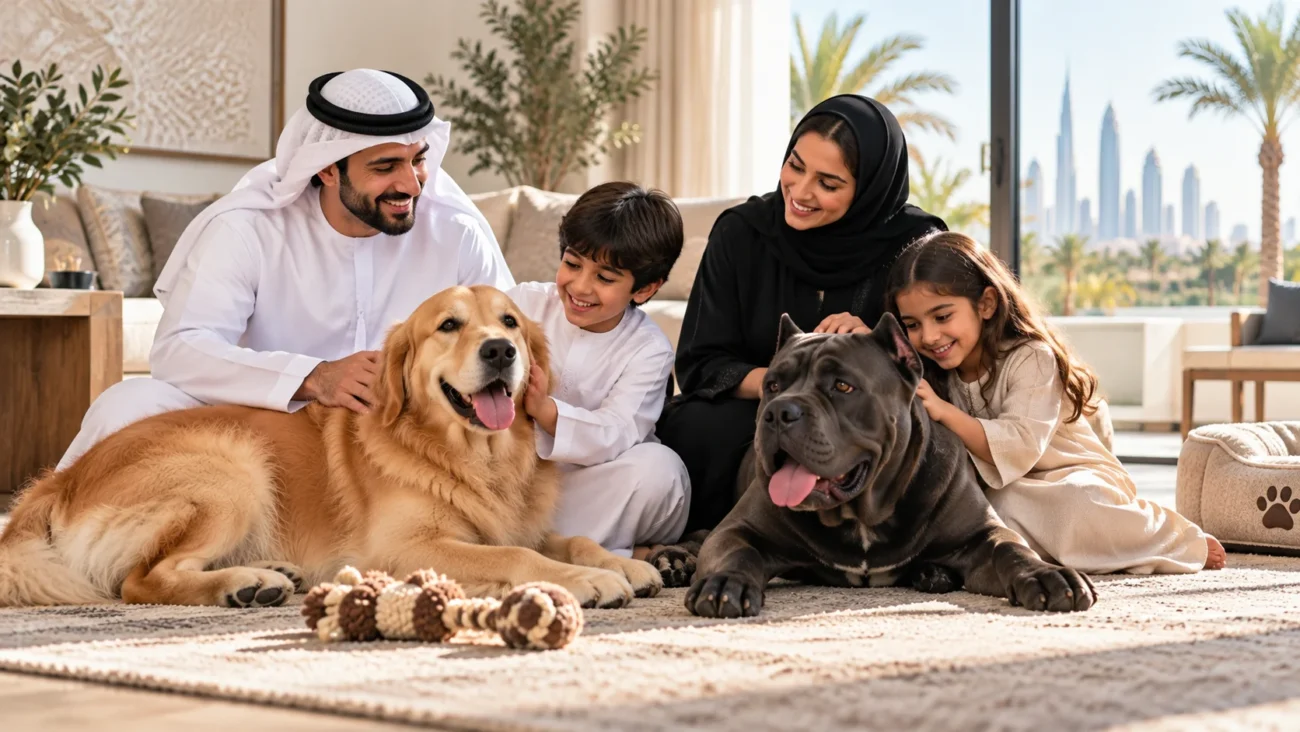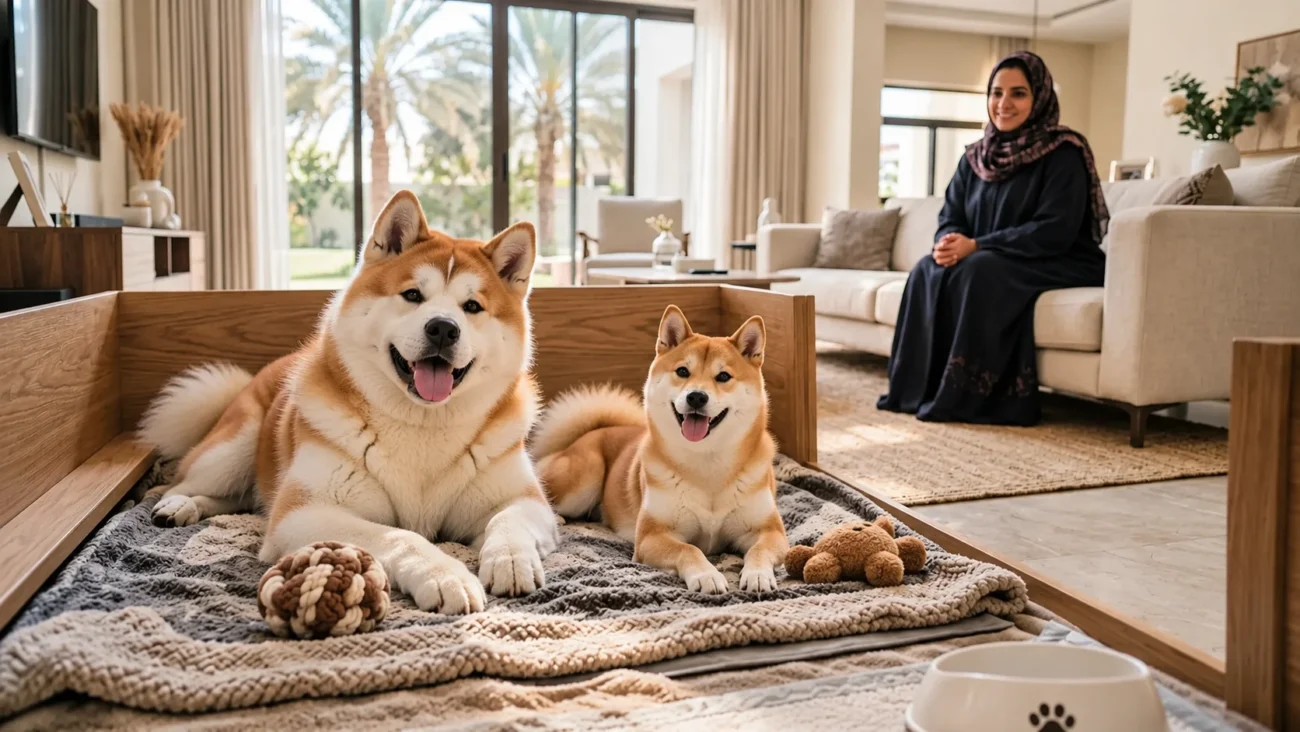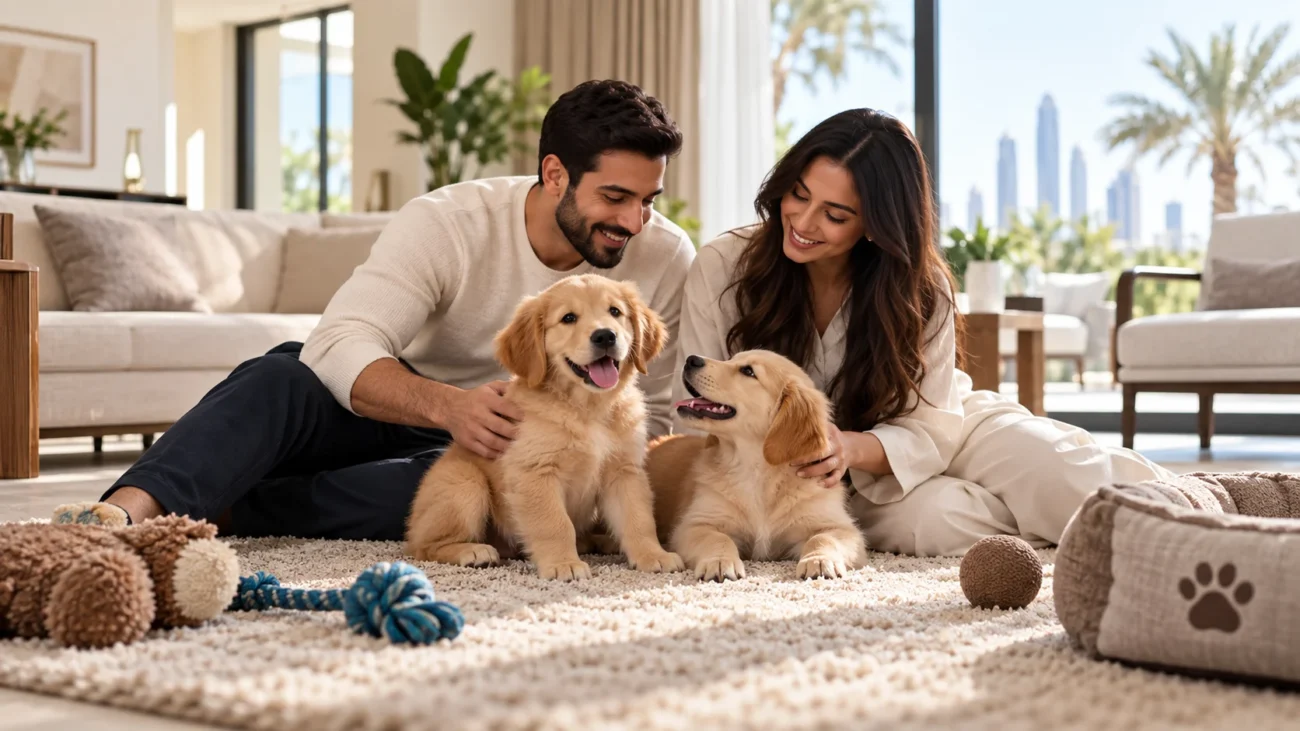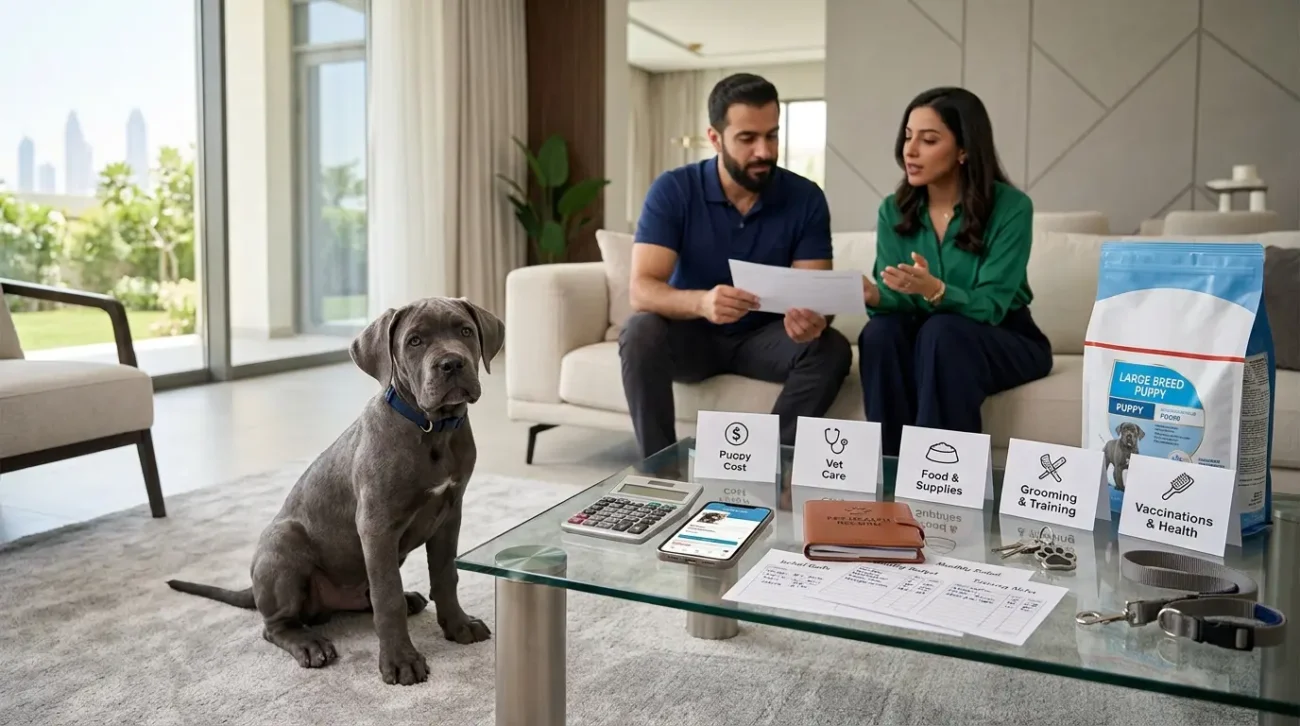

When choosing among the best large dog breeds for apartments or considering the best big dog breeds for apartments, the more important factors are temperament, energy level, exercise needs, barking habits, trainability, and the dog’s ability to settle comfortably indoors.
Living with a large dog in an apartment may seem challenging, but size alone does not determine whether a dog is suitable for apartment life. Some large breeds are relatively calm indoors, while some smaller dogs can have extremely high energy levels and require constant stimulation.
For apartment residents in the UAE, there are additional considerations. Hot weather can limit outdoor exercise during much of the day, elevators and shared buildings require good manners, and indoor space needs to be managed carefully when living with a large breed. Fortunately, several big dogs can potentially adapt well to apartment living when their physical and mental needs are met.
Can Large Dogs Really Live Comfortably in Apartments?
Yes, some large dogs can live successfully in apartments. The key is understanding that floor space and exercise are not the same thing.
A large dog may spend much of the day sleeping or relaxing indoors if it receives enough appropriate exercise and mental stimulation. Conversely, a smaller but highly energetic dog may become restless in an apartment if its needs are not met.
Apartment suitability depends on several factors:
- Energy level – High-energy dogs generally need more activity.
- Exercise requirements – Some breeds require extensive daily physical activity.
- Indoor temperament – Calm dogs that settle well can be easier to manage.
- Barking tendency – Frequent barking can create problems in shared buildings.
- Trainability – Obedience and impulse control are particularly important.
- Mental stimulation needs – Intelligent dogs need more than physical walks.
- Adaptability – Some breeds adjust to different living environments more easily.
- Owner commitment – A suitable routine can make a major difference.
Therefore, apartment suitability should be evaluated on the individual dog as well as the breed.
What Makes a Large Dog Suitable for Apartment Living?
Before choosing a breed, apartment owners should look beyond weight and height. A large dog that calmly rests after a walk may be easier to live with than a smaller dog that constantly wants to run.
1. Ability to Settle Indoors
One of the most important characteristics is the ability to relax inside the home.
A dog that can transition from activity to rest is generally easier to manage in an apartment. This does not mean the dog should be inactive. Instead, it should be able to enjoy exercise and then settle without continuously demanding physical activity.
2. Moderate Energy
Energy level is more important than body size.
Large breeds with moderate energy can potentially adapt to apartments when they receive consistent exercise. High-energy working breeds may require significantly more planning and may be challenging for owners with busy schedules.
3. Manageable Barking
Barking is especially important in apartments because sound can travel through hallways and neighboring units.
A dog does not have to be completely silent, but owners should consider the breed’s typical vocal tendencies and invest in early training.
4. Trainability
A well-trained large dog is easier to manage in elevators, entrances, corridors, parks, and other shared areas.
Basic commands such as “sit,” “stay,” “leave it,” “come,” and loose-leash walking can make everyday apartment life much smoother.
5. Adaptability
Some breeds are naturally adaptable and can adjust to different routines. Others have strong working instincts and need a more structured lifestyle.
The individual dog’s personality also matters. Two dogs of the same breed can have very different energy levels and behavioral needs.
Best Large Dog Breeds for Apartments
The following breeds can potentially adapt to apartment living when their needs are properly managed. None should be considered automatically suitable simply because of breed reputation.
1. Great Dane
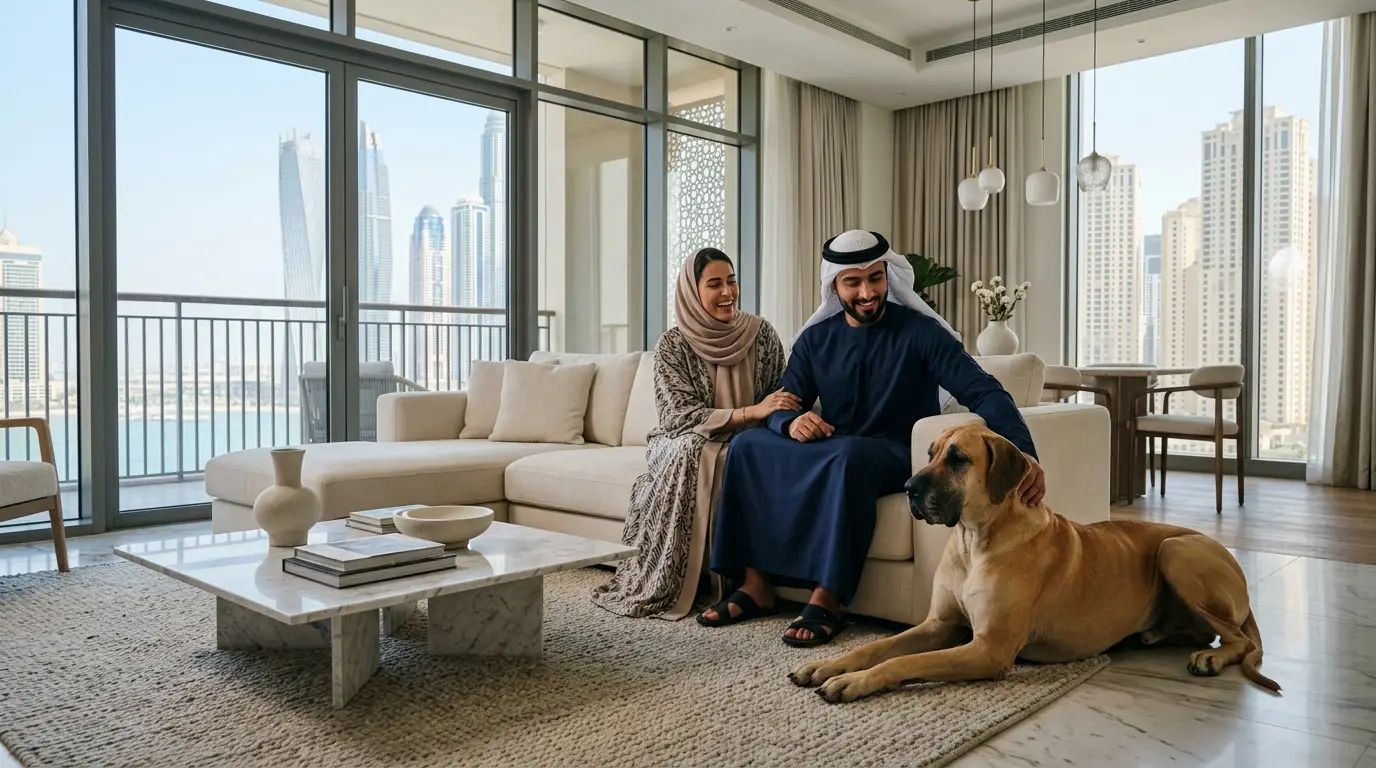
The Great Dane is one of the most surprising examples of a large dog that can potentially adapt to apartment living.
Despite its enormous size, many Great Danes are relatively calm indoors and enjoy spending considerable time relaxing with their owners.
| Factor | Great Dane |
| Size | Giant |
| Energy | Moderate |
| Exercise | Moderate |
| Barking | Generally moderate |
| Trainability | Moderate to good |
| Indoor settling | Often good |
| Apartment potential | Good with responsible management |
The main challenge is not necessarily exercise. It is physical space. A Great Dane needs enough room to stand, turn, lie down comfortably, and move around without constantly bumping into furniture.
Owners should also consider elevator access and building rules before choosing such a large breed.
2. Greyhound
The Greyhound is another breed that can surprise apartment residents.
Greyhounds are known for their athletic ability and speed, but many adult Greyhounds are quite relaxed inside the home.
They can enjoy a comfortable indoor lifestyle when provided with regular opportunities to walk and exercise.
| Factor | Greyhound |
| Size | Large |
| Energy | Moderate |
| Exercise | Moderate |
| Barking | Generally low to moderate |
| Trainability | Moderate |
| Indoor settling | Often very good |
| Apartment potential | Good |
Their short coat can also make grooming relatively straightforward. However, UAE owners still need to be careful about outdoor temperatures and hot pavement.
Early morning or evening walks are generally more practical during very hot periods than midday exercise.
3. Mastiff
Mastiffs are enormous dogs, but their generally calm nature can make them potential apartment candidates for experienced owners.
They usually do not need the same amount of constant physical activity associated with some highly driven working breeds.
| Factor | Mastiff |
| Size | Giant |
| Energy | Low to moderate |
| Exercise | Moderate |
| Barking | Moderate |
| Trainability | Moderate |
| Indoor settling | Often good |
| Apartment potential | Possible with sufficient space |
The biggest concern is physical size. A Mastiff can occupy a substantial amount of living space, and apartment owners need to consider elevators, doorways, flooring, furniture placement, and building policies.
4. Newfoundland
Newfoundlands are large working dogs with generally gentle and affectionate temperaments.
They can potentially live in apartments when owners provide sufficient exercise, training, and appropriate indoor space.
However, the UAE climate requires special attention because Newfoundlands have thick coats and are not naturally suited to extreme heat.
| Factor | Newfoundland |
| Size | Giant |
| Energy | Moderate |
| Exercise | Moderate |
| Barking | Moderate |
| Trainability | Good |
| Indoor settling | Good |
| Apartment potential | Possible with climate management |
Air conditioning and careful scheduling of outdoor activity are particularly important in hot weather.
5. Saint Bernard
Saint Bernards are another giant breed that may be calmer indoors than their size suggests.
They can be affectionate and relatively relaxed, but their size, shedding, drooling, and heat sensitivity make them more demanding for UAE apartment owners.
| Factor | Saint Bernard |
| Size | Giant |
| Energy | Moderate |
| Exercise | Moderate |
| Barking | Moderate |
| Trainability | Moderate |
| Indoor settling | Good |
| Apartment potential | Possible |
Owners should make sure their home provides sufficient ventilation and reliable cooling.
Outdoor activities should also be planned around weather conditions rather than simply following a fixed midday schedule.
6. Bernese Mountain Dog
The Bernese Mountain Dog is large, affectionate, and generally moderate in energy.
Its calm personality can help it adapt to apartment life, but its thick coat makes the UAE climate a major consideration.
| Factor | Bernese Mountain Dog |
| Size | Large |
| Energy | Moderate |
| Exercise | Moderate |
| Barking | Moderate |
| Trainability | Good |
| Indoor settling | Good |
| Apartment potential | Possible |
The breed needs regular activity and human interaction. Owners should also be prepared for significant shedding and the need to maintain a cool indoor environment.
7. Greyhound-Type Large Sighthounds
Large sighthounds can sometimes make excellent apartment companions because some are surprisingly relaxed indoors.
Their exercise needs still need to be met, but their indoor behavior can be much calmer than their athletic appearance suggests.
They are also generally not the type of dog that needs to run around the apartment continuously.
The important point is to provide safe, controlled outdoor activity rather than relying on apartment space as a substitute for exercise.
Large Dog Breeds That May Be More Challenging in Apartments
Not every large breed is equally convenient for apartment living.
Highly energetic working and herding breeds may require significant physical and mental stimulation. This does not mean they can never live in apartments, but their owners often need to provide a more demanding daily routine.
| Breed Type | Potential Apartment Challenge |
| High-energy herding breeds | Need extensive mental stimulation |
| High-drive working breeds | Can become restless without a job or structured activity |
| Extremely vocal breeds | May create noise concerns |
| Very large breeds | Require more physical space |
| Highly active sporting breeds | Need substantial daily exercise |
Individual temperament is always important. A calm adult dog may be easier to manage than a young dog of the same breed with much higher energy.
Large Dog vs. Small Dog: Why Size Is Not Everything
Many people automatically assume that small dogs are better for apartments.
That assumption is not always correct.
A small, energetic dog may spend much of the day moving around the apartment, barking, or demanding stimulation. A calm large dog may spend long periods resting after its daily activity.
For example, a large dog that needs two structured walks and then comfortably rests may fit apartment life better than a smaller dog that requires continuous engagement.
This is why apartment suitability should be assessed using a combination of characteristics rather than weight alone.
For owners who are specifically comparing different sizes, Best dog breeds for apartments should be evaluated according to energy, noise, trainability, and lifestyle compatibility rather than simply choosing the smallest available breed.
Comparison of Large Breeds for Apartment Living
The following table provides a practical overview.
| Breed | Energy | Exercise Need | Barking | Indoor Calmness | UAE Climate Concern |
| Great Dane | Moderate | Moderate | Moderate | High | High |
| Greyhound | Moderate | Moderate | Low–Moderate | High | Moderate |
| Mastiff | Low–Moderate | Moderate | Moderate | High | High |
| Newfoundland | Moderate | Moderate | Moderate | High | Very High |
| Saint Bernard | Moderate | Moderate | Moderate | High | Very High |
| Bernese Mountain Dog | Moderate | Moderate | Moderate | High | Very High |
These ratings are general breed tendencies rather than guarantees. Individual dogs can behave differently depending on age, training, health, genetics, and environment.
Daily Exercise for a Large Apartment Dog
Living in an apartment does not eliminate a dog’s need for exercise.
Instead, owners need to create a reliable routine.
A practical schedule might include:
- Morning walk: A structured walk before temperatures become uncomfortable.
- Mental activity: Short training or puzzle-based activities at home.
- Afternoon rest: Allow the dog to relax indoors.
- Evening activity: Another walk or appropriate outdoor exercise.
- Short training session: Reinforce obedience and calm behavior.
The exact amount of exercise should depend on the dog’s breed, age, health, and individual energy level.
UAE Weather Changes the Routine
The UAE’s hot climate is one of the most important differences between apartment ownership in the Emirates and many cooler countries.
During hotter periods, walking times may need to move toward cooler parts of the day.
Owners should also consider:
- Hot pavement
- Heat exposure
- Humidity
- Access to shade
- Water availability
- Indoor cooling
- Signs of overheating
Large dogs should not be forced into strenuous outdoor activity simply to meet a predetermined exercise target when environmental conditions are unsafe.
Mental Stimulation for Large Dogs in Apartments
Physical exercise is only one part of the equation.
Large dogs can become bored even when they receive regular walks.
Mental stimulation can include:
- Basic obedience training
- Food puzzles
- Scent games
- Controlled search games
- Interactive toys
- Trick training
- Hide-and-seek activities
- Rotating toys
- Short training sessions
Training can be particularly valuable because it gives dogs an opportunity to use their brains while strengthening communication with their owners.
Instead of providing hours of uncontrolled activity, owners can divide stimulation into several short sessions throughout the day.
How to Manage Space When Living With a Big Dog
A large dog does not necessarily need an enormous apartment, but the available space should be organized intelligently.
Create a Dedicated Resting Area
Give the dog a comfortable location where it can sleep without being constantly disturbed.
This area should not block:
- Doors
- Hallways
- Kitchen access
- Emergency exits
- High-traffic areas
Reduce Unnecessary Clutter
Large dogs need more clearance around furniture.
A room that feels spacious for a person may feel crowded for a large dog.
Moving unnecessary furniture can improve movement and reduce accidental collisions.
Use Vertical Storage
Storing dog supplies vertically can help preserve floor space.
Food, toys, grooming supplies, and cleaning products can be organized without occupying valuable walking areas.
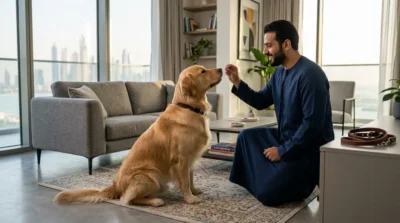
Apartment Training for Large Dogs
Training becomes especially important when the dog is physically powerful.
A large dog pulling on a leash can be difficult to control, particularly inside an elevator or crowded building entrance.
Focus on the following skills:
- Loose-leash walking
- Waiting at doors
- Calm elevator behavior
- Reliable recall where appropriate
- Sit and stay
- Leave it
- Calm greetings
- Settling on a bed
- Reduced jumping
- Quiet behavior on command
Training should begin early and be reinforced consistently.
Barking and Noise Management
Noise can be one of the biggest apartment-related concerns.
A large dog does not necessarily bark more than a small dog, but a loud bark can be more noticeable in a shared building.
Owners should try to understand why their dog is barking.
Common triggers include:
- Sounds in the hallway
- Other dogs
- Strangers
- Doorbells
- Separation
- Boredom
- Fear
- Territorial behavior
Punishment alone does not address the underlying reason.
Instead, owners should identify triggers, teach alternative behaviors, provide sufficient stimulation, and reward calm responses.
Choosing Between a Puppy and an Adult Large Dog
Age can significantly affect apartment suitability.
A puppy may eventually become calm and well-trained, but puppies require extensive supervision, house training, socialization, chewing management, and behavioral guidance.
An adult dog may already have an established temperament, making it easier to evaluate whether it can settle indoors.
For UAE residents considering different options, the search for Puppies Dubai should not focus only on appearance or breed size. Prospective owners should also consider temperament, expected adult size, exercise needs, grooming, and whether their daily routine can support the dog throughout its life.
What Should You Check Before Bringing a Large Dog Into an Apartment?
Before making a decision, use this checklist.
Apartment Checklist
- Does the building allow large dogs?
- Are there restrictions on breeds or sizes?
- Is there a reliable elevator?
- Can the dog comfortably move around the apartment?
- Is there enough space for a large bed?
- Can you provide daily exercise?
- Can you provide mental stimulation?
- Is the apartment reliably air-conditioned?
- Are suitable outdoor areas accessible?
- Can you walk the dog during cooler hours?
- Are you prepared for grooming and shedding?
- Can you manage the dog’s size and strength?
- Do you have a plan for travel or long workdays?
Answering these questions honestly can prevent many common ownership problems.
How to Choose the Right Large Dog for Your Lifestyle
The best breed on paper may not be the best breed for you.
Consider your lifestyle first.
If You Work Long Hours
A breed that requires extensive interaction throughout the day may be difficult unless you have reliable support.
If You Exercise Frequently
A more active large breed may be a better match, provided you can safely exercise it in the UAE climate.
If You Prefer a Calm Home
Look for breeds and individual dogs known for settling well indoors.
If You Live in a Smaller Apartment
Physical dimensions become more important. Giant breeds may technically adapt but can still make everyday movement difficult.
If You Are a First-Time Owner
Trainability and manageable temperament should receive significant attention. Physical strength is also important because a large dog can be difficult to control when poorly trained.
Common Mistakes Large-Dog Apartment Owners Make
Even a potentially suitable breed can become difficult when its needs are overlooked.
Mistake 1: Assuming Indoor Space Replaces Exercise
An apartment is not an exercise area. Dogs still need appropriate physical activity.
Mistake 2: Focusing Only on Breed Size
Size is only one variable. Energy and temperament can matter much more.
Mistake 3: Ignoring Mental Stimulation
A dog can receive physical exercise and still become bored.
Mistake 4: Walking at Unsafe Times
In the UAE, weather should influence exercise scheduling.
Mistake 5: Skipping Training
A large untrained dog can create problems in elevators, hallways, parks, and shared spaces.
Mistake 6: Buying Based Only on Appearance
A breed’s appearance should not be the primary factor when selecting a dog for apartment life.
For anyone searching for a Dog puppy for sale, the decision should begin with lifestyle compatibility rather than simply choosing the largest or most visually impressive breed.
Large Dog Apartment Routine Example
A structured routine can make apartment life easier.
| Time | Activity |
| Early morning | Outdoor walk |
| Morning | Breakfast and short training |
| Midday | Rest and indoor enrichment |
| Afternoon | Puzzle toy or scent activity |
| Evening | Main walk or outdoor exercise |
| Night | Calm interaction and relaxation |
This is only an example. Puppies, senior dogs, and high-energy breeds may require very different schedules.
Outdoor Access and Apartment Living in the UAE
Access to suitable outdoor areas can make a major difference.
Ideally, owners should have practical access to places where dogs can safely walk and explore. However, outdoor activity should always take weather into account.
During very hot conditions, owners may need to rely more heavily on:
- Early morning walks
- Late evening walks
- Indoor training
- Interactive toys
- Scent games
- Short enrichment sessions
Indoor enrichment cannot completely replace outdoor activity, but it can help maintain a balanced routine when weather conditions temporarily restrict outdoor exercise.
Are Big Dogs Better Than Small Dogs for Apartments?
There is no universal answer.
Some large breeds can be calm, quiet, and comfortable indoors, while some small breeds can be highly energetic or vocal.
The better question is:
Can this individual dog have its physical, mental, social, and behavioral needs met consistently in this apartment and lifestyle?
That question provides a much better framework than simply asking whether the dog is large or small.
For UAE residents comparing Small Dogs with larger breeds, remember that reduced physical size does not automatically mean reduced responsibility. Energy, training, barking, exercise, grooming, and temperament remain important regardless of size.
Large Dog Breeds and Long-Term Commitment
A large dog is a long-term responsibility.
Before bringing one home, owners should consider:
- Food requirements
- Grooming
- Training
- Exercise
- Veterinary care
- Equipment
- Boarding or travel arrangements
- Cleaning
- Time commitment
- Housing restrictions
Large dogs may also require appropriately sized beds, crates, harnesses, collars, transportation arrangements, and other equipment.
The cost and practical demands should therefore be evaluated before acquisition rather than after the dog arrives.
A Simple Decision Framework
If you are unsure whether a large breed is suitable for your apartment, follow these steps:
Step 1: Measure Your Available Space
Consider usable floor space rather than the apartment’s total advertised size.
Step 2: Check Building Rules
Confirm whether large dogs are permitted and whether there are any restrictions.
Step 3: Evaluate Your Schedule
Determine when you can provide walks, training, feeding, and interaction.
Step 4: Consider UAE Weather
Build your exercise routine around realistic weather conditions.
Step 5: Compare Breed Characteristics
Look at energy, barking, trainability, grooming, and indoor behavior.
Step 6: Consider the Individual Dog
Temperament varies between individual dogs, even within the same breed.
Step 7: Think Long Term
Choose a dog that can realistically fit your lifestyle for years, not just one that seems suitable for your current situation.
Frequently Asked Questions
What are the best large dog breeds for apartments?
Some large breeds that can potentially adapt to apartment living include Great Danes, Greyhounds, Mastiffs, Newfoundlands, Saint Bernards, and Bernese Mountain Dogs. However, suitability depends on individual temperament, exercise needs, training, available space, and the owner’s lifestyle.
Can a Great Dane live in an apartment?
Yes, a Great Dane can potentially live in an apartment. Despite its enormous size, the breed can be relatively calm indoors. Owners must provide enough room for comfortable movement, regular exercise, proper training, and reliable climate control.
Are large dogs harder to keep in apartments?
Not necessarily. Large dogs require more physical space and can be more difficult to physically manage, but a calm large dog may adapt better than a smaller, highly energetic dog. Temperament and energy level are often more important than size alone.
How much exercise does a large apartment dog need?
Exercise requirements vary by breed, age, health, and individual temperament. Some large breeds need moderate daily activity, while others require considerably more. Owners should develop a routine based on the dog’s specific needs and adjust outdoor activity according to UAE weather.
Can big dogs live comfortably in Dubai apartments?
Some big dogs can potentially live comfortably in Dubai apartments when their needs are properly met. Owners should consider apartment size, building rules, elevator access, exercise opportunities, indoor cooling, and the dog’s ability to settle indoors.
How can I exercise a large dog during hot UAE weather?
Schedule outdoor activity during cooler periods, such as early morning or later in the evening, and avoid exposing the dog to excessively hot surfaces or extreme temperatures. Indoor training and enrichment can provide additional stimulation when outdoor conditions are unsuitable.
Are Greyhounds good apartment dogs?
Greyhounds can be good apartment candidates because many adult Greyhounds are relatively relaxed indoors. They still need regular walks and appropriate exercise, and UAE owners should carefully manage outdoor activity during hot weather.
Do large dogs bark more than small dogs?
Not necessarily. Barking depends on breed tendencies, individual temperament, training, environment, and the reason for the behavior. Because apartments have shared walls and common areas, owners should prioritize appropriate socialization and barking management regardless of dog size.
Is a puppy or adult dog better for an apartment?
Neither is automatically better. Puppies require extensive training, supervision, socialization, and house training. An adult dog’s temperament and ability to settle may be easier to evaluate, but individual behavior remains important.
What should I consider before getting a large dog for an apartment?
Consider building rules, available floor space, your daily schedule, exercise opportunities, climate control, outdoor access, training requirements, grooming, long-term costs, and the dog’s temperament and energy level.
What is the most important factor when choosing a large apartment dog?
There is no single factor. A combination of temperament, energy level, exercise requirements, barking, trainability, indoor settling ability, and compatibility with your lifestyle provides a much more accurate assessment than size alone.
Find the Right Large Dog for Your Apartment
Ready to welcome a large dog into your UAE home? Take a closer look at your space, daily routine, and the breed’s exercise and temperament needs before making your choice. If you’re exploring Dogs for sale in UAE, focus on finding a dog that genuinely fits your lifestyle—not just one that looks right for your home.
With the right breed, proper training, and a consistent routine, apartment living with a big dog can be a rewarding experience.