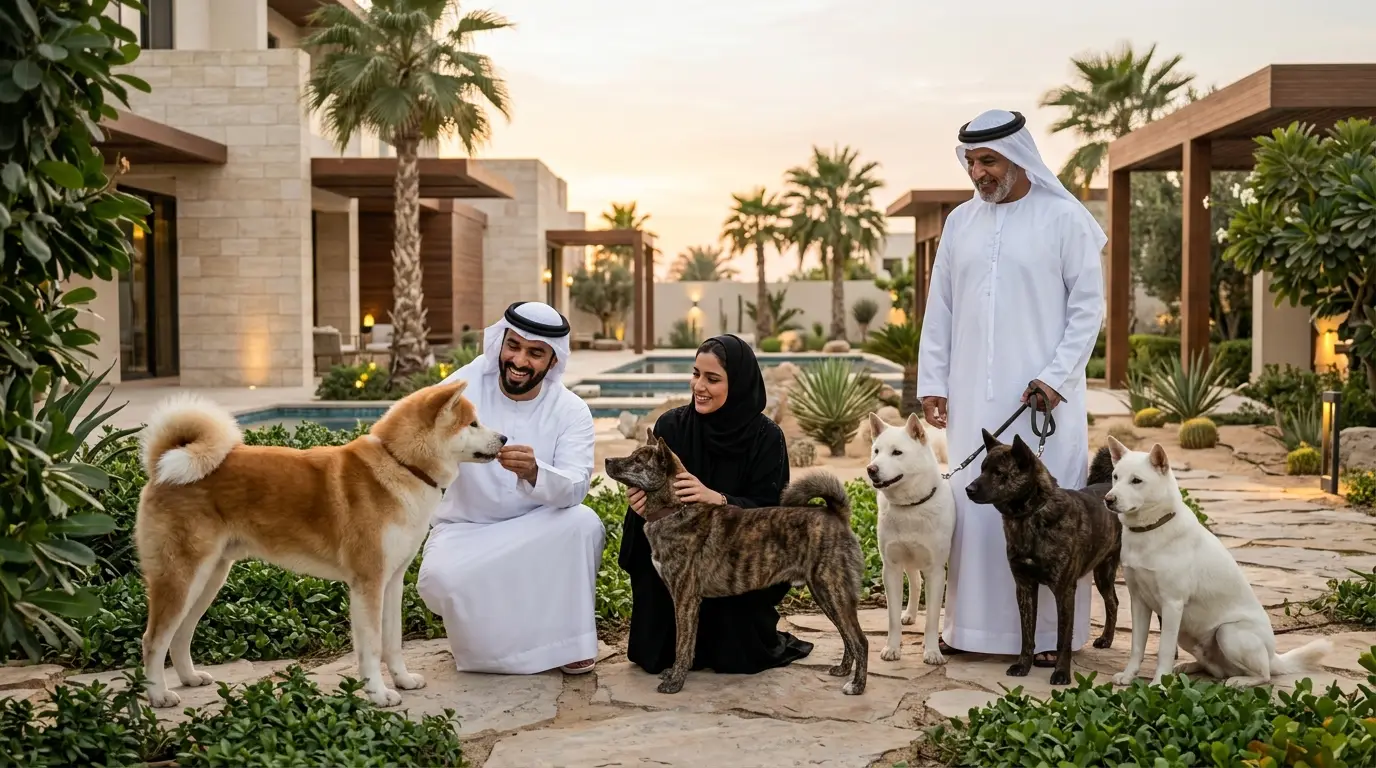

Japanese Dog Breeds Large are known for their loyalty, intelligence, impressive presence, and strong bonds with their families. For UAE dog owners looking for a substantial companion, Japanese breeds can offer a fascinating combination of devotion, independence, athletic ability, and distinctive character. But what are Japanese large dog breeds really like, and which ones can fit different lifestyles? From the powerful Akita Inu and Tosa Inu to medium-to-large native breeds such as the Hokkaido, Kishu, Shikoku, and Kai Ken, Japanese dogs have developed for very different purposes and environments.
For families in the UAE, choosing among Japanese Dog Breeds Large requires more than focusing on appearance. Owners should consider the dog’s adult size, exercise requirements, temperament, grooming needs, training demands, climate tolerance, available indoor space, and long-term veterinary expenses. A large dog can thrive in a UAE home when its physical and mental needs are properly managed, especially when it has access to a comfortable indoor environment, controlled exercise, fresh water, and responsible veterinary care.
Japanese Dog Breeds Large: What Makes Them Different?
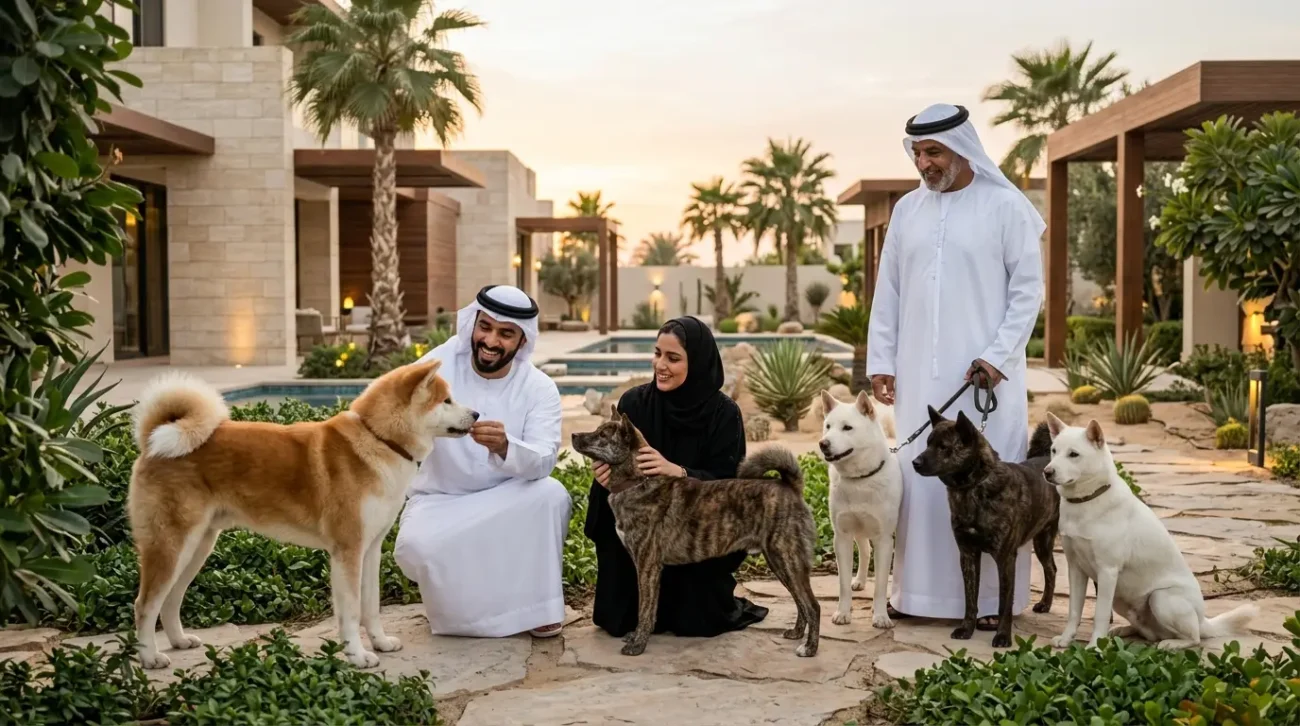
Japanese Dog Breeds Large are not all identical, and the phrase can cover both genuinely large dogs and substantial medium-to-large native breeds. The Akita Inu and Tosa Inu are the clearest examples of large Japanese breeds, while Hokkaido, Kishu, Shikoku, and Kai Ken are generally smaller but still athletic and sturdy.
Historically, these dogs were developed for hunting, guarding, protection, companionship, or other demanding work. As a result, many retain strong instincts and an independent personality. They may not behave like highly eager-to-please companion breeds, so training, socialization, and consistency are especially important.
| Feature | Typical Large Japanese Breeds | What UAE Owners Should Expect |
| Loyalty | Very strong | Often form deep bonds with their household |
| Independence | Moderate to high | Training requires patience and consistency |
| Intelligence | Generally high | Mental stimulation is important |
| Exercise | Moderate to high | Outdoor activity should avoid extreme heat |
| Grooming | Moderate to high | Shedding can be significant in some breeds |
| Socialization | Essential | Early exposure helps develop confident behavior |
| Space | Medium to large | Indoor comfort is more important than simply having a yard |
| Training | Structured approach needed | Positive reinforcement and clear boundaries work well |
| Climate | Varies by breed | Heat management is essential in the UAE |
| Commitment | Long term | Owners should plan for food, training, grooming, and veterinary care |
1. Akita Inu – A Powerful and Devoted Japanese Companion
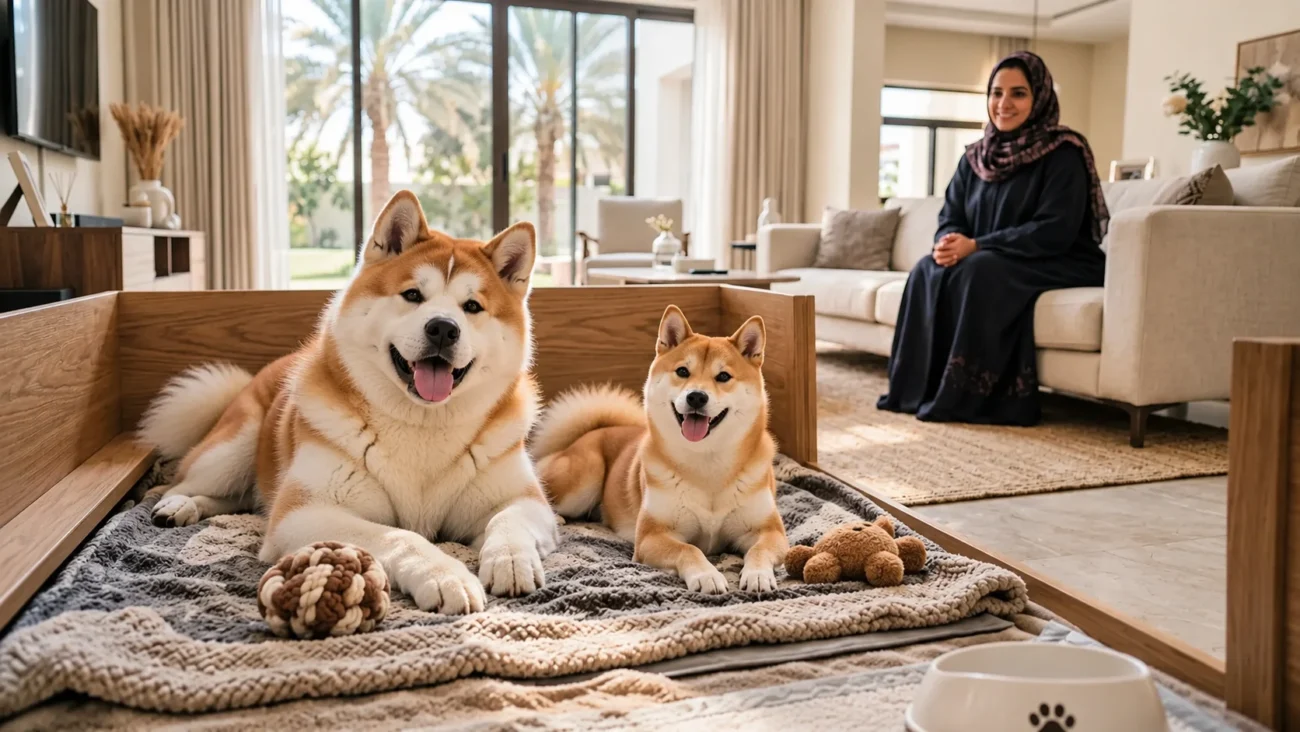
The Akita Inu is one of the best-known Japanese Dog Breeds Large and has a powerful, dignified appearance. Originally developed in Japan, the breed was used for hunting and later became valued as a loyal companion and guardian.
Akitas are typically confident, independent, and strongly attached to their families. Their reserved nature can make them less socially outgoing than some other breeds. This does not mean every Akita behaves the same way; individual temperament depends on genetics, socialization, training, and environment.
For UAE households, the Akita’s thick double coat deserves particular consideration. Owners should provide a cool indoor environment, avoid intense outdoor activity during the hottest hours, and carefully monitor the dog for signs of heat stress.
| Akita Inu Characteristic | Typical Profile |
| Size | Large |
| Build | Powerful and muscular |
| Temperament | Loyal, independent, dignified |
| Energy | Moderate |
| Grooming | Moderate to high |
| Shedding | High, especially during seasonal shedding |
| Training | Best with experienced, consistent handling |
| Family suitability | Can suit appropriate households with socialization |
| UAE consideration | Strong heat-management requirements |
2. Tosa Inu – A Strong Japanese Breed With a Serious Presence
The Tosa Inu is another major example of Japanese Dog Breeds Large. Developed in Japan, particularly in Tosa, the breed has historically been associated with dog fighting and later became recognized as a powerful guardian and companion in suitable homes.
The Tosa is physically impressive and can become extremely strong. That makes responsible ownership particularly important. Owners need to prioritize early socialization, obedience training, controlled interactions, secure housing, and appropriate supervision.
A Tosa is generally more suitable for an experienced owner who understands large, powerful dogs. In the UAE, secure outdoor areas can be useful, but outdoor time should be carefully scheduled around the climate.
| Tosa Inu Factor | Consideration |
| Size | Very large |
| Strength | Extremely substantial |
| Energy | Moderate |
| Training | Requires consistency and experience |
| Socialization | Essential from an early age |
| Grooming | Relatively manageable |
| Space | Large, secure environment preferred |
| UAE suitability | Requires careful heat and exercise management |
| Ideal owner | Experienced large-dog owner |
3. Hokkaido Ken – Hardy, Alert, and Devoted
The Hokkaido Ken is one of Japan’s native breeds and is traditionally associated with hunting in demanding northern conditions. Although it is not as large as an Akita or Tosa, its sturdy body and athletic character make it relevant when discussing Japanese Dog Breeds Large and medium-to-large Japanese breeds.
Hokkaido dogs can be alert, intelligent, courageous, and loyal. Their heritage means they may appreciate structured activity and purposeful training. Owners should not assume that a smaller physical size automatically means low maintenance.
In the UAE, exercise should be adapted to temperature. Early-morning walks and indoor enrichment can help provide activity without exposing the dog to dangerous midday heat.
4. Kishu Ken – Athletic and Focused
The Kishu Ken is a Japanese hunting breed traditionally associated with the mountainous Kii region. It is generally medium-sized rather than truly large, but it has a sturdy athletic body and a strong working-dog background.
Kishu Ken dogs can be loyal and alert while maintaining an independent streak. They often benefit from owners who enjoy active routines and are prepared to provide consistent obedience work.
For UAE families, the Kishu can be considered when looking beyond only the biggest Japanese Dog Breeds Large. Its moderate size may make indoor management easier than with a Tosa or very large Akita, although its exercise and mental stimulation needs still matter.
5. Shikoku Ken – An Energetic Japanese Hunting Breed
The Shikoku Ken is another Japanese native breed originally developed for hunting. It is agile, energetic, alert, and often highly engaged with its surroundings.
Although it is not a giant breed, the Shikoku’s athletic build and working instincts make it important to include when comparing Japanese Dog Breeds Large and other substantial Japanese breeds.
Shikoku dogs can thrive when owners provide structured walks, obedience training, puzzle activities, and controlled opportunities to explore. A bored Shikoku may find its own ways to stay busy, which is rarely ideal for a household.
| Shikoku Need | Practical Approach |
| Exercise | Shorter sessions during hot weather |
| Mental stimulation | Training, puzzles, scent games |
| Socialization | Begin early and continue regularly |
| Training | Consistent positive reinforcement |
| Indoor life | Comfortable with adequate daily activity |
| UAE routine | Early morning or evening outdoor sessions |
6. Kai Ken – Agile, Intelligent, and Distinctive
The Kai Ken is recognized for its striking brindle coat and athletic physique. Historically, it was used for hunting in mountainous areas of Japan.
Among Japanese Dog Breeds Large and related native breeds, the Kai Ken demonstrates why owners should consider personality and activity level rather than size alone. A medium-sized dog with strong working instincts can require considerable engagement.
The breed can be loyal to its household while remaining somewhat reserved. Early socialization, appropriate training, and a predictable routine can help create a well-adjusted companion.
7. Japanese Spitz – Small but Highly Adaptable
The Japanese Spitz is much smaller than the genuinely large Japanese breeds, so it should not technically be classified as a large breed. However, it is useful as a comparison because it shows how different Japanese dogs can be in size and lifestyle requirements.
Its white coat, alert expression, playful personality, and companion-dog characteristics contrast strongly with the working backgrounds of breeds such as the Akita and Tosa.
For UAE residents deciding whether they truly need a large dog, comparing a Japanese Spitz with Japanese Dog Breeds Large can be helpful. A smaller dog may require less physical space and may be easier to manage in some apartments, although every dog still requires exercise, training, grooming, and responsible care.
8. Japanese Chin – A Companion Breed With a Very Different Lifestyle
The Japanese Chin is another small Japanese breed rather than a large breed. Including it in the broader comparison helps prospective owners understand that “Japanese dog” does not automatically mean a large, powerful working dog.
Japanese Chin dogs were historically valued as companion animals and generally have very different exercise requirements from an Akita or Tosa.
For UAE households living in smaller homes, this contrast can be useful when deciding whether Japanese Dog Breeds Large genuinely match their lifestyle or whether a smaller Japanese breed would be more practical.
9. Sakhalin Husky – A Historical Japanese-Associated Working Dog
The Sakhalin Husky, also known as Karafuto Ken, is a historical sled-dog type associated with Japan and Sakhalin. It is not a practical modern choice for most prospective UAE owners because the breed is extremely rare and is generally regarded as nearly extinct.
Its history is nevertheless relevant when exploring Japanese working dogs because it demonstrates the diversity of dogs associated with Japan’s northern regions.
Rather than treating historical breeds as realistic buying options, prospective owners should focus on currently established breeds with reliable health information, responsible breeding programs, and accessible veterinary documentation.
10. Japanese Mastiff and Large-Breed Working Heritage
The Tosa is the principal modern Japanese breed commonly associated with the term Japanese Mastiff. When researching Japanese Dog Breeds Large, prospective owners may encounter several informal descriptions online, so it is important to distinguish recognized breed names from marketing terminology.
For any large Japanese dog, responsible sourcing matters more than an impressive label. Buyers should verify the dog’s identity, parents, health information, vaccination records, living conditions, and breeder practices before making a decision.
A Separate Look at Popular Family Dogs
For UAE families exploring different dog options beyond Japanese Dog Breeds Large, Top 5 Smartest Dog Breeds can be a useful internal resource when comparing intelligence, trainability, and lifestyle requirements. The right dog depends on the household rather than intelligence rankings alone, so prospective owners should consider temperament, exercise, grooming, and long-term care as well.
Japanese Dog Breeds Large: Side-by-Side Comparison
The following comparison makes it easier to understand how the best-known Japanese breeds differ in practical ownership requirements.
| Breed | Approx. Size Category | Temperament | Energy | Grooming | Training Difficulty | Best-Suited Owner |
| Akita Inu | Large | Loyal, reserved, independent | Moderate | High | Moderate-high | Experienced or prepared owner |
| Tosa Inu | Very large | Powerful, serious, loyal | Moderate | Low-moderate | High | Experienced owner |
| Hokkaido Ken | Medium | Alert, loyal, courageous | High | Moderate-high | Moderate | Active owner |
| Kishu Ken | Medium | Independent, focused | High | Moderate | Moderate | Active household |
| Shikoku Ken | Medium | Energetic, alert, loyal | High | Moderate | Moderate-high | Experienced active owner |
| Kai Ken | Medium | Intelligent, alert, devoted | High | Moderate | Moderate | Active owner |
| Japanese Spitz | Small | Friendly, playful | Moderate | High | Moderate | Families and companions |
| Japanese Chin | Small | Affectionate, adaptable | Low-moderate | Moderate | Moderate | Companion-focused homes |
| Sakhalin Husky | Historical | Working-oriented | High | High | High | Not a practical modern option |
| Tosa/Japanese Mastiff type | Very large | Strong, serious | Moderate | Low-moderate | High | Experienced owner |
What Are Japanese Large Dog Breeds Like in a UAE Home?
Understanding what are Japanese large dog breeds like in everyday life is more useful than focusing only on breed appearance. Large Japanese dogs generally need structure, adequate space, consistent routines, and owners who understand that physical size does not determine temperament.
A villa with a secure outdoor area can make management easier, but a yard does not replace daily walks, training, or interaction. Similarly, an apartment does not automatically rule out every substantial dog, but owners must realistically consider elevator access, exercise opportunities, flooring, sleeping space, and the dog’s adult size.
Daily Exercise for Japanese Dog Breeds Large
Japanese Dog Breeds Large should receive regular physical activity appropriate for their age, health, and individual energy level. In the UAE, the biggest adjustment is timing.
A practical routine may include:
- Early-morning outdoor activity before temperatures become extreme.
- Indoor training sessions during the hottest part of the day.
- Evening walks when conditions become more comfortable.
- Mental enrichment through scent games, obedience exercises, and puzzle toys.
- Fresh water access throughout the day.
Puppies should not be pushed into excessive high-impact exercise while their bodies are developing. Adult dogs also need activity adjusted according to health and veterinary guidance.
Heat Management for Large Japanese Dogs in the UAE
Climate is one of the most important factors for anyone considering Japanese Dog Breeds Large in the UAE. Some Japanese breeds developed in climates that are very different from the hot Gulf environment.
Owners should:
- Keep dogs indoors during extreme heat.
- Provide constant access to clean drinking water.
- Avoid pavement when it becomes dangerously hot.
- Schedule walks around cooler periods.
- Use air conditioning or another reliably cool indoor environment.
- Never leave a dog inside a parked car.
- Monitor for excessive panting, weakness, disorientation, or other signs of heat-related distress.
- Ask a veterinarian about breed-specific risks and individual heat tolerance.
Thick-coated dogs such as Akitas can require particular attention. Shaving a double-coated dog is not a substitute for climate management and may interfere with the coat’s normal protective functions.
Feeding and Weight Management for Japanese Dog Breeds Large
Nutrition is especially important for large dogs because excessive weight can place additional stress on joints and mobility.
A sensible feeding routine should include:
- Complete and balanced food appropriate for the dog’s life stage.
- Portions based on body condition rather than simply filling the bowl.
- Controlled treats.
- Fresh water.
- Regular monitoring of weight.
- Veterinary guidance when special nutritional needs arise.
Growing large-breed puppies require particular care because rapid growth and inappropriate nutrition can contribute to skeletal problems.
Owners should choose puppy food suitable for the dog’s expected adult size and discuss feeding amounts with a veterinarian.
| Feeding Consideration | Why It Matters |
| Puppy life-stage food | Supports controlled development |
| Correct portion size | Helps prevent excessive weight |
| Body-condition monitoring | More useful than weight alone |
| Treat control | Prevents hidden calorie overload |
| Fresh water | Essential in UAE conditions |
| Veterinary guidance | Useful for growth and health concerns |
Grooming Needs of Japanese Dog Breeds Large
Grooming requirements vary significantly. Akitas, for example, have thick double coats and can shed heavily. Other Japanese breeds may have shorter or more manageable coats.
A basic grooming routine can include:
- Regular brushing.
- Nail trimming.
- Ear checks.
- Dental care.
- Bathing when appropriate.
- Checking the skin and coat for abnormalities.
- Professional grooming when needed.
Owners should also remember that grooming provides an opportunity to notice changes such as lumps, skin irritation, parasites, unusual odors, or coat problems.
Training and Socialization: A Major Priority
Training should begin early for Japanese Dog Breeds Large, especially because an untrained large dog can become difficult to manage simply because of its physical strength.
Positive reinforcement, consistency, clear expectations, and controlled exposure to different environments can help build reliable behavior.
Early socialization should introduce puppies gradually and positively to:
- Different people.
- Appropriate dogs.
- Household sounds.
- Car travel.
- Veterinary handling.
- Grooming.
- Different surfaces.
- Everyday UAE environments.
Socialization does not mean forcing a dog into every situation. The goal is to help the puppy develop confidence and appropriate responses.
Choosing Japanese Dog Breeds Large for Your Lifestyle
There is no single Japanese breed that suits every UAE household. Consider these factors before choosing:
| Your Situation | What to Consider |
| First-time owner | Training support and breed temperament |
| Experienced owner | More independent or demanding breeds may be manageable |
| Apartment | Adult size, exercise, noise, and building rules |
| Villa | Secure outdoor area and indoor cooling |
| Children | Temperament, supervision, training, and socialization |
| Busy schedule | Avoid breeds whose needs exceed your available time |
| Active household | Consider athletic breeds requiring more engagement |
| Limited grooming time | Look for a more manageable coat |
| Warm UAE climate | Prioritize heat management regardless of breed |
| Limited budget | Consider food, grooming, veterinary care, training, and insurance where applicable |
Consider food, grooming, veterinary care, training, and insurance where applicable
Japanese Dog Breeds Large for Families
Families should evaluate the individual dog’s temperament rather than assuming that a breed is automatically suitable for every household.
Children should always be taught respectful dog behavior, and interactions between young children and large dogs should be supervised.
A calm, well-socialized dog can become a wonderful family companion, but large size increases the importance of training and household management.

Japanese Dog Breeds Large for Apartments
Apartment living requires realistic planning. A large dog may physically fit inside an apartment while still having significant exercise or enrichment requirements.
Before bringing home a Japanese Dog Breeds Large puppy, consider:
- Elevator access.
- Building pet policies.
- Noise tolerance.
- Nearby walking areas.
- Temperature-controlled indoor space.
- Daily exercise availability.
- Sleeping area.
- Ability to manage the adult dog’s size.
A spacious villa can make ownership easier, but responsible care remains necessary regardless of property size.
Find a German Shepherd Puppy for an Active Household
A German Shepherd Puppy may appeal to owners who want a highly trainable dog with a strong working-dog background. Before choosing one, compare its exercise, training, socialization, grooming, and adult-size requirements with those of Japanese Dog Breeds Large.
Health Considerations for Large Japanese Dogs
Large dogs can face health challenges involving joints, mobility, weight, and other breed- or individual-specific conditions. This is why preventive veterinary care is an essential part of owning Japanese Dog Breeds Large.
Owners should maintain:
- Routine veterinary examinations.
- Appropriate vaccination schedules.
- Parasite prevention.
- Dental care.
- Weight monitoring.
- Appropriate exercise.
- Breed-relevant health screening where available.
- Prompt evaluation of unusual symptoms.
When buying a puppy, ask about parental health testing and available veterinary records rather than relying only on verbal claims.
Discover a Shih Tzu Dog for a Smaller Home
A Shih Tzu Dog represents the opposite end of the size spectrum from Japanese Dog Breeds Large. Its smaller size can make some aspects of indoor management easier, but it still requires grooming, veterinary care, socialization, training, and daily attention.
Japanese Dog Breeds Large Puppy Buying Checklist
When considering a Japanese Dog Breeds Large puppy in the UAE, responsible sourcing should be treated as seriously as the breed choice itself.
Use this checklist:
| What to Check | Questions to Ask |
| Puppy health | Has the puppy received a veterinary examination? |
| Vaccinations | Are vaccination records available? |
| Parasite treatment | Is there documented deworming or parasite prevention? |
| Parents | Can information about both parents be provided? |
| Health screening | What health testing has been completed? |
| Socialization | How has the puppy been raised and exposed to people? |
| Living conditions | Are the puppies clean, active, and appropriately housed? |
| Documentation | Are veterinary and identification records available? |
| Transparency | Is the seller willing to answer detailed questions? |
| After-sale support | Is guidance available after purchase? |
Warning signs may include refusal to provide records, pressure to pay immediately, unhealthy-looking puppies, unclear parentage, poor living conditions, unusually vague answers, or claims that sound too good to be true.
Responsible adoption can also be considered where suitable dogs are available through reputable organizations.
Budgeting for Japanese Dog Breeds Large in the UAE
The purchase price is only one part of the financial commitment. Owners should budget for recurring expenses throughout the dog’s life.
| Expense Category | What to Budget For |
| Quality food | Monthly recurring cost |
| Veterinary care | Routine and unexpected expenses |
| Vaccinations | Preventive healthcare |
| Parasite prevention | Regular treatment |
| Grooming | Depends heavily on coat type |
| Training | Puppy classes or private sessions |
| Equipment | Crate, bed, leash, collar, bowls |
| Cooling | Important in UAE conditions |
| Emergency care | Important financial preparation |
| Long-term care | Senior-dog veterinary needs |
Choosing a dog based solely on the initial purchase price can lead to unrealistic expectations. Large dogs generally consume more food and may require larger equipment, while certain breeds can also have specialized grooming or veterinary needs.
Explore English Bulldog Puppies at Puppies Nest
If your household prefers a compact, recognizable companion rather than Japanese Dog Breeds Large, English Bulldog Puppies offer a very different ownership experience. Puppies Nest provides an option for UAE shoppers who want to explore this breed alongside other available puppies and dogs.
Frequently Asked Questions About Japanese Dog Breeds Large
What are the largest Japanese dog breeds?
The Akita Inu and Tosa Inu are among the clearest examples of genuinely large Japanese breeds. Other native breeds, including the Hokkaido, Kishu, Shikoku, and Kai Ken, are generally smaller and better described as medium-sized or medium-to-large depending on the individual and classification.
Are Japanese Dog Breeds Large suitable for UAE weather?
They can live in the UAE when their environment is managed carefully. Indoor cooling, hydration, shade, and appropriately timed exercise are especially important. Dogs with thick coats may need additional attention during hot weather.
Is an Akita suitable for first-time owners?
An Akita can be demanding because of its size, independence, strength, coat, and socialization requirements. First-time owners should realistically assess whether they can provide consistent training and responsible management.
Are Japanese large dogs good with children?
Individual temperament varies. A well-socialized, appropriately trained dog may live successfully with children, but interactions should always be supervised, especially with very large or powerful dogs.
Can Japanese Dog Breeds Large live in apartments?
Some may adapt to apartment living if their exercise, training, enrichment, and indoor comfort needs are met. However, large size and breed-specific activity levels should be considered before making the decision.
How much exercise does a large Japanese dog need?
Requirements depend on breed, age, health, and individual temperament. In the UAE, owners should prioritize cooler morning and evening periods and use indoor enrichment when outdoor temperatures are excessive.
What should I check before buying a Japanese breed puppy?
Ask for vaccination and veterinary records, information about the parents, health-screening documentation where applicable, details about early socialization, and information about the puppy’s living conditions. A responsible seller should be transparent and willing to answer reasonable questions.
Should I choose a Japanese breed based only on appearance?
No. Appearance should be only one part of the decision. Adult size, temperament, exercise, grooming, training, health, climate requirements, and your ability to provide long-term care are equally important.
Choosing among Japanese Dog Breeds Large is a long-term decision, and the right puppy should match your home, experience, daily routine, available space, and ability to provide responsible care. If you are ready to explore your options, Puppies Nest makes it easier to discover puppies and dogs available for UAE families while considering the practical needs that come with each breed.