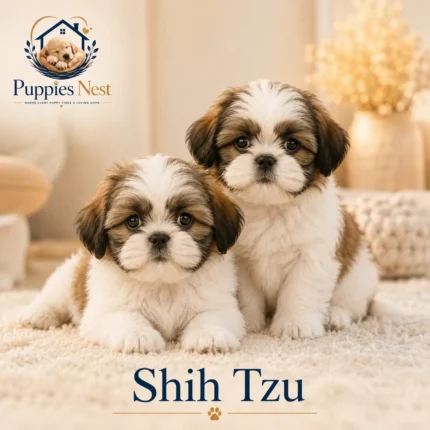
If you are researching the Shih Tzu, considering Shih Tzu puppies, or comparing the Shih Tzu price in UAE, this guide will help you understand what makes this small companion breed so special. The Shih Tzu is known for its affectionate personality, beautiful coat, compact size, and strong bond with people. Originally developed as a companion dog, the breed is now loved by families around the world, including families looking for a small dog that can adapt well to indoor life in the UAE. Before choosing a puppy, however, it is important to understand the breed’s history, personality, grooming requirements, nutrition, health, exercise needs, and special considerations for living in a hot climate.
Shih Tzu: Quick Facts About the Breed
The Shih Tzu is a small companion dog with a long history and a distinctive appearance. Despite its small body, this breed has a confident personality and can be surprisingly playful and independent.
| Feature | Information |
|---|---|
| Breed | Shih Tzu |
| Origin | Tibet and China |
| Type | Companion dog |
| Adult Size | Small |
| Average Weight | Around 4–7.5 kg |
| Height | Around 20–28 cm |
| Life Expectancy | Around 10–16 years |
| Coat | Long, dense, and flowing |
| Energy Level | Moderate |
| Personality | Affectionate, friendly, playful |
| Suitable for Apartments | Yes, with proper care |
| Grooming | High |
| Climate Consideration | Needs careful heat management |
Individual dogs can differ in size, temperament, health, and energy level, so these figures should be considered general guidelines rather than exact guarantees.
Shih Tzu History: Where Did the Breed Come From?
The history of the Shih Tzu is closely connected to Tibet and imperial China. The breed is believed to have developed from ancient companion dogs associated with Tibetan monasteries and Chinese royal courts.
The name “Shih Tzu” is commonly translated as “lion dog.” This name reflects the breed’s traditional association with the lion-like appearance that was admired in Chinese culture.
Shih Tzus were not originally developed to hunt, herd, or guard livestock. Their primary role was companionship.
They were valued for their ability to:
- Stay close to people
- Provide companionship
- Adapt to indoor environments
- Develop strong bonds with their owners
- Live comfortably around families
This history explains many of the characteristics we still see today. The modern Shih Tzu generally enjoys being around people and often prefers staying close to its family rather than spending long periods alone.
The Shih Tzu and Chinese Imperial Courts
The Shih Tzu became particularly associated with Chinese imperial courts.
Small companion dogs were highly valued in royal households, where their appearance, personality, and companionship made them desirable.
Over generations, selective breeding helped create the small, long-coated dog that we recognize today.
The breed’s luxurious coat and distinctive facial features became important parts of its identity.
How the Shih Tzu Reached the Modern World
The breed eventually became known outside China and was introduced to other countries during the twentieth century.
Its popularity grew because of its combination of:
- Small size
- Attractive appearance
- Friendly personality
- Adaptability
- Companion-focused temperament
Today, the Shih Tzu is one of the best-known small companion breeds.
Shih Tzu Appearance: What Makes This Breed Special?
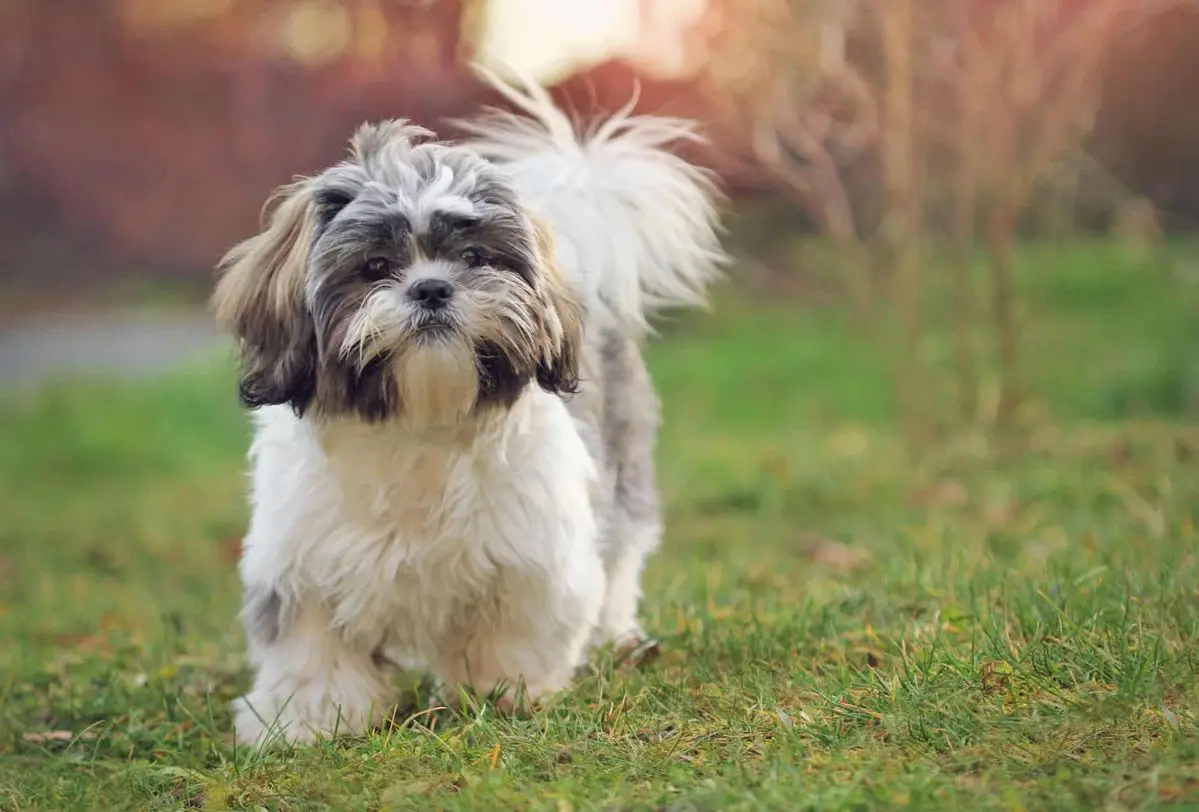
The appearance of the Shih Tzu is one of the main reasons people become interested in the breed.
A typical Shih Tzu has:
- A compact body
- Short legs
- A broad head
- Large, expressive eyes
- Drop ears covered with hair
- A short muzzle
- A long, flowing coat
- A tail carried over the back
The breed’s face is one of its most recognizable characteristics.
Its large eyes give it an expressive appearance, while its long coat creates the elegant look that many owners associate with the breed.
Shih Tzu Coat Colors
Shih Tzu puppies can come in a wide variety of coat colors and patterns.
Common colors include:
- White
- Black
- Gold
- Brown
- Red
- Cream
- Silver
- Black and white
- Gold and white
- Brown and white
- Tri-color combinations
The coat can change slightly as a puppy matures, so the appearance of a young puppy may not always be identical to its adult coat.
Shih Tzu Puppies: What Are They Like?
Shih Tzu puppies are generally curious, affectionate, playful, and social.
During their early months, puppies begin learning about:
- People
- Other dogs
- Household sounds
- Grooming
- Training
- New environments
- Car rides
- Daily routines
This period is extremely important because positive experiences can help create a confident adult dog.
A young Shih Tzu should not simply be treated as a small decorative pet. It needs the same basic education and socialization as any other dog.
Shih Tzu Puppy Personality
Typical Shih Tzu Puppies for Sale in UAE may be:
- Playful
- Curious
- Affectionate
- Social
- Confident
- Sometimes stubborn
- Interested in attention
Individual personalities can vary considerably.
One puppy may be calm and cuddly, while another may be energetic and constantly looking for something to explore.
This is why meeting and observing a puppy’s personality can be useful when choosing a companion.
Shih Tzu Temperament: Is It a Good Family Dog?
The Shih Tzu is generally considered a friendly companion breed and can be an excellent family dog when properly socialized.
Many Shih Tzus enjoy:
- Sitting beside their owners
- Playing indoors
- Going for short walks
- Following family members around the house
- Receiving attention
- Learning simple tricks
They usually prefer being part of family activities rather than being isolated.
Shih Tzu With Other Dogs
Shih Tzu puppies can often learn to live successfully with other dogs when introductions are gradual and positive.
When bringing a new puppy into a home with another dog:
- Introduce them gradually.
- Supervise their first interactions.
- Give each dog its own food area.
- Provide separate resting spaces.
- Avoid forcing interaction.
- Give both dogs individual attention.
A successful relationship may take time to develop.
Shih Tzu With Cats
A Shih Tzu can potentially live with cats, particularly when introduced at a young age.
The introduction should be controlled and gradual. The cat should always have access to safe areas where the puppy cannot follow.
This allows the cat to retreat when it needs space and prevents unnecessary stress.
Shih Tzu Intelligence and Training
The Shih Tzu is an intelligent companion breed, but it can also have an independent and sometimes stubborn side. This means training may require patience, consistency, and short, positive sessions.
A Shih Tzu can learn many useful commands and household behaviors, including:
- Sit
- Stay
- Come
- Wait
- Leave it
- Drop it
- Place
- Basic tricks
- Household routines
- Walking calmly on a leash
Positive reinforcement usually works well with Shih Tzu puppies. Instead of forcing the puppy to obey, reward the behavior you want to see.
Good rewards can include: - Small training treats
- Verbal praise
- Favorite toys
- Gentle affection
- Short play sessions
Keep training sessions short because young puppies can lose focus quickly. Several short sessions throughout the day are often more effective than one long session.
Avoid harsh punishment. Shouting or physical punishment can make a Shih Tzu fearful and may damage the trust between the puppy and its owner.
Shih Tzu Puppy Training Schedule
A simple routine can make training easier.
| Age | Training Focus |
|---|---|
| 8–12 Weeks | Name recognition, toilet routine, sit, gentle handling |
| 3–4 Months | Stay, come, leave it, leash introduction |
| 4–6 Months | Better leash manners, longer attention, household rules |
| 6–12 Months | Reinforcing commands, impulse control, advanced tricks |
| Adult | Continued obedience, mental stimulation, and good manners |
Every puppy develops at a different pace, so the schedule should be adjusted according to the individual dog’s behavior and needs.
Shih Tzu House Training
House training is one of the first challenges many owners face with Shih Tzu puppies.
Because young puppies have small bladders, they need frequent opportunities to use their designated bathroom area. Creating a predictable routine can make the process much easier.
Take your Shih Tzu puppy to its bathroom area:
- After waking up
- After eating
- After drinking
- After playing
- After a nap
- Before bedtime
- At regular intervals throughout the day
When your puppy uses the correct area, reward it immediately with praise or a small treat. The reward helps the puppy understand which behavior you want repeated.
Accidents are normal during puppyhood. If an accident happens, clean the area thoroughly and continue with the routine. Punishing the puppy after an accident can create confusion because the puppy may not understand what it did wrong.
Consistency is much more effective than punishment.
Shih Tzu Puppy and Crate Training
Crate training can help establish a safe and comfortable space for a Shih Tzu puppy.
The crate should never be used as punishment. Instead, make it a positive area where the puppy can rest.
You can introduce the crate gradually:
- Place comfortable bedding inside.
- Leave the door open initially.
- Put a safe toy inside.
- Reward the puppy for entering.
- Gradually increase the amount of time spent inside.
- Never force the puppy into the crate as a punishment.
A crate can also help with house training because puppies generally prefer not to soil the area where they sleep. However, young puppies should not be expected to remain in a crate for long periods.
Shih Tzu Leash Training
Leash training should begin gradually.
A young Shih Tzu may initially find a collar or harness unfamiliar. Allow the puppy to become comfortable wearing it indoors before introducing longer outdoor walks.
Start with short sessions:
- Let the puppy wear the harness indoors.
- Reward calm behavior.
- Introduce the leash.
- Walk a few steps indoors.
- Reward the puppy for following you.
- Gradually move to quiet outdoor areas when appropriate.
Never rely on pulling or harsh corrections. A small breed such as the Shih Tzu can be physically sensitive, so gentle handling is important.
Shih Tzu Socialization
Early socialization helps a Shih Tzu puppy become comfortable with different people, sounds, environments, and experiences.
Positive exposure can include:
- Different household sounds
- Gentle handling
- New people
- Safe surfaces
- Grooming routines
- Car rides
- Appropriate interactions with other dogs
Socialization should be gradual and positive. Do not overwhelm a young puppy with too many new experiences at once.
Because vaccination schedules differ between puppies, ask your veterinarian when it is safe to visit public areas or interact with unfamiliar dogs.
Shih Tzu Training in the UAE
Families raising a Shih Tzu in the UAE should also consider the local climate when planning training and outdoor activities.
During very hot weather, outdoor training should be scheduled during cooler parts of the day. Short-nosed dogs can be more vulnerable to heat, so avoid intense activity during high temperatures.
Indoor training can be a useful alternative. A Shih Tzu can practice commands, tricks, and household routines inside an air-conditioned home.
Simple indoor activities can provide both training and mental stimulation without exposing the puppy to excessive heat.
Shih Tzu Mental Stimulation
Training is not only about obedience. It also allows a Shih Tzu to use its brain.
Try activities such as:
- Finding hidden treats
- Learning new tricks
- Puzzle toys
- Name-recognition games
- Toy retrieval
- Short obedience sessions
- Interactive play
A few minutes of mental stimulation can make a puppy feel more engaged and can help prevent boredom.
Common Shih Tzu Training Mistakes
Some training problems happen because owners accidentally reward unwanted behavior.
Common mistakes include:
- Giving treats when the puppy is jumping
- Changing household rules frequently
- Training for too long
- Expecting immediate results
- Punishing accidents
- Skipping socialization
- Giving commands repeatedly without reinforcement
- Allowing behaviors as a puppy that will be unacceptable as an adult
For example, if you do not want your adult Shih Tzu to jump on visitors, begin rewarding calm greetings while the dog is young.
The goal is to make the desired behavior easy to understand and consistently rewarding.
Shih Tzu Exercise Requirements
Although the Shih Tzu is small, it still needs regular physical activity.
Most healthy adult Shih Tzus can enjoy:
- Short walks
- Indoor play
- Gentle games
- Training sessions
- Interactive toys
The breed generally does not need the same amount of exercise as a Border Collie or Belgian Malinois.
However, being small does not mean being completely inactive.
Shih Tzu Mental Stimulation
Mental stimulation is particularly useful for Shih Tzu puppies.
You can keep your puppy mentally active with:
- Puzzle toys
- Treat-dispensing toys
- Simple obedience
- Hide-and-seek
- Learning tricks
- Finding toys
- Interactive games
Short training sessions can help prevent boredom while strengthening the relationship between the dog and its owner.
Shih Tzu Price: What Determines the Cost?
The Shih Tzu price can vary depending on several factors.
There is no single price that applies to every Shih Tzu puppy.
Factors that may influence the price include:
- Age
- Health
- Vaccination status
- Pedigree
- Parents
- Coat color
- Size
- Breeding quality
- Veterinary care
- Socialization
- Availability
When comparing puppies, the lowest price should not automatically be considered the best deal.
A puppy that has received appropriate veterinary care, nutrition, socialization, and responsible breeding may offer considerably better long-term value.
Shih Tzu Price in UAE: What Should Buyers Consider?
The Shih Tzu price in UAE can differ between puppies depending on their individual characteristics and the level of care they have received.
When comparing prices, ask what is included.
Important questions include:
- Has the puppy received a veterinary examination?
- Which vaccinations have been given?
- Has the puppy been dewormed?
- What food is the puppy currently eating?
- How old is the puppy?
- Has the puppy been socialized?
- Are health records available?
- What information is available about the parents?
The purchase price is also only the beginning of the financial commitment.
Future expenses may include:
- Food
- Veterinary visits
- Vaccinations
- Parasite prevention
- Grooming
- Toys
- Training
- Dental care
- Emergency healthcare
A responsible owner should plan for the full lifetime cost of the dog.
Shih Tzu in Puppies Nest online puppy store
If you are searching for Shih Tzu puppies for sale Dubai and across the UAE, Puppies Nest provides families with an opportunity to explore available puppies and learn more about the breed before making a decision.
At Puppies Nest, choosing a puppy should not be based only on appearance.
Families should consider:
- Health
- Age
- Personality
- Size
- Grooming needs
- Exercise requirements
- Lifestyle compatibility
A Shih Tzu can be a wonderful companion for the right family, particularly for people looking for a small dog that enjoys spending time indoors and staying close to its owners.
Find a lot of cheap puppies for sale in Dubai from Puppies Nest store
Shih Tzu Nutrition: What Should This Breed Eat?
Nutrition plays an important role in the development and long-term health of the Shih Tzu.
A puppy needs a complete and balanced diet appropriate for its age and size.
A good puppy diet should provide appropriate levels of:
- Protein
- Healthy fats
- Carbohydrates
- Vitamins
- Minerals
- Essential fatty acids
Choose food designed for puppies rather than simply giving a young dog adult food.
Shih Tzu Puppies Feeding Schedule
The feeding schedule should change as Shih Tzu puppies grow.
A general routine may look like:
| Age | Typical Meals |
|---|---|
| 8–12 weeks | 4 meals daily |
| 3–6 months | 3 meals daily |
| 6–12 months | 2–3 meals daily |
| Adult | Usually 2 meals daily |
The exact amount depends on the puppy’s weight, food type, activity level, and individual needs.
Your veterinarian can help determine the appropriate portion.
Shih Tzu Weight Management
Keeping a healthy weight is particularly important for a small breed.
Overfeeding a Shih Tzu can contribute to:
- Obesity
- Joint stress
- Reduced mobility
- Breathing difficulties
- Lower activity levels
Measure meals rather than constantly leaving food available.
Treats should also be given in moderation.
Shih Tzu Foods to Avoid
Owners of Shih Tzu puppies should be aware that some human foods are dangerous for dogs.
Avoid:
- Chocolate
- Grapes
- Raisins
- Onions
- Garlic
- Xylitol
- Alcohol
- Coffee
- Macadamia nuts
- Cooked bones
Keep dangerous foods away from your puppy’s reach.
If your dog eats something potentially toxic, contact a veterinarian immediately.