
When people search for Dangerous dog breeds, Most dangerous dog breeds, Top ten most dangerous dog breeds, The most dangerous dog breeds in the world, or 10 Most Dangerous Dog Breeds In The World, they are often looking for a simple list of dogs to fear or avoid. However, responsible dog ownership requires a more accurate perspective.
A dog’s breed alone does not determine whether it will become aggressive or dangerous. Size, physical strength, breeding history, training, early socialization, environment, owner behavior, and individual temperament can all influence how a dog behaves. For families in the UAE considering a dog, understanding these factors is far more useful than relying on breed stereotypes. Puppies Nest believes that choosing a dog should be based on informed ownership, suitable living conditions, and the ability to meet the dog’s physical and behavioral needs.
Understanding Dangerous Dog Breeds: Why Do Some Dogs Have This Reputation?
The term Dangerous dog breeds is widely used online, but it can be misleading. It may describe breeds that have powerful physical characteristics, dogs that have historically been used for guarding or fighting, or breeds that appear frequently in discussions about serious bite incidents. None of these factors automatically means that every individual dog from that breed is aggressive.
A responsible discussion of Most dangerous dog breeds should therefore separate a dog’s potential physical capability from its actual temperament. A large, powerful dog that is calm, properly trained, supervised, and well socialized may pose less practical risk than a poorly managed dog of a smaller breed.
This distinction is especially important for families. A dog should not be selected simply because it looks impressive, protective, or intimidating. Owners should consider whether they can safely manage the dog’s strength, exercise requirements, training needs, and behavior around children, visitors, other animals, and unfamiliar environments.
Are the Most Dangerous Dog Breeds Actually Dangerous?
There is no universal scientific ranking that can definitively identify the Most dangerous dog breeds in every situation. Bite statistics can be affected by population size, reporting practices, identification errors, owner behavior, access to veterinary care, and the circumstances surrounding each incident.
For example, a breed that is very common in a particular region may naturally appear more frequently in incident reports simply because there are more dogs of that type. Similarly, mixed-breed dogs may be difficult to classify accurately.
Therefore, lists of dangerous breeds should be treated as educational starting points rather than absolute judgments about individual dogs.
Top Ten Most Dangerous Dog Breeds: What Should You Actually Look At?
When discussing the Top ten most dangerous dog breeds, it is more responsible to focus on breeds that are known for significant size, strength, guarding instincts, athletic ability, or historical working roles. These characteristics can create a higher management responsibility when combined with poor training or unsuitable ownership.
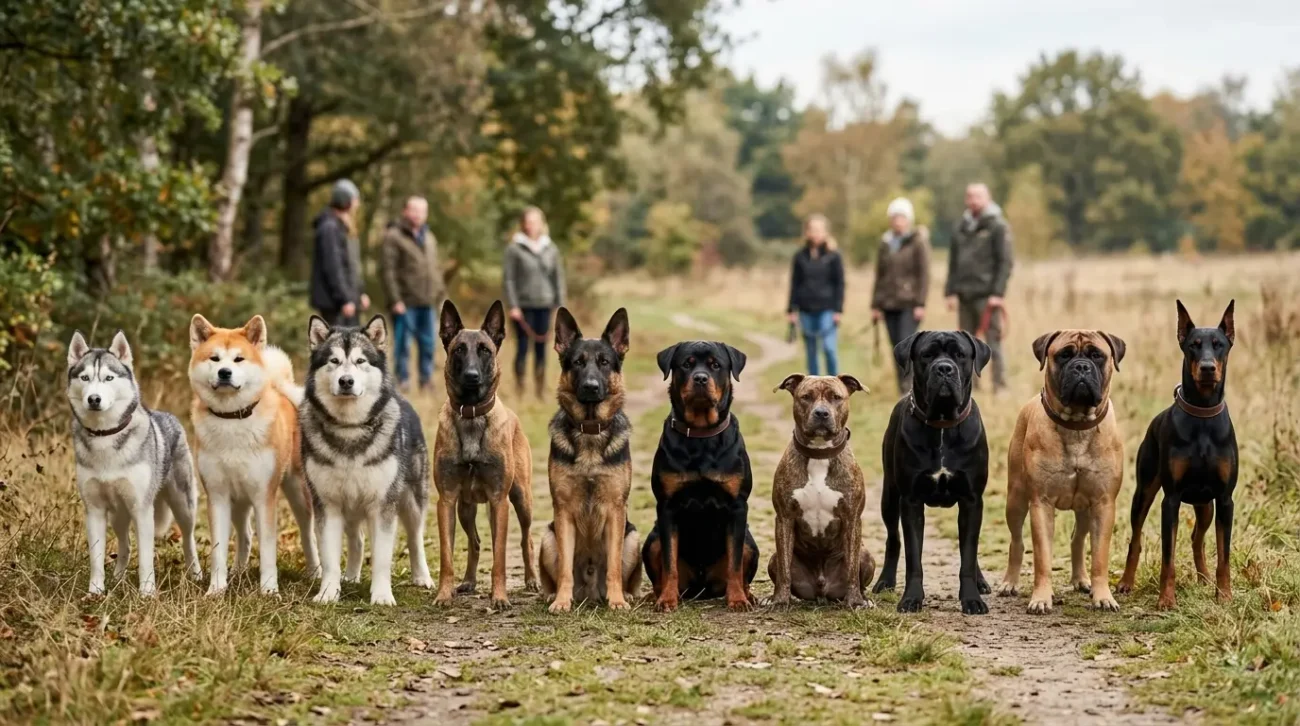
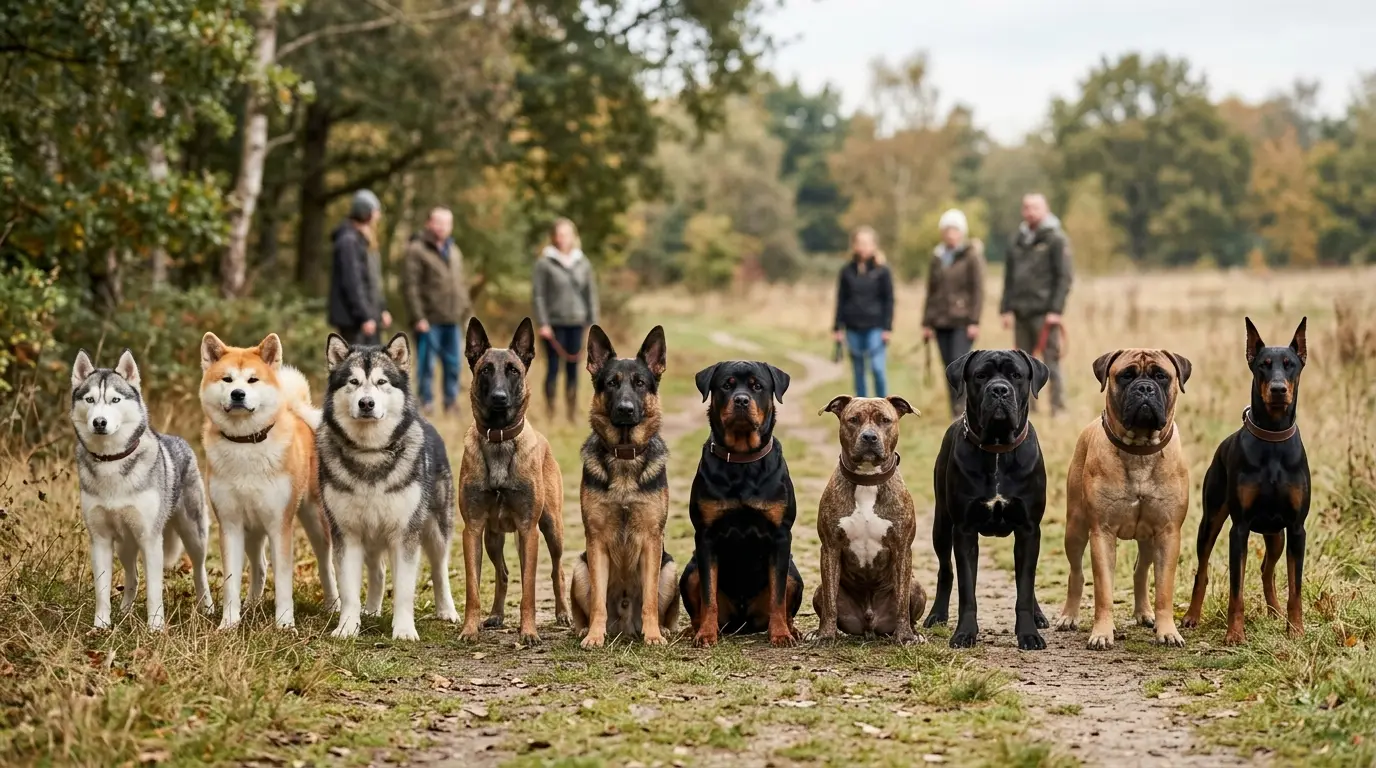
The following list is not a ranking of inherently dangerous animals. Instead, it highlights ten breeds commonly discussed in conversations about powerful or potentially challenging dogs.
| Breed | Common Characteristics | Responsible Ownership Considerations |
| American Pit Bull Terrier | Athletic, strong, energetic | Requires consistent training and socialization |
| Rottweiler | Powerful, confident, protective | Needs structured training and responsible handling |
| German Shepherd | Intelligent, active, protective | Benefits from exercise, socialization, and mental stimulation |
| Doberman Pinscher | Athletic, alert, loyal | Requires experienced, consistent training |
| Cane Corso | Large, muscular, protective | Needs early socialization and strong owner management |
| Presa Canario | Powerful, confident, territorial | Requires extensive training and controlled environments |
| Bullmastiff | Large, strong, protective | Needs boundaries, socialization, and appropriate exercise |
| Siberian Husky | Athletic, energetic, independent | Requires substantial exercise and secure environments |
| Alaskan Malamute | Powerful, energetic, independent | Needs experienced ownership and regular physical activity |
| Wolfdog | Highly variable behavior and needs | Can be particularly challenging and unsuitable for inexperienced owners |
This table should not be interpreted as saying that these dogs are naturally aggressive. Individual temperament can vary significantly within every breed.
Best Large Dog Breeds For Apartments
People often search for Best Large Dog Breeds For Apartments when they want a bigger companion but live in a smaller home. Apartment suitability depends on energy level, temperament, exercise requirements, noise, and the owner’s ability to provide daily stimulation.
A calm large dog may sometimes adapt better to apartment living than a smaller but extremely energetic dog.
Potential owners should consider the dog’s entire lifestyle rather than relying only on breed size.
The Most Dangerous Dog Breeds in the World: The Role of Size and Strength
When people discuss The most dangerous dog breeds in the world, physical strength is often one of the first characteristics they consider. This is understandable because a powerful dog can potentially cause more serious injuries if an incident occurs.
However, strength is not the same as aggression.
A calm Rottweiler, Cane Corso, or German Shepherd that has received appropriate training may behave responsibly around people and animals. At the same time, any powerful dog can become difficult to control if an owner fails to establish appropriate boundaries or cannot physically manage the animal.
Why Size Matters With Dangerous Dog Breeds
Size affects practical handling. A strong dog pulling suddenly on a leash, jumping on a visitor, chasing another animal, or reacting unexpectedly can be difficult for an inexperienced owner to control.
For this reason, potential owners should honestly assess their ability to manage the dog before bringing it home.
Important considerations include:
- Can the owner physically control the dog?
- Does the owner understand canine body language?
- Can the dog receive enough daily exercise?
- Is the home environment suitable?
- Can the owner afford professional training if necessary?
- Is the dog properly supervised around children?
- Can the owner provide secure transportation and outdoor management?
These questions are much more useful than simply asking whether a breed belongs on a list of Dangerous dog breeds.
10 Most Dangerous Dog Breeds In The World: Breed History Matters
The phrase 10 Most Dangerous Dog Breeds In The World often makes these dogs sound as if they were created specifically to be aggressive. The historical reality is more complicated.
Different breeds were developed for different purposes. Some were used for livestock protection, some for hunting, some for guarding property, and others for various forms of working activity.
A dog’s historical purpose can influence traits such as confidence, alertness, independence, persistence, prey drive, or protectiveness. These characteristics may be valuable when appropriately managed but challenging when an owner does not understand them.
Working History and Dangerous Dog Breeds
A dog developed to guard livestock may naturally be more suspicious of unfamiliar people. A hunting dog may have a strong instinct to chase movement. A working dog may need considerable physical and mental stimulation.
These are not automatically signs of aggression.
Instead, they are characteristics owners should understand before selecting a dog. Responsible ownership means giving the dog appropriate outlets for its natural behaviors while teaching it how to behave safely in a modern household.
Most Dangerous Dog Breeds and the Importance of Early Socialization
One of the most important factors when raising a dog is socialization. This is particularly relevant when discussing Most dangerous dog breeds, because powerful dogs need to learn appropriate responses to everyday situations.
Socialization means gradually introducing a puppy to suitable people, environments, sounds, surfaces, experiences, and other animals in a safe and positive way.
A well-socialized dog is more likely to understand that unfamiliar situations do not automatically represent a threat.
Socialization Tips for Dogs
Owners can gradually introduce puppies to:
- Different household sounds
- Visitors
- Car journeys
- Veterinary visits
- Different surfaces
- Calm, vaccinated dogs
- New environments
- Grooming and handling
- Basic household routines
The objective is not to overwhelm the puppy. Socialization should be controlled, age-appropriate, and positive.
A fearful or overwhelmed puppy should not be forced into situations it cannot handle. Owners should instead work gradually and seek professional help when necessary.
Top Ten Most Dangerous Dog Breeds and the Importance of Training
Training is another major factor that should be discussed alongside the Top ten most dangerous dog breeds. Basic obedience can make everyday life safer and more predictable.
Commands such as “sit,” “stay,” “come,” “leave it,” and loose-leash walking can help owners manage dogs in common situations.
Training should not rely primarily on intimidation or physical punishment. Positive, consistent methods can help dogs understand what behavior is expected while strengthening communication between the dog and owner.
Essential Training for Powerful Dogs
Owners of strong dogs should prioritize:
- Reliable recall.
- Loose-leash walking.
- Calm greetings.
- Impulse control.
- Appropriate response to handling.
- Basic obedience.
- Safe interaction with visitors.
- Calm behavior around distractions.
The larger and stronger the dog, the more important reliable training becomes.
Cute Dogs For Sale: Why Appearance Should Not Be the Only Factor
Searching for Cute Dogs For Sale is completely understandable. Puppies are naturally appealing, but appearance should never be the only factor behind a purchase.
A cute puppy eventually becomes an adult dog with exercise requirements, behavioral needs, grooming needs, veterinary expenses, and a long-term commitment.
Before choosing a puppy, families should research the adult characteristics of the breed and consider whether they can provide a suitable home for many years.
The right dog is not necessarily the cutest dog. It is the dog whose temperament, size, activity level, and needs fit the owner’s lifestyle.
The Most Dangerous Dog Breeds in the World and Owner Responsibility
Discussions about The most dangerous dog breeds in the world sometimes focus almost entirely on the animal while ignoring the person responsible for it.
Owner behavior can have a major influence on a dog’s development and daily behavior.
An owner who encourages aggression, neglects training, keeps a dog permanently isolated, fails to provide exercise, or allows uncontrolled interactions can create significant behavioral problems.
Responsible ownership means recognizing that owning a powerful dog is a long-term responsibility rather than simply a lifestyle choice.
How Owners Can Reduce Risk
Responsible owners should:
- Use secure leashes and appropriate equipment.
- Supervise interactions with children.
- Avoid encouraging aggressive behavior.
- Provide regular physical activity.
- Provide mental stimulation.
- Maintain veterinary care.
- Continue training throughout the dog’s life.
- Respect the dog’s warning signals.
- Prevent uncontrolled roaming.
- Seek professional behavioral support when needed.
These principles apply to every breed, not just dogs commonly included in lists of Dangerous dog breeds.
10 Most Dangerous Dog Breeds In The World and Individual Temperament
The biggest mistake in discussions about 10 Most Dangerous Dog Breeds In The World is assuming that every dog within a breed behaves the same way.
Individual temperament can differ substantially between dogs.
Two dogs from the same breed may have very different personalities. One might be relaxed around strangers while another is cautious. One may be highly energetic while another is comparatively calm.
Genetics play a role, but development and environment also matter.
Factors That Influence Individual Temperament
A dog’s behavior can be influenced by:
- Genetics
- Early experiences
- Socialization
- Training
- Health
- Pain or discomfort
- Living environment
- Daily routine
- Owner behavior
- Previous experiences
- Stress levels
This is why responsible breeders and sellers should pay attention to temperament rather than focusing only on appearance.
Dangerous Dog Breeds and the UAE Home Environment
For families searching for Dangerous dog breeds in the UAE, the local environment should be part of the decision-making process.
The UAE offers a variety of living situations, from apartments in Dubai and Abu Dhabi to larger villas and homes. A dog’s suitability depends on its individual needs rather than simply the size of the property.
A large garden does not replace daily exercise, training, or mental stimulation. Likewise, living in an apartment does not automatically mean that someone cannot responsibly own a larger dog, provided the dog’s needs can realistically be met.
Climate is another consideration. Dogs with heavy coats may require particularly careful management during hot weather. Outdoor exercise should be planned responsibly, and owners should avoid exposing dogs to dangerous heat.
Dog Store Dubai and Small Dogs: Are Smaller Dogs Always Safer?
People searching for a Dog Store Dubai may also look specifically for Small Dogs because they assume smaller dogs are automatically easier or safer.
Size can reduce the potential severity of some physical incidents, but small dogs can still bite, become fearful, or develop behavioral problems.
Small dogs also require training and socialization. Excessive fear, resource guarding, separation problems, and uncontrolled barking can become difficult if they are ignored simply because the dog is small.
Responsible ownership therefore applies equally to large and small breeds.
Dangerous Dog Breeds: How Environment Can Change Behavior
The environment is an important factor when evaluating Dangerous dog breeds. Dogs that receive little stimulation, inconsistent rules, inadequate exercise, or limited social interaction may develop unwanted behaviors.
A predictable routine can help dogs feel more secure.
Owners should provide:
- Regular exercise
- Consistent feeding routines
- Mental stimulation
- Appropriate rest
- Training sessions
- Safe social experiences
- A comfortable sleeping area
- Veterinary support
Environmental management becomes particularly important with energetic or powerful dogs.
Most Dangerous Dog Breeds and Warning Signs of Stress
Understanding canine body language can help owners recognize situations before behavior escalates. This is especially useful when living with dogs frequently discussed as Most dangerous dog breeds.
Possible signs of stress or discomfort can include:
- Avoidance
- Excessive lip licking
- Yawning in stressful situations
- Turning the head away
- Tucked tail
- Stiff body posture
- Growling
- Barking
- Attempting to retreat
- Sudden changes in behavior
A growl should not simply be punished. It can provide valuable information that the dog is uncomfortable. Owners should create distance and identify the underlying trigger.
If concerning behavior appears repeatedly, professional assistance from a qualified veterinary behavior professional or experienced trainer can be appropriate.

Top Ten Most Dangerous Dog Breeds: Children and Family Safety
Families considering the Top ten most dangerous dog breeds should take child safety particularly seriously.
Children should never be expected to manage a powerful dog independently. Even a friendly dog can react unpredictably when frightened, injured, startled, or overwhelmed.
Parents should teach children:
- Do not disturb a dog while eating.
- Do not pull ears or tails.
- Do not climb on dogs.
- Do not take toys away from a dog.
- Do not approach unfamiliar dogs without permission.
- Give dogs space while sleeping.
- Never tease or chase a dog.
- Always involve an adult in interactions with unfamiliar or powerful dogs.
Supervision is the responsibility of adults, not children.
Small Dogs for Modern Homes
Small Dogs are a popular choice for families and individuals looking for a loving companion that can fit comfortably into apartments and smaller homes. While their size may make them easier to handle, they still need proper training, socialization, daily activity, and responsible care to develop into happy and well-adjusted pets.
The Most Dangerous Dog Breeds in the World: Responsible Ownership Checklist
Before purchasing or adopting one of The most dangerous dog breeds in the world, prospective owners should complete an honest suitability assessment.
| Question | Why It Matters |
| Can you provide daily exercise? | Prevents boredom and supports physical health |
| Can you afford veterinary care? | Dogs require long-term financial commitment |
| Can you provide consistent training? | Helps develop reliable behavior |
| Can you safely manage the dog’s strength? | Reduces handling risks |
| Is your home suitable? | Environment affects daily welfare |
| Can you supervise interactions? | Important for children and visitors |
| Do you understand the breed’s traits? | Helps prevent unrealistic expectations |
| Can you commit for the dog’s lifetime? | Ownership is a long-term responsibility |
A responsible owner should be comfortable answering “yes” before bringing a powerful dog into the home.
10 Most Dangerous Dog Breeds In The World: Choosing a Dog Responsibly
The popularity of searches for 10 Most Dangerous Dog Breeds In The World shows how interested people are in understanding canine behavior. But a better question for future owners is not “Which breed is dangerous?” It is “Which dog is appropriate for my lifestyle, experience, and environment?”
A responsible selection process should consider the dog’s:
- Adult size
- Exercise needs
- Energy level
- Trainability
- Social tendencies
- Grooming requirements
- Potential health considerations
- Compatibility with children
- Compatibility with other pets
- Individual temperament
The goal should be a safe and positive relationship between the dog and its family.
Dangerous Dog Breeds: The Difference Between Potential and Behavior
The central lesson when discussing Dangerous dog breeds is that potential physical risk and behavioral aggression are different concepts.
A powerful dog has greater physical capability. That means owners have a greater responsibility to manage it properly. It does not mean the dog is destined to become aggressive.
Likewise, a small dog is not automatically perfectly behaved.
Breed can provide useful information about likely characteristics, but it cannot completely predict the behavior of an individual animal.
Most Dangerous Dog Breeds: Why Responsible Breeding Matters
When researching Most dangerous dog breeds, prospective owners should also consider where the dog comes from.
Responsible breeding should place attention on health, temperament, appropriate pairings, and proper puppy development. Breeders and sellers should avoid promoting dogs solely because they look intimidating or aggressive.
For buyers, transparency matters.
A responsible seller should be willing to provide appropriate information and answer reasonable questions rather than pressuring customers into making a quick purchase.
This is particularly important for first-time owners who may not recognize the difference between normal puppy behavior and potential behavioral concerns.
Top Ten Most Dangerous Dog Breeds: Training Is a Lifelong Process
Training does not end when a puppy learns basic commands. Dogs continue learning throughout their lives.
The needs of a young puppy are different from those of an adolescent dog and an adult dog. Owners should continue reinforcing appropriate behavior and adapting training as the dog develops.
This is particularly important for the Top ten most dangerous dog breeds, because a powerful adolescent dog can become difficult to handle if early obedience is not maintained.
Short, consistent training sessions can be more effective than occasional long sessions. Rewarding desired behavior also helps dogs understand what owners expect from them.
The Most Dangerous Dog Breeds in the World: Common Myths
There are several common myths surrounding The most dangerous dog breeds in the world.
| Myth | More Accurate Perspective |
| A breed is born aggressive | Temperament is influenced by multiple factors |
| Large dogs are always dangerous | Size increases physical capability but does not equal aggression |
| Small dogs do not need training | All dogs benefit from training |
| Aggression can always be fixed easily | Some behavioral problems require professional support |
| Punishment automatically prevents aggression | Harsh methods can worsen fear or defensive behavior |
| A dog that growls is always bad | Growling can communicate fear or discomfort |
| Breed alone predicts behavior | Individual history and temperament matter |
Understanding these distinctions helps owners make better decisions.
Dogs for sale Dubai: What Responsible Buyers Should Check
Anyone searching for Dogs for sale Dubai should look beyond appearance and price. A responsible buyer should ask questions about the puppy’s age, health history, vaccination status, socialization, parents, living conditions, and general temperament.
Before choosing a puppy, consider:
- Is the puppy active and alert?
- Does it appear appropriately socialized?
- Are health records available?
- Can the seller explain its background?
- Has the puppy received appropriate veterinary attention?
- Are you prepared for the breed’s long-term needs?
- Does the dog’s temperament suit your household?
Puppies Nest can be part of that research process by helping prospective owners think beyond the initial excitement of bringing home a puppy.
10 Most Dangerous Dog Breeds In The World: Final Takeaway
The phrase 10 Most Dangerous Dog Breeds In The World may attract attention, but responsible dog ownership requires more than a ranking.
There is no single breed that can accurately be labeled dangerous in every situation. Dogs are individuals, and their behavior is shaped by genetics, early development, training, socialization, environment, health, and owner behavior.
Some breeds have greater physical strength, stronger guarding instincts, higher energy levels, or more demanding working characteristics. These traits can increase the responsibility placed on an owner, but they do not determine that an individual dog will be aggressive.
For families in the UAE, the best approach is to choose a dog based on lifestyle compatibility, understand the animal’s needs, invest in proper training, provide appropriate socialization, and practice responsible supervision.
Whether someone is researching Dangerous dog breeds, comparing the Most dangerous dog breeds, exploring the Top ten most dangerous dog breeds, reading about The most dangerous dog breeds in the world, or searching for 10 Most Dangerous Dog Breeds In The World, the most useful conclusion is the same: responsible ownership matters more than stereotypes.
Puppies Nest encourages prospective dog owners to look beyond appearance and internet rankings. Choosing a puppy should be the beginning of a long-term relationship built on care, training, safety, trust, and understanding.
Frequently Asked Questions About Dangerous Dog Breeds
Are Dangerous Dog Breeds Naturally Aggressive?
No. Dangerous dog breeds are not automatically aggressive simply because of their breed. Genetics can influence behavioral tendencies, but training, socialization, environment, health, individual temperament, and owner behavior also play important roles.
What Are the Most Dangerous Dog Breeds?
There is no universally accepted ranking of the Most dangerous dog breeds. Breeds commonly discussed in this context include powerful working and guarding breeds, but the behavior of individual dogs can vary considerably.
What Are the Top Ten Most Dangerous Dog Breeds?
The Top ten most dangerous dog breeds is not a scientifically fixed list. Lists commonly mention breeds such as Rottweilers, German Shepherds, American Pit Bull Terriers, Doberman Pinschers, Cane Corsos, Presa Canarios, Bullmastiffs, Huskies, Alaskan Malamutes, and wolfdogs because of their physical strength or working characteristics.
What Are The Most Dangerous Dog Breeds in the World?
The most dangerous dog breeds in the world is a phrase commonly used in online searches, but it should not be interpreted as proof that particular breeds are inherently dangerous. Breed statistics can be influenced by population size, identification, reporting practices, and other factors.
Are the 10 Most Dangerous Dog Breeds In The World Unsafe for Families?
Not necessarily. The 10 Most Dangerous Dog Breeds In The World can include dogs that live successfully with families when their individual temperament, training, socialization, and living environment are appropriate. However, powerful dogs require careful supervision and responsible ownership.
Is a Large Dog Suitable for an Apartment in Dubai?
Some large dogs can adapt to apartment living when their exercise, mental stimulation, training, and space requirements are properly met. Apartment suitability should be evaluated according to the individual dog’s needs rather than size alone.
Are Small Dogs Easier to Own?
Not always. Small dogs may be easier to physically handle, but they still require training, socialization, exercise, veterinary care, and consistent boundaries.
What Should I Look for When Buying a Puppy?
Look for information about the puppy’s health, age, veterinary care, background, socialization, temperament, and living conditions. Prospective owners should also research the adult characteristics and long-term needs of the breed.
How Can I Prevent Aggressive Behavior in My Dog?
Start with appropriate socialization, reward-based training, adequate exercise, mental stimulation, supervision, and consistent household rules. If concerning behavior develops, consult a qualified professional rather than relying on punishment or internet advice alone.
Is Breed More Important Than Individual Temperament?
Breed can provide useful information about potential traits, but individual temperament and life experiences are extremely important. A responsible owner should evaluate the specific dog rather than making a decision solely from a breed label.
Responsible Dog Ownership in the UAE
The conversation around Dangerous dog breeds should ultimately be about safety, education, and responsible ownership rather than fear.
A dog is a long-term commitment. Before bringing a puppy home, UAE families should consider their home environment, daily schedule, experience with dogs, ability to provide exercise and training, and capacity to manage the animal responsibly.
The right dog is one whose needs can be realistically met by its owner.
Whether you are interested in a powerful working dog, an active family companion, or a smaller household pet, informed decision-making creates a better outcome for both the family and the dog. Puppies Nest supports the idea that responsible puppy ownership begins with choosing carefully and continues through training, socialization, healthcare, and lifelong care.
Choose based on compatibility, prepare for responsibility, and remember that responsible ownership—not breed stereotypes—is one of the most important factors in creating a safe relationship between people and dogs.
Ready to Find the Right Puppy?
If you are looking for a puppy in the UAE, Puppies Nest can be part of your journey toward finding a dog that fits your lifestyle and expectations. Take time to understand the puppy’s needs, ask questions, and prepare your home before bringing your new companion into the family.
A responsible purchase is not simply about finding a beautiful puppy. It is about finding the right match and being prepared to provide care, training, safety, and companionship throughout the dog’s life.