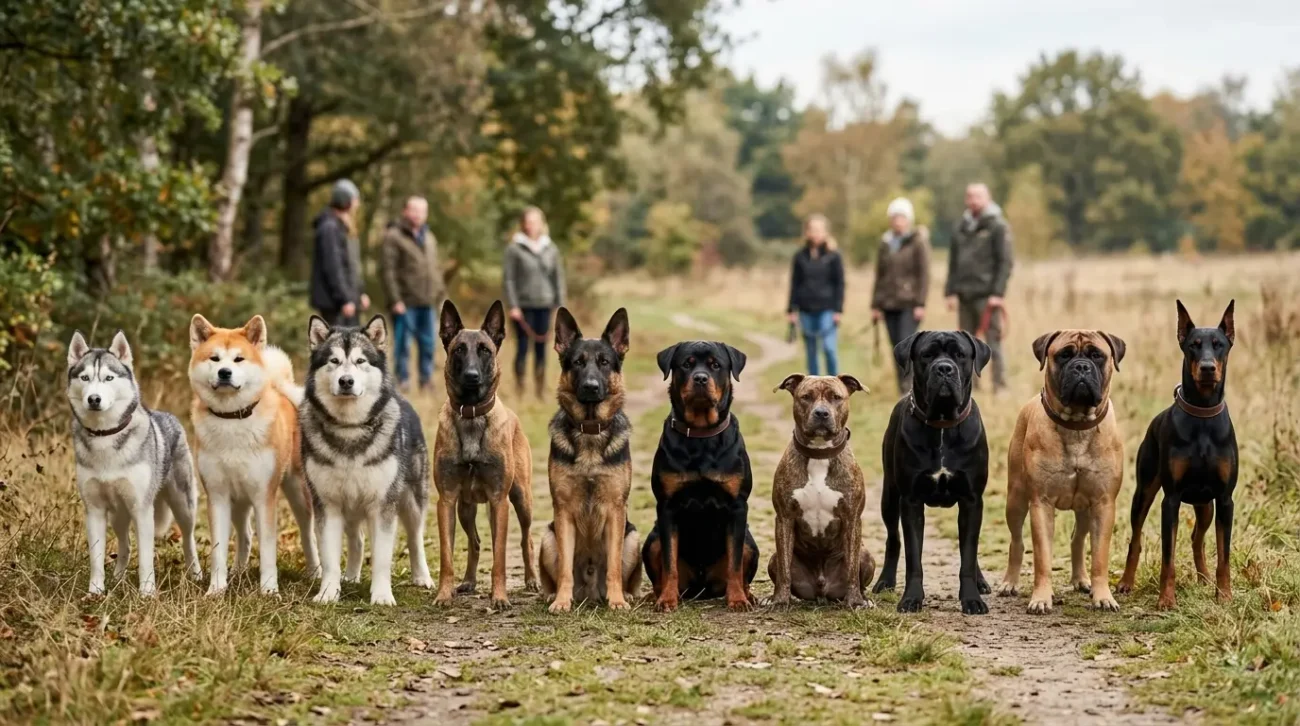


Most Aggressive Dog Breeds are often discussed as if aggression is an unavoidable characteristic of certain dogs. However, understanding canine behavior requires looking beyond breed labels. The 10 Most Aggressive Dog Breeds are not necessarily aggressive in every situation, and individual temperament can vary significantly depending on genetics, early socialization, training, environment, health, and the way a dog is handled. For families in the UAE considering bringing a dog home, understanding these factors is far more useful than relying on a simple breed ranking.
Aggression in dogs can include growling, barking, lunging, snapping, chasing, guarding, or biting. These behaviors may develop for different reasons, including fear, territorial instincts, resource guarding, frustration, inadequate socialization, previous negative experiences, or learned behavior. Some breeds can have physical strength, guarding instincts, or high drive that require experienced ownership, but breed alone does not determine whether an individual dog will become dangerous.
For prospective dog owners shopping through Puppies Nest, understanding temperament should be part of the decision-making process. A responsible choice considers the dog’s personality, exercise requirements, living environment, training needs, and compatibility with the household.
Most Aggressive Dog Breeds: What Does “Aggressive” Really Mean?
The term Most Aggressive Dog Breeds can be misleading because aggression is not a single personality trait. A dog may behave aggressively in one specific context while remaining calm and friendly in other situations.
For example, a dog may bark aggressively when a stranger approaches its home but behave gently with family members. Another dog may guard its food but show no territorial behavior. These differences demonstrate why canine aggression should be understood as a behavior rather than simply a breed characteristic.
Some common forms of canine aggression include:
- Fear aggression – A dog reacts aggressively because it feels threatened or trapped.
- Territorial aggression – The dog attempts to protect its home, yard, or perceived territory.
- Resource guarding – The dog protects food, toys, sleeping areas, or other valued resources.
- Protective behavior – Some dogs attempt to protect their owners or family members.
- Redirected aggression – A frustrated dog redirects its reaction toward another person or animal.
- Predatory behavior – Chasing and attacking can sometimes be associated with prey drive.
- Frustration-based aggression – A dog may react aggressively when prevented from reaching something it wants.
Understanding the context behind the behavior is essential when evaluating any dog, including breeds sometimes included in discussions of the 10 Most Aggressive Dog Breeds.
10 Most Aggressive Dog Breeds: Why Breed Rankings Can Be Misleading
Searches for the 10 Most Aggressive Dog Breeds often produce lists that make it appear that aggression is guaranteed by genetics. In reality, breed can influence tendencies such as guarding, prey drive, confidence, sensitivity, or physical intensity, but those tendencies interact with many other factors.
Two dogs from the same breed can have completely different personalities. One may be confident and social, while another may be nervous or reactive. Early experiences, responsible breeding, training, social exposure, health, and daily environment can all influence behavior.
Therefore, breed rankings should be treated as general information rather than predictions about individual dogs.
| Factor | How It Can Influence Aggression |
| Genetics | May influence temperament, confidence, sensitivity, and behavioral tendencies |
| Socialization | Helps dogs become comfortable around people, animals, sounds, and environments |
| Training | Establishes boundaries and teaches appropriate responses |
| Environment | Stressful or restrictive environments may contribute to behavioral problems |
| Exercise | Insufficient physical and mental stimulation can contribute to frustration |
| Health | Pain or illness can cause sudden changes in behavior |
| Previous experiences | Trauma or repeated negative experiences can influence reactions |
| Owner handling | Inconsistent or harsh handling may increase fear and reactivity |
This is why responsible ownership is more important than simply asking which breed is number one on an aggression list.
Most Aggressive Dog Breeds: Genetics and Temperament
Genetics play an important role in canine temperament. Dogs have been selectively bred for different purposes, including guarding, hunting, herding, protection, companionship, and working tasks.
Some working and guardian breeds may naturally be more alert, independent, protective, or suspicious of unfamiliar people. These characteristics can be valuable when properly managed, but they may also require an owner who understands canine behavior.
However, genetics do not work in isolation. A dog’s inherited tendencies interact with its environment and experiences.
Responsible breeders generally consider temperament alongside health and physical characteristics when selecting breeding dogs. Prospective owners should therefore consider the background of a puppy rather than focusing only on its breed name.
When choosing a puppy through Puppies Nest, buyers should consider questions such as:
- What is the puppy’s temperament like?
- How has it interacted with people?
- Has it been exposed to different environments?
- What are its exercise requirements?
- Does the breed match the owner’s experience?
- How much training will the dog require?
- Is the household prepared for the dog’s adult size and energy level?
Most Aggressive Dog Breeds and Fear-Based Aggression
Fear is one of the most important causes of aggressive behavior in dogs. A frightened dog may growl, bark, retreat, freeze, snap, or bite when it believes escape is impossible.
Fear-based aggression is particularly important because the dog may not be trying to dominate anyone. Instead, it may be attempting to create distance from something it perceives as dangerous.
Common triggers can include:
- Unfamiliar people
- Loud noises
- Strange dogs
- Veterinary examinations
- Sudden movements
- Previous traumatic experiences
- Being cornered
- Physical discomfort
Punishing a fearful dog for warning behaviors can sometimes make the problem worse. A dog that learns its warning signals are punished may become less predictable.
A better approach is to identify triggers, manage exposure, use reward-based training, and seek professional behavioral support when necessary.
10 Most Aggressive Dog Breeds and Territorial Behavior
Territorial behavior is another reason some dogs may appear aggressive. Dogs naturally pay attention to their surroundings, and some breeds have stronger guarding tendencies than others.
A dog may bark when someone approaches the house, fence, gate, car, or other area it considers part of its territory. In some cases, this behavior can escalate into lunging or biting.
Territorial behavior can become particularly challenging in urban environments. Dogs living in apartments may encounter neighbors, elevators, delivery workers, visitors, and other animals regularly.
Owners can help manage territorial behavior by:
- Teaching reliable basic commands.
- Preventing uncontrolled access to doors and gates.
- Rewarding calm behavior around visitors.
- Avoiding situations that repeatedly trigger intense reactions.
- Providing adequate exercise and mental stimulation.
- Working with a qualified trainer if the behavior escalates.
A protective instinct does not automatically make a dog dangerous. What matters is whether the behavior can be safely managed and whether the owner understands the dog’s needs.
Most Aggressive Dog Breeds and Resource Guarding
Resource guarding occurs when a dog attempts to protect something it considers valuable. Food is one of the most common resources, but dogs may also guard toys, beds, spaces, or even people.
Signs can include:
- Stiffening of the body
- Growling
- Showing teeth
- Freezing when approached
- Eating faster when someone comes near
- Snapping when someone attempts to take the resource
Resource guarding should be taken seriously, especially in homes with young children.
Owners should avoid deliberately taking food or objects from a dog simply to “show dominance.” Instead, structured training can teach the dog that human approach predicts something positive.
If guarding behavior involves biting or escalating threats, professional behavioral assistance is recommended.
Most Aggressive Dog Breeds: Dogs Price in UAE
When researching Dogs Price in UAE, buyers should avoid using purchase price as the only measure of affordability. The long-term cost of dog ownership can include food, veterinary care, vaccinations, grooming, training, supplies, boarding, and emergency treatment.
Different breeds can also have different long-term costs because of their size, grooming requirements, exercise needs, and potential health considerations.
A responsible budget should therefore consider the entire lifespan of the dog rather than the initial purchase price.
10 Most Aggressive Dog Breeds: The Role of Socialization
Early socialization is one of the most important elements of raising a confident dog. Puppies that are gradually and positively introduced to different people, sounds, environments, surfaces, and appropriate animals can develop better coping skills.
Socialization does not mean forcing a puppy to interact with everything. The goal is controlled, positive exposure.
A well-planned socialization routine may include:
- Meeting different types of people.
- Experiencing household sounds.
- Walking in different environments.
- Encountering safe and appropriately vaccinated dogs.
- Becoming comfortable with grooming.
- Learning to remain calm during handling.
- Visiting new places gradually.
Poor socialization does not automatically cause aggression, but a lack of positive experiences can contribute to fear and uncertainty later in life.
Most Aggressive Dog Breeds and Training Requirements
Training is particularly important for strong, energetic, protective, or independent dogs. The larger and more powerful the dog, the more important it becomes that the owner can manage it safely.
Basic obedience should include:
- Name recognition
- Sit
- Stay
- Come
- Leave it
- Drop it
- Loose-leash walking
- Calm greetings
Reward-based training can help dogs understand which behaviors are desirable. Consistency is essential because dogs learn through repeated associations and consequences.
Owners should avoid relying on intimidation or physical punishment. The goal is to build communication and impulse control rather than create fear.
10 Most Aggressive Dog Breeds: Breeds That May Require Experienced Handling
Certain breeds are frequently included in discussions of the 10 Most Aggressive Dog Breeds because they can combine substantial physical strength with guarding instincts, high energy, independence, or strong prey drive.
Examples often discussed include:
| Breed | Traits That May Require Experience | Important Consideration |
| Cane Corso | Protective, powerful, confident | Requires structured socialization and training |
| Rottweiler | Strong, confident, protective | Early training and responsible management are important |
| Doberman Pinscher | Alert, energetic, protective | Needs mental stimulation and consistent training |
| German Shepherd | Intelligent, active, protective | Socialization and appropriate exercise are essential |
| Akita | Independent, reserved, strong-willed | May require experienced handling |
| Belgian Malinois | Extremely energetic and driven | Often better suited to highly active, experienced owners |
| American Pit Bull Terrier | Strong, athletic, people-oriented in many individuals | Individual temperament and responsible ownership matter |
| Siberian Husky | High-energy, independent, strong prey drive | Requires exercise and secure management |
| Chow Chow | Independent and sometimes reserved | Early socialization can be especially important |
| Alaskan Malamute | Powerful, energetic, independent | Requires exercise, structure, and experienced handling |
This table should not be interpreted as saying that every dog in these breeds is aggressive. Breed tendencies are only one part of a much larger behavioral picture.
Small Dogs For Sale
People searching for Small Dogs For Sale should remember that small size does not automatically mean easy temperament. Small dogs can also display fear, territorial behavior, resource guarding, reactivity, and other forms of aggression.
In fact, owners sometimes overlook problematic behavior in small dogs because the physical consequences are generally less severe. Barking, snapping, or lunging should still be addressed through appropriate training and management.
The best small dog is not simply the smallest or cutest option. It is the dog whose energy level, temperament, grooming needs, and personality fit the household.
Most Aggressive Dog Breeds: Cane Corso
The Cane Corso is a powerful Italian working breed historically associated with guarding and protection. Its size, confidence, and protective instincts mean that responsible ownership is particularly important.
A well-socialized Cane Corso can be calm and devoted to its family, but inexperienced owners may underestimate the amount of training and management required.
Important needs include:
- Early socialization
- Consistent obedience training
- Daily physical activity
- Mental stimulation
- Clear household rules
- Responsible supervision around unfamiliar people
The breed’s physical strength means behavioral problems should be addressed early rather than ignored.
10 Most Aggressive Dog Breeds: Rottweiler
Rottweilers are strong working dogs that can be confident, intelligent, and protective. Their physical capabilities make proper training and socialization particularly important.
A Rottweiler does not become aggressive simply because of its breed. However, owners should understand the breed’s strength and potential guarding instincts.
Positive training, controlled social exposure, exercise, and consistent boundaries can help a Rottweiler develop into a stable companion.
Most Aggressive Dog Breeds: German Shepherd
German Shepherds are intelligent working dogs known for their trainability and versatility. They are commonly used in service, police, military, search-and-rescue, and other working roles.
Their intelligence and protective instincts can be strengths, but they also mean that German Shepherds need adequate mental and physical stimulation.
Without sufficient activity, training, and socialization, some individuals may develop undesirable behaviors such as excessive barking, reactivity, or destructive behavior.
Dog Puppy For Sale
If you are searching for a Dog Puppy For Sale, avoid choosing solely based on photographs or breed popularity. A puppy’s future behavior depends on genetics, early development, socialization, training, environment, and ongoing care.
Before purchasing, ask about the puppy’s age, health, vaccination status, temperament, parents, and care history. A good puppy match is one that fits your household’s ability to provide appropriate exercise, training, veterinary care, and companionship.
10 Most Aggressive Dog Breeds: Belgian Malinois
The Belgian Malinois is one of the most demanding breeds for inexperienced owners. It has been developed for demanding working roles and can possess extremely high energy, focus, and drive.
This does not mean the breed is inherently aggressive. Instead, its intensity makes appropriate management essential.
A Belgian Malinois may need:
- Significant daily exercise
- Structured training
- Mental challenges
- Clear communication
- Consistent routines
- Appropriate outlets for its working drive
For many households, this level of commitment can be more important than the question of whether the breed appears on an aggression ranking.
Most Aggressive Dog Breeds: Doberman Pinscher
The Doberman Pinscher is an athletic and intelligent breed with a long history as a protection and working dog. Dobermans can form strong bonds with their families and often respond well to training.
Their sensitivity and intelligence mean that inconsistent handling can create behavioral challenges.
Early socialization and positive training can help them learn how to behave around visitors, animals, and unfamiliar environments.
10 Most Aggressive Dog Breeds: Akita and Chow Chow
Akitas and Chow Chows are sometimes included in lists of the 10 Most Aggressive Dog Breeds, largely because both can be independent and reserved compared with highly social companion breeds.
The Akita can be strong-willed and may not always tolerate unfamiliar dogs. The Chow Chow can also be independent and reserved.
For both breeds, owners should prioritize:
- Early socialization
- Controlled introductions
- Consistent boundaries
- Understanding canine body language
- Appropriate supervision
Again, these traits describe tendencies rather than guaranteed behavior.
Most Aggressive Dog Breeds: Environment Matters
A dog’s environment can have a major effect on its behavior. Even a naturally calm dog may become stressed if its basic needs are consistently ignored.
Environmental factors that can contribute to behavioral problems include:
- Chronic stress
- Lack of exercise
- Excessive isolation
- Inadequate mental stimulation
- Unpredictable routines
- Poor handling
- Limited social exposure
- Unsafe interactions with other animals
In the UAE, owners should also consider the climate when planning a dog’s daily routine. During very hot periods, outdoor exercise may need to be scheduled during cooler parts of the day, with appropriate access to water, shade, and temperature-controlled environments.

10 Most Aggressive Dog Breeds: Choosing the Right Dog for Your Lifestyle
Choosing a dog should begin with lifestyle compatibility rather than appearance.
Before purchasing or adopting a dog, consider:
| Question | Why It Matters |
| How much time can you dedicate daily? | Dogs need exercise, attention, and training |
| Do you live in an apartment or villa? | Space requirements vary between breeds |
| Do you have children? | Temperament and supervision become especially important |
| Do you own other pets? | Some dogs have stronger prey or dog-directed tendencies |
| Are you an experienced owner? | Some breeds require advanced handling |
| Can you provide daily exercise? | High-energy dogs may become frustrated without activity |
| Can you commit to training? | Consistent training helps establish reliable behavior |
| Can you afford veterinary care? | Responsible ownership includes long-term expenses |
Best Big Dog Breeds For Apartments
Choosing Best Big Dog Breeds For Apartments requires looking beyond size alone. A large dog can sometimes adapt well to apartment living if it has an appropriate temperament, receives sufficient exercise, and has its mental needs met. Conversely, a smaller high-energy dog may be more difficult to manage in a small home.
When considering a large dog for an apartment, evaluate energy level, barking tendencies, exercise requirements, temperament, and the individual dog’s ability to settle indoors. Apartment owners should also consider building rules and local regulations before bringing a dog home.
Most Aggressive Dog Breeds: Puppy Selection and Responsible Ownership
When buying a puppy, temperament should be considered alongside appearance, breed, and price.
A responsible puppy-buying process should involve:
- Learning about the breed.
- Understanding expected adult size.
- Asking about health history.
- Evaluating the puppy’s behavior.
- Considering the parents’ temperament when information is available.
- Understanding exercise and grooming requirements.
- Planning for training and socialization.
- Making sure the household can meet the dog’s long-term needs.
For UAE buyers, platforms such as Puppies Nest can be part of the initial research process, but prospective owners should still evaluate whether a specific puppy and breed fit their lifestyle.
Most Aggressive Dog Breeds: Understanding Children and Dogs
Families with children should take a particularly careful approach when selecting a dog.
Children may not recognize warning signals such as:
- Growling
- Lip licking
- Turning away
- Stiff posture
- Avoidance
- Freezing
- Whale eye
- Raised hackles
Children should be taught not to disturb dogs while they are eating, sleeping, hiding, or chewing valuable objects.
Regardless of breed, young children should not be left unsupervised with a dog.
The objective is not to teach children that certain breeds are dangerous. Instead, children should learn that every dog has boundaries and that safe interaction requires respect.
10 Most Aggressive Dog Breeds: When Professional Help Is Needed
Owners should seek professional help when aggressive behavior is frequent, unpredictable, escalating, or associated with biting.
Professional support may be appropriate when a dog:
- Has bitten someone.
- Frequently lunges at people.
- Attacks other animals.
- Guards resources intensely.
- Reacts aggressively to routine handling.
- Suddenly changes behavior.
- Cannot be safely controlled by its owner.
A veterinarian should also be consulted when aggression appears suddenly because pain, illness, neurological problems, or other medical factors can sometimes influence behavior.
Behavior professionals can help identify triggers and create a management and training plan tailored to the individual dog.
Dogs For Sale: What UAE Buyers Should Consider
When searching for Dogs For Sale, UAE buyers should focus on responsible purchasing and long-term compatibility.
Before bringing a dog home, consider:
- Breed characteristics
- Individual temperament
- Health information
- Vaccination and veterinary records
- Expected adult size
- Exercise requirements
- Training requirements
- Housing conditions
- Family compatibility
- Local rules and responsibilities
A dog is a long-term commitment. The right choice should be based on whether you can provide a safe, stable, and enriching environment for many years.
Most Aggressive Dog Breeds: How to Reduce Aggressive Behavior
Preventing behavioral problems starts early.
1. Socialize Gradually
Introduce puppies to new experiences in controlled and positive ways.
2. Use Reward-Based Training
Reward calm and appropriate behavior instead of relying primarily on punishment.
3. Provide Enough Exercise
Physical activity can help dogs manage energy and reduce frustration.
4. Provide Mental Stimulation
Training games, scent activities, puzzle toys, and structured play can help meet cognitive needs.
5. Learn Canine Body Language
Recognizing early stress signals can help owners intervene before behavior escalates.
6. Manage the Environment
Prevent situations where the dog repeatedly practices unwanted behavior.
7. Address Problems Early
Early intervention is generally easier than attempting to correct a deeply established behavior problem.
10 Most Aggressive Dog Breeds: The Most Important Takeaway
The biggest mistake is assuming that a breed automatically determines a dog’s personality.
The 10 Most Aggressive Dog Breeds should not be viewed as a list of dogs that are destined to become aggressive. Instead, breed information can help prospective owners understand potential characteristics such as guarding instinct, independence, energy, prey drive, and physical strength.
Aggression is influenced by multiple factors, including genetics, fear, socialization, training, environment, health, previous experiences, and owner management.
Some powerful breeds may be better suited to experienced owners, while other breeds may be more appropriate for first-time dog owners. The key is to match the individual dog with the right household.
Frequently Asked Questions About Most Aggressive Dog Breeds
Are some dog breeds naturally aggressive?
Some breeds may have inherited behavioral tendencies such as guarding, high prey drive, or strong independence. However, breed does not guarantee aggression. Individual temperament and environmental factors are extremely important.
What are the 10 Most Aggressive Dog Breeds?
There is no universally accepted scientific list of the 10 Most Aggressive Dog Breeds because aggression depends on how it is defined and measured. Breeds such as Cane Corsos, Rottweilers, Doberman Pinschers, German Shepherds, Akitas, Belgian Malinois, and others are sometimes discussed because of their strength, guarding instincts, or working characteristics. These traits should not be confused with inevitable aggression.
Are large dogs more aggressive than small dogs?
Not necessarily. Small dogs can also show aggressive behaviors such as barking, snapping, lunging, and resource guarding. Large dogs simply have greater physical capacity to cause serious injury, making responsible management especially important.
Is fear a cause of aggression in dogs?
Yes. Fear is a common trigger for aggressive behavior. A frightened dog may attempt to increase distance from a perceived threat through barking, growling, snapping, or biting.
Can training prevent aggression?
Appropriate training and early socialization can help reduce the likelihood of many behavioral problems. Training should focus on communication, impulse control, appropriate responses, and positive associations.
What should I do if my dog suddenly becomes aggressive?
A sudden behavioral change should be taken seriously. Consult a veterinarian to rule out pain or medical causes, and consider working with a qualified canine behavior professional.
Are aggressive dog breeds suitable for families?
Some breeds with strong guarding or working characteristics can live successfully with families when properly socialized, trained, supervised, and matched to an appropriate household. However, families should evaluate the individual dog’s temperament and their own ability to manage the breed.
How can I choose the right puppy in the UAE?
Research the breed, evaluate the puppy’s individual temperament, ask about health and vaccination records, understand its expected adult size and exercise needs, and choose a puppy whose characteristics fit your lifestyle. Buyers can also research reputable UAE-based sellers such as Puppies Nest before making a decision.
Find the Right Dog for Your Home in the UAE
Understanding the Most Aggressive Dog Breeds is ultimately less about creating a frightening ranking and more about understanding why dogs behave the way they do. Genetics can influence temperament, but fear, socialization, training, environment, health, previous experiences, and owner management all play important roles.
For UAE dog owners, the best approach is to choose a dog based on individual temperament and lifestyle compatibility. Powerful or highly driven breeds may require experienced handling, while every dog—regardless of size or breed—benefits from responsible training, socialization, exercise, veterinary care, and respectful treatment.
If you are exploring puppies and dogs in the UAE, Puppies Nest can be part of your research when comparing available dogs and considering which type of puppy may fit your home. The ultimate goal should always be a safe, healthy, and positive relationship between the dog and its family.