











Blog
10 Best Dog Breeds for Families: Friendly Breeds for Family Life
Choosing one of the best dog breeds for families is not only about finding a cute dog. A good family dog should fit your family’s lifestyle, home, daily schedule, experience, and ability to provide training, exercise, grooming, and care. The 10 best dog breeds for families can be very different from one another, so the right choice for one family may not be the right choice for another.
Some families want an active dog that can join outdoor activities. Others prefer a calmer companion that enjoys spending time at home. Families with children may also need a dog that can respond well to training and live comfortably around people of different ages.
This guide looks at the top 10 best dog breeds for families and compares their temperament, size, exercise needs, grooming, energy level, training, and general suitability for homes with children.
What Makes a Good Family Dog?
There is no single breed that is perfect for every family. A good family dog is usually one whose needs match the family’s lifestyle.
Before choosing a breed, think about:
- How much time your family has every day.
- How much exercise the dog will receive.
- The size of your home.
- Whether you have a garden or outdoor space.
- The ages of your children.
- How much grooming you can manage.
- Your experience with dogs.
- How much training you are prepared to provide.
- Whether someone is home during the day.
- The cost of food, veterinary care, grooming, and other supplies.
A friendly breed can still become difficult to manage if it does not receive enough exercise, training, attention, or socialization.
10 Best Dog Breeds for Families
The following breeds are popular choices for family life because they can offer a combination of companionship, trainability, social behavior, and adaptability. However, individual dogs can have different personalities, so breed alone should never be the only factor in your decision.
1. Golden Retriever
The Golden Retriever is one of the most popular choices for families. It is known for being friendly, social, intelligent, and eager to participate in family activities.
Golden Retrievers often enjoy spending time with their owners and can be excellent companions for families that have enough time for exercise and training.
They are also intelligent dogs, which can make training easier when positive and consistent methods are used.
Size: Large
Energy level: High
Exercise: High
Training: Usually very good
Grooming: Moderate to high
Family suitability: Excellent for active families
A Golden Retriever is not the best choice for a family that wants a dog that requires very little exercise. Young Goldens can be energetic and may need daily walks, play, training, and mental stimulation.
Families with children should also teach children how to interact respectfully with the dog.
2. Labrador Retriever
The Labrador Retriever is another strong choice for families. Labradors are generally social, playful, intelligent, and enthusiastic.
They often enjoy games, walks, swimming, and outdoor activities, making them a good match for active households.
Size: Large
Energy level: High
Exercise: High
Training: Usually very good
Grooming: Moderate
Family suitability: Excellent for active families
Labradors can be energetic, especially when young. Without enough activity and training, a young Labrador may become difficult to manage.
A family that chooses this breed should be ready to provide regular exercise and structured training.
3. Cavalier King Charles Spaniel
The Cavalier King Charles Spaniel can be a good choice for families looking for a smaller companion.
These dogs are known for their affectionate nature and generally enjoy being close to their owners. Their smaller size can make them easier to manage in some homes.
Size: Small
Energy level: Moderate
Exercise: Moderate
Training: Generally good
Grooming: Moderate
Family suitability: Good for families wanting a smaller companion
Because of their small size, children should be taught to handle them gently. Young children should always be supervised around any dog.
The Cavalier can enjoy walks and playtime but usually does not require the same level of physical activity as a Labrador or Golden Retriever.
4. Beagle
Beagles can be fun companions for families that enjoy an active and playful dog.
They are curious, energetic, and often interested in exploring their surroundings. Their playful personality can make them entertaining companions.
Size: Small to medium
Energy level: Moderate to high
Exercise: Moderate to high
Training: Moderate
Grooming: Low to moderate
Family suitability: Good for active families
One thing families should understand is that Beagles are scent hounds. Their strong sense of smell can make them very interested in following interesting scents.
Training and secure outdoor areas are therefore important.
A Beagle may be a better match for a family that enjoys walks and interactive activities than for someone looking for a very calm dog.
5. Poodle
Poodles come in different sizes, including Toy, Miniature, and Standard.
They are highly intelligent dogs and can learn many commands and behaviors with consistent training. Their intelligence also means they need mental stimulation.
Size: Small to large, depending on variety
Energy level: Moderate to high
Exercise: Moderate to high
Training: Excellent
Grooming: High
Family suitability: Very good when grooming needs are understood
One important point is grooming. Poodle coats require regular maintenance and professional grooming may be needed.
Families should also remember that a Poodle is not simply a decorative companion. These dogs are intelligent and active and benefit from training, games, and mental challenges.
6. French Bulldog
The French Bulldog can be a suitable companion for families that prefer a smaller dog and a more moderate exercise routine.
French Bulldogs are often affectionate and enjoy spending time with their owners.
Size: Small
Energy level: Low to moderate
Exercise: Low to moderate
Training: Moderate
Grooming: Low to moderate
Family suitability: Good for families looking for a smaller companion
However, families considering this breed should understand its physical characteristics and care needs. French Bulldogs can have breathing and heat-related concerns because of their short muzzle.
This is particularly important in hot climates. Outdoor activity should be planned carefully, especially during very warm weather.
7. Cocker Spaniel
The Cocker Spaniel can be a lively and affectionate family companion.
It is an active breed that can enjoy walks, games, and spending time with its family.
Size: Medium
Energy level: Moderate to high
Exercise: Moderate
Training: Generally good
Grooming: Moderate to high
Family suitability: Good for active families
Cocker Spaniels need regular grooming and should receive appropriate exercise and mental stimulation.
They can be a good choice for families that want a medium-sized dog that enjoys interaction rather than spending most of the day alone.
8. Shih Tzu
The shih tzu can be a good option for families looking for a small companion dog.
They are generally suited to indoor life and can enjoy spending time with their owners.
Size: Small
Energy level: Low to moderate
Exercise: Low to moderate
Training: Moderate
Grooming: High
Family suitability: Good for families wanting a small indoor companion
Their coat requires regular grooming. Families should also make sure children understand that a small dog still needs space and gentle handling.
A Shih Tzu may work well for households that want companionship without the exercise requirements of a large working breed.
9. Bernese Mountain Dog
The Bernese Mountain Dog is a large breed known for its gentle and affectionate nature.
Its size means that families need enough space and must be prepared for the responsibilities of owning a large dog.
Size: Large
Energy level: Moderate
Exercise: Moderate
Training: Generally good
Grooming: High
Family suitability: Good for families with enough space and time
Bernese Mountain Dogs can enjoy family activities and outdoor walks, but their large size should be considered carefully when young children are involved.
Families should also understand the breed’s grooming needs and the practical costs associated with caring for a large dog.
10. Maltese
The Maltese is a small companion breed that can be suitable for families looking for a compact dog.
They are often affectionate and can adapt well to indoor environments.
Size: Small
Energy level: Moderate
Exercise: Moderate
Training: Moderate to good
Grooming: High
Family suitability: Good for families with older children and gentle handling
Because of its small size, the Maltese may not be the ideal choice for very young children who have not yet learned how to interact safely with dogs.
Regular grooming is also an important part of caring for this breed.
Know more: which dog breeds are banned in uae
Comparison of the Top 10 Family Dog Breeds
| Breed | Size | Energy | Exercise | Training | Grooming | Family Suitability |
|---|---|---|---|---|---|---|
| Golden Retriever | Large | High | High | Excellent | Moderate-High | Excellent |
| Labrador Retriever | Large | High | High | Excellent | Moderate | Excellent |
| Cavalier King Charles Spaniel | Small | Moderate | Moderate | Good | Moderate | Very Good |
| Beagle | Small-Medium | Moderate-High | Moderate-High | Moderate | Low-Moderate | Good |
| poodle | Varies | Moderate-High | Moderate-High | Excellent | High | Very Good |
| French Bulldog | Small | Low-Moderate | Low-Moderate | Moderate | Low-Moderate | Good |
| Cocker Spaniel | Medium | Moderate-High | Moderate | Good | Moderate-High | Good |
| Shih Tzu | Small | Low-Moderate | Low-Moderate | Moderate | High | Good |
| Bernese Mountain Dog | Large | Moderate | Moderate | Good | High | Good |
| Maltese | Small | Moderate | Moderate | Moderate-Good | High | Good |
Best Dog Breeds for Families With Children
When choosing a dog for a home with children, temperament is important, but it is not the only consideration.
Families should also think about the dog’s size, energy, training needs, and the children’s ages.
Golden Retrievers and Labrador Retrievers can be excellent choices for active families because they often enjoy play, training, walks, and outdoor activities.
Smaller breeds such as Cavalier King Charles Spaniels and Shih Tzus may work well for families that prefer a smaller companion, but children still need to learn appropriate handling.
The most important rule is that children should always be supervised around dogs, particularly younger children. Even a friendly family dog can react negatively if it is frightened, hurt, disturbed while eating, or handled roughly.
Best Family Dogs for Active Families
If your family spends a lot of time outdoors, an active breed may be a better fit.
Consider breeds such as:
- Golden Retriever
- Labrador Retriever
- Beagle
- Cocker Spaniel
- Poodle
These dogs can enjoy walks, games, training sessions, and other activities.
However, choosing an energetic dog only makes sense if the family has enough time to meet its daily exercise needs.
A high-energy dog that receives very little activity may become bored or develop unwanted behaviors.
Best Family Dogs for Smaller Homes
A smaller home does not automatically mean you need a small dog, but smaller breeds can sometimes be easier to manage in limited spaces.
Possible options include:
- Cavalier King Charles Spaniel
- Shih Tzu
- Maltese
- French Bulldog
- Smaller Poodle varieties
However, size is not the only factor.
Some small dogs can be very active, while some larger dogs can be calmer indoors. Families should consider the dog’s energy level, exercise needs, and ability to adapt to their daily routine.
Read more: how many dog breeds are there in the world
How Much Exercise Does a Family Dog Need?
Exercise needs vary considerably between breeds and individual dogs.
A young Labrador may need much more activity than a Shih Tzu. A Beagle may require more mental and physical stimulation than a family expects from a small-to-medium dog.
Exercise can include:
- Walking.
- Playing fetch.
- Training games.
- Safe outdoor activities.
- Interactive toys.
- Mental stimulation.
The goal is not simply to make the dog tired. Dogs also need opportunities to explore, learn, interact, and use their natural abilities.
Why Training Matters for Family Dogs
Even naturally friendly dogs need training.
Basic training can teach a dog how to:
- Sit.
- Stay.
- Come when called.
- Walk on a leash.
- Wait before eating.
- Leave unwanted objects.
- Behave calmly around visitors.
Training can make everyday family life easier and can help children and dogs interact more safely.
Positive reinforcement and consistency are useful approaches for teaching dogs desired behaviors.
Socialization Is Important for Family Dogs
A puppy’s early experiences can influence how it responds to people, environments, sounds, and other animals.
Appropriate socialization can help a puppy become more comfortable with normal experiences.
For example, a puppy may gradually learn to experience:
- Different people.
- Household sounds.
- Car rides.
- Grooming.
- Veterinary visits.
- Different surfaces.
- Normal household activity.
Socialization should be safe and appropriate for the puppy’s age and vaccination status.
How to Choose the Right Family Dog
Instead of asking only, “What is the best family dog?” ask a more useful question:
Which dog fits our family best?
Start with your daily routine.
If your family enjoys long walks and outdoor activities, an active breed may be appropriate.
If you prefer quiet evenings and short walks, a lower-energy companion may be a better fit.
Then consider your experience.
First-time owners may prefer a breed known for being relatively trainable and adaptable, while experienced owners may be comfortable with dogs that have more demanding training or exercise requirements.
Questions to Ask Before Bringing a Dog Home
Before choosing a puppy or adult dog, ask:
- How old is the dog?
- What is the dog’s breed?
- What is the dog’s temperament?
- What veterinary records are available?
- What vaccinations has the dog received?
- Has the dog been socialized?
- What food is the dog currently eating?
- What exercise does the dog need?
- What grooming will be required?
- What training has already been started?
Getting clear answers can help your family understand whether the dog is a suitable match.
Family Dogs and Young Children
Families with very young children should pay special attention to supervision and interaction.
Children may not understand that dogs need personal space. They may hug a dog tightly, pull its ears or tail, disturb it while sleeping, or approach it while it is eating.
Parents should teach children:
- Do not pull the dog’s tail or ears.
- Do not climb on the dog.
- Do not disturb the dog while eating.
- Do not take toys away from the dog.
- Do not chase the dog.
- Allow the dog to move away when it wants space.
- Always ask an adult before approaching an unfamiliar dog.
These rules apply regardless of breed.
Family Dogs and Older Children
Older children can often participate more actively in caring for a dog.
Depending on their age and maturity, they may help with:
- Feeding.
- Training.
- Walking with an adult.
- Grooming.
- Playing.
- Cleaning supplies.
This can teach responsibility, but adults remain responsible for the dog’s welfare and safety.
How to Prepare Your Home for a Family Dog
Before bringing a puppy home, prepare a safe space.
You may need:
- Food and water bowls.
- Appropriate puppy food.
- A comfortable bed.
- Toys.
- A collar and identification.
- A leash.
- Grooming supplies.
- Cleaning products suitable for pet homes.
- A crate if appropriate for your training approach.
Also inspect your home for hazards.
Keep electrical cables, cleaning products, medicines, small objects, and unsafe foods away from the dog.
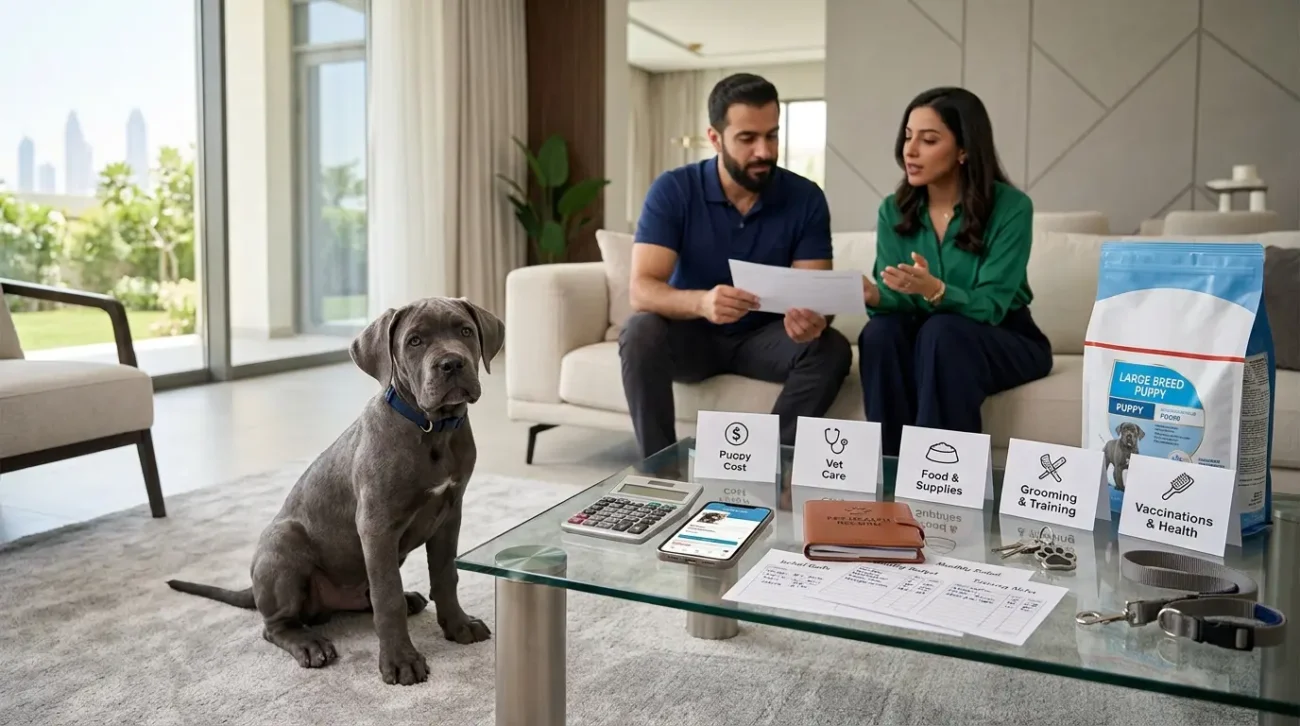
Family Dog Costs
The purchase price is only one part of the total cost of owning a dog.
Families should plan for:
- Food.
- Veterinary visits.
- Vaccinations.
- Preventive care.
- Grooming.
- Toys.
- Bedding.
- Training.
- Boarding or pet care when traveling.
- Unexpected veterinary expenses.
Large dogs can also require more food and larger equipment than small breeds.
Understanding the long-term costs before getting a dog can help prevent difficult situations later.
Choosing Between a Puppy and an Adult Dog
A puppy can be exciting for a family, but puppies require significant time.
They need toilet training, socialization, basic obedience training, supervision, and regular veterinary care.
An adult dog may already have some training and established behavior, although its previous experiences and personality should be carefully evaluated.
Families should choose based on their ability to provide the necessary care rather than choosing a puppy simply because it looks cute.
Is the Friendliest Breed Always the Best Family Dog?
Not necessarily.
A breed can be known for being friendly but still require more exercise, grooming, training, or space than your family can provide.
For example, a Golden Retriever may be an excellent family dog, but a family that cannot provide enough exercise may struggle with a young Golden Retriever.
Similarly, a small breed may seem easier because of its size but may still require significant grooming, training, or attention.
The best choice is the breed whose needs fit your family’s real lifestyle.

Common Mistakes When Choosing a Family Dog
Choosing Only by Appearance
A cute puppy can grow into a large, energetic adult dog with very different needs.
Ignoring Exercise Requirements
An active breed needs regular physical and mental activity.
Assuming Small Means Easy
Small dogs still need training, exercise, veterinary care, and attention.
Forgetting Grooming
Some breeds require frequent brushing and professional grooming.
Choosing a Dog Without Considering the Children
The dog’s size and temperament should match the family’s ability to supervise and interact safely.
Buying Without Checking Health Records
Health information and veterinary records are important when choosing a puppy.
Expecting the Dog to Raise Itself
Every dog needs guidance, training, socialization, and consistent rules.
Which of the Top 10 Family Dogs Is Right for You?
Here is a simple way to narrow your choices:
Choose a Golden Retriever if you want an active, intelligent family companion and have time for exercise and grooming.
Choose a Labrador Retriever if your family enjoys outdoor activities and wants a playful, trainable dog.
Choose a Cavalier King Charles Spaniel if you prefer a smaller affectionate companion.
Choose a beagle if you want a playful and curious dog and can provide enough activity and training.
Choose a Poodle if intelligence and trainability are important and you are comfortable with regular grooming.
Choose a French Bulldog if you prefer a small companion with lower exercise needs, while being prepared for its heat and breathing-related care considerations.
Choose a Cocker Spaniel if you want an active medium-sized companion and can manage its grooming needs.
Choose a Shih Tzu if you want a small indoor companion and are prepared for regular coat care.
Choose a Bernese Mountain Dog if you have enough space for a large dog and can manage its grooming and care requirements.
Choose a Maltese if you want a small companion and can provide regular grooming and gentle handling.
The 10 best dog breeds for families are not necessarily the same for every household. Golden Retrievers, Labrador Retrievers, Cavalier King Charles Spaniels, Beagles, Poodles, French Bulldogs, Cocker Spaniels, Shih Tzus, Bernese Mountain Dogs, and Maltese can all be considered by families, but each breed has different needs.
Before choosing a dog, look beyond appearance. Think about energy level, exercise, training, grooming, size, home environment, children’s ages, and the amount of time your family can provide.
The best family dog is ultimately the one whose needs your family can meet consistently and responsibly.
FAQ About the Best Dog Breeds for Families
What is the best dog breed for families?
There is no single best breed for every family. Golden Retrievers and Labrador Retrievers are popular choices for active families, while smaller breeds such as Cavalier King Charles Spaniels and Shih Tzus may suit families looking for smaller companions.
What are the 10 best dog breeds for families?
The 10 breeds covered in this guide are Golden Retriever, Labrador Retriever, Cavalier King Charles Spaniel, Beagle, Poodle, French Bulldog, Cocker Spaniel, Shih Tzu, Bernese Mountain Dog, and Maltese.
What is the best family dog for children?
The right choice depends on the children’s ages, the family’s lifestyle, and the dog’s individual temperament. Regardless of breed, children should be supervised around dogs.
Are Golden Retrievers good family dogs?
Golden Retrievers can be excellent family companions, particularly for families that can provide regular exercise, training, socialization, and grooming.
Are Labradors good family dogs?
Labradors can be very good family dogs, especially for active households. They need regular exercise, training, and interaction.
What is the best small dog for a family?
Cavalier King Charles Spaniels, Shih Tzus, and Maltese can be considered by families looking for smaller companions. The individual dog’s temperament and the children’s ability to interact safely should also be considered.
Are Poodles good family dogs?
Poodles can be excellent family companions because they are intelligent and trainable. However, their grooming and mental stimulation needs should be considered.
Are Beagles good family dogs?
Beagles can be good family dogs for active households. Their curiosity and strong sense of smell mean they need appropriate training and secure environments.
Should I choose a large or small family dog?
Consider your home, lifestyle, children’s ages, exercise routine, and experience with dogs. Size alone does not determine whether a dog will be suitable for your family.
What should children learn before getting a dog?
Children should learn to respect the dog’s space, avoid disturbing it while eating or sleeping, handle it gently, and always follow adult supervision rules.
Find the Right Puppy for Your Family
Choosing a family dog is an important decision, and the right puppy should match your family’s lifestyle, home, experience, and ability to provide long-term care.
If you are looking for a puppy in the UAE, Puppies Nest can help you explore different breeds and find a puppy that may be suitable for your family.
Ready to find your family’s new companion? Explore available puppies and learn more about different breeds before making your decision.
Recent Posts
Our Puppies
-
Mini Maltipoo Puppy for Sale in UAE
6,500 د.إ
-
Teacup Mini Maltipoo Puppy for Sale in UAE
6,500 د.إ
-
Teacup Poodle Puppy for Sale at best price in UAE
7,500 د.إ
-
Mini Poodle Puppy for Sale at best price in UAE
7,500 د.إ
-
Toy Poodle Puppy for Sale at best price in Dubai
7,500 د.إ
-
Toy Poodle Dog for Sale at best price in UAE
7,500 د.إ
-
Pekingese Puppy for Sale in UAE
8,500 د.إ
-
Italian greyhound Puppy for Sale in UAE
15,000 د.إ
-
Husky Puppy for Sale in UAE
6,000 د.إ
-
Havanese Puppy for Sale in UAE
6,500 د.إ
-
Bichon Frise puppy for sale in UAE
8,500 د.إ
-
American Bully puppy for sale
6,000 د.إ
-
Japanese Spitz puppy for sale in UAE
5,500 د.إ
-
Akita puppy for sale at best price in UAE
6,500 د.إ
-
Bull Terrier puppy for sale in UAE
5,000 د.إ