
smallest dog breeds 10 smallest dog breeds 10 smallest dog breeds in the world top 10 smallest dog breeds

10 Smallest Dog Breeds in the World: Sizes, Temperaments, and Care Needs

If you are looking for the smallest dog breeds, you will find many breeds that remain very small even when fully grown. The 10 smallest dog breeds can be attractive choices for people who live in apartments, want a compact companion, or simply love tiny dogs. However, being small does not automatically mean being easy to care for.
The 10 smallest dog breeds in the world can have very different personalities, exercise requirements, grooming needs, and training challenges. Some tiny dogs are energetic and confident, while others are calmer and more comfortable with a quiet indoor lifestyle.
This guide compares the top 10 smallest dog breeds by approximate size, temperament, exercise, grooming, training, and everyday care needs. Remember that individual dogs can vary, and adult size can be influenced by genetics, sex, nutrition, and other factors.

How Small Is a Small Dog?

small dogs breeds can vary considerably in body size. Some weigh only a few kilograms, while others can be small but relatively muscular.
When comparing tiny breeds, it is useful to consider both:

  • Adult weight
  • Adult height
    A dog that is short may not necessarily be the lightest dog, while a slightly taller breed may have a much smaller body frame.
    Breed standards can also vary between kennel clubs, so published measurements should be treated as approximate rather than an exact prediction for every individual dog.

Top 10 Smallest Dog Breeds

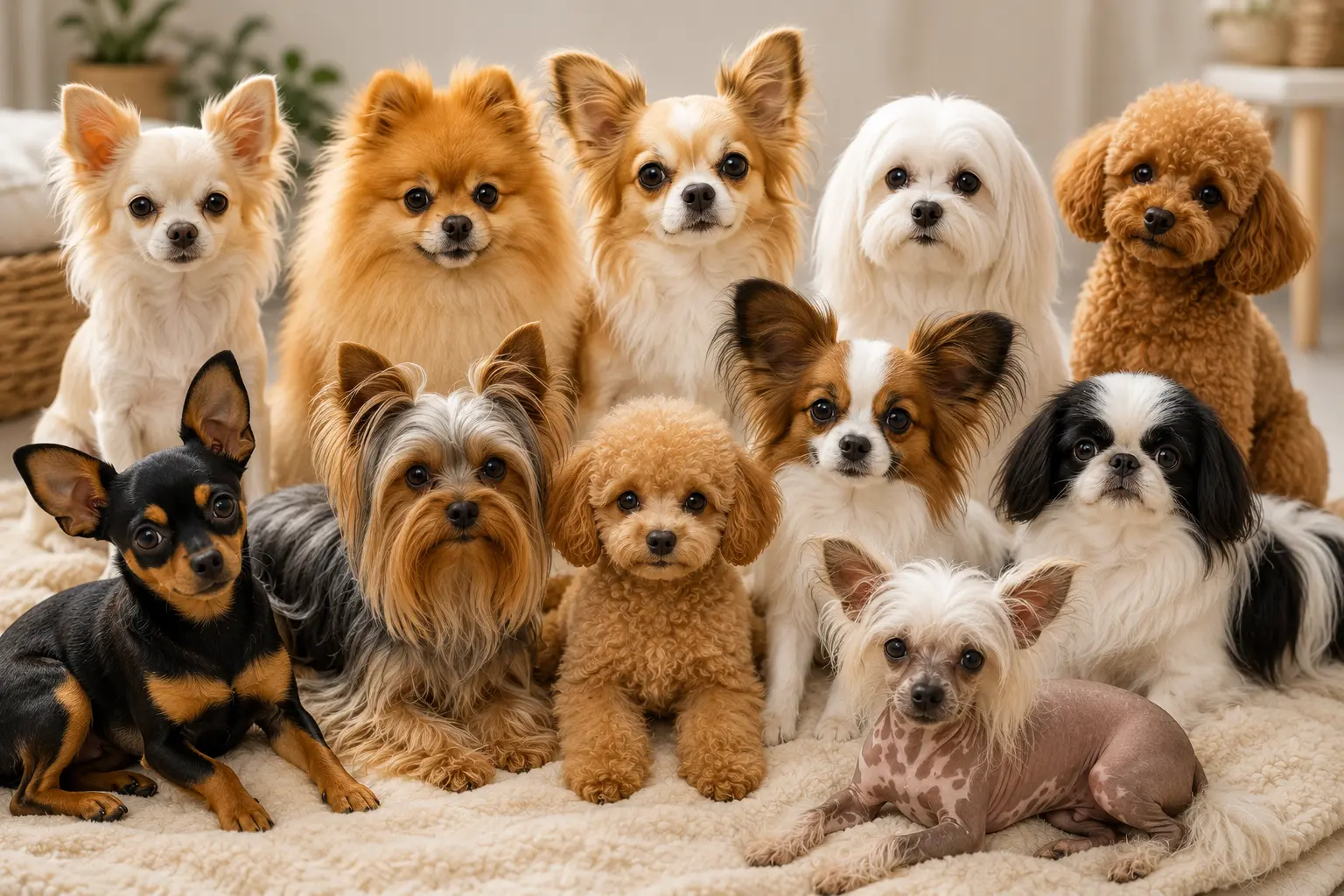
The following breeds are among the smallest recognized companion breeds and are popular choices for people who want a very small dog.

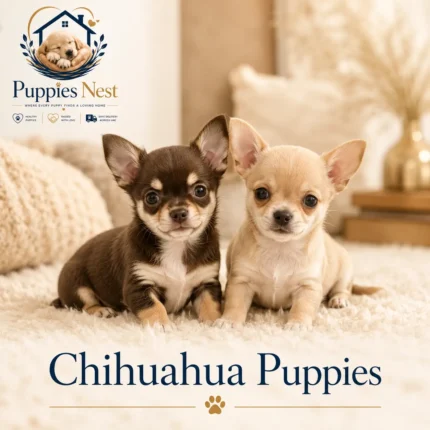
1. Chihuahua

The Chihuahua dog is widely recognized as one of the smallest dog breeds in the world.
Approximate height: 13–20 cm
Approximate weight: Up to about 2.7 kg
Energy level: Moderate to high
Exercise: Low to moderate
Grooming: Low to moderate
Trainability: Good with consistent training
Temperament: Alert, confident, lively, and affectionate
Despite its tiny body, the Chihuahua can have a surprisingly confident personality. Many Chihuahuas are alert and enjoy staying close to their owners.

Chihuahua Appearance

Chihuahuas can have smooth or long coats and come in many colors and patterns.
Their large ears and expressive eyes contribute to their distinctive appearance.

Chihuahua Exercise

They do not need the same amount of exercise as large working breeds, but they still benefit from daily walks and indoor play.
Mental stimulation is also important.

Chihuahua Training

Their small size does not mean training is unnecessary.
Early socialization and positive reinforcement can help a Chihuahua learn appropriate behavior around people and other dogs.

Chihuahua and Children

Because of their very small size, Chihuahuas can be physically fragile.
Families with young children should supervise interactions and teach children how to handle small dogs safely.

2. Pomeranian

The pomeranian dog is another extremely small breed known for its fluffy coat and lively personality.
Approximate height: 18–30 cm
Approximate weight: About 1.8–3.2 kg
Energy level: Moderate to high
Exercise: Moderate
Grooming: High
Trainability: Good
Temperament: Lively, confident, curious, and affectionate

Pomeranian Appearance

The Pomeranian has a thick double coat that gives it a much larger appearance than its actual body size.
Its fluffy coat and fox-like face are among its most recognizable features.

Pomeranian Exercise

A Pomeranian can enjoy short walks, play sessions, and interactive activities.
Its small body does not mean it should spend the entire day without activity.

Pomeranian Grooming

Regular brushing is important because of its thick coat.
Owners should also maintain nail, dental, ear, and general hygiene.

Pomeranian Training

Pomeranians can be intelligent and responsive to training.
Consistent routines and positive reinforcement can help prevent unwanted barking or other behavioral problems.

3. Yorkshire Terrier

The Yorkshire Terrier is a tiny breed with a long, silky coat and a confident personality.
Approximate height: 18–20 cm
Approximate weight: About 2–3.2 kg
Energy level: Moderate
Exercise: Low to moderate
Grooming: High
Trainability: Good
Temperament: Confident, lively, affectionate, and alert

Yorkshire Terrier Appearance

Yorkshire Terriers have a fine, silky coat that can grow long if it is not trimmed.
Their small body and elegant coat make them popular among people who prefer tiny companion dogs.

Yorkshire Terrier Exercise

They can receive much of their daily activity through short walks and indoor play.
They still need opportunities to explore, interact, and stay mentally active.

Yorkshire Terrier Grooming

The long coat requires regular brushing.
Owners who want to maintain a long coat may need to dedicate significant time to grooming.

Yorkshire Terrier Family Life

Yorkshire Terriers can be fragile because of their small size.
Families with young children should provide close supervision.

buy a yorkshire terrier puppy

4. Maltese

The Maltese is a small companion breed known for its long, white coat.
Approximate height: 18–23 cm
Approximate weight: About 1.8–3.2 kg
Energy level: Moderate
Exercise: Low to moderate
Grooming: High
Trainability: Good
Temperament: Affectionate, lively, social, and playful

Maltese Appearance

The Maltese has a long, silky white coat that gives it an elegant appearance.
Some owners keep the coat long, while others prefer a shorter trim.

Maltese Exercise

Short daily walks and indoor play can provide useful physical activity.
Mental stimulation and interaction with the family are also important.

Maltese Grooming

The coat requires regular brushing to reduce tangling and matting.
Professional grooming may also be useful.

Maltese Training

Maltese dogs can learn basic commands when training is consistent and positive.
Early socialization can help them become comfortable around different people and environments.

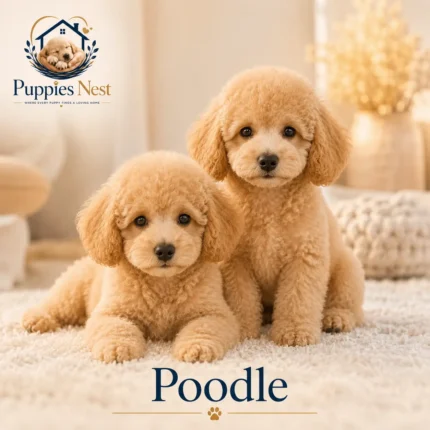
5. Toy Poodle

The Toy Poodle is the smallest recognized Poodle variety and combines a tiny body with high intelligence.
Approximate height: Up to about 28 cm
Approximate weight: Often around 2–4 kg
Energy level: Moderate to high
Exercise: Moderate
Grooming: High
Trainability: Excellent
Temperament: Intelligent, active, alert, and affectionate

Toy Poodle Appearance

Toy Poodles have a curly coat and compact body.
They can have a range of coat colors.

Toy Poodle Exercise

Toy Poodles are small but active.
They benefit from walks, play, training games, and mental stimulation.

Toy Poodle Grooming

Their curly coat requires regular brushing and trimming.
Owners should be prepared for ongoing grooming costs.

Toy Poodle Training

Their intelligence makes them highly trainable when lessons are consistent and positive.
They can enjoy learning tricks and new commands.

6. Papillon

The Papillon is a small toy breed recognized for its distinctive butterfly-like ears.
Approximate height: 20–28 cm
Approximate weight: About 2.3–4.5 kg
Energy level: Moderate to high
Exercise: Moderate
Grooming: Moderate
Trainability: Excellent
Temperament: Intelligent, lively, friendly, and alert

Papillon Appearance

The large, fringed ears are one of the breed’s defining features.
Its fine coat requires regular but generally manageable grooming.

Papillon Exercise

Papillons are more active than their size might suggest.
They can enjoy walks, games, and training activities.

Papillon Training

They are intelligent and often respond well to positive reinforcement.
Their small size should not lead owners to overlook obedience training.

7. Japanese Chin

The Japanese Chin is a small companion breed with a distinctive face and silky coat.
Approximate height: 20–27 cm
Approximate weight: About 1.8–4.1 kg
Energy level: Low to moderate
Exercise: Low to moderate
Grooming: Moderate
Trainability: Moderate
Temperament: Affectionate, independent, gentle, and charming

Japanese Chin Appearance

The breed has a compact body, large expressive eyes, and a soft coat.
Its appearance is one of the reasons it remains popular among toy-dog enthusiasts.

Japanese Chin Exercise

Japanese Chins generally do not require intense exercise.
Short walks and indoor play can help meet their daily activity needs.

Japanese Chin Personality

They can be affectionate while also showing an independent side.
Owners should use gentle, consistent training.

8. Chinese Crested

The Chinese Crested is a distinctive small breed that can have either a mostly hairless body or a fully coated variety known as the Powderpuff.
Approximate height: 23–33 cm
Approximate weight: About 2.3–5.4 kg
Energy level: Moderate
Exercise: Moderate
Grooming: Moderate
Trainability: Good
Temperament: Affectionate, lively, playful, and sensitive

Chinese Crested Appearance

The breed’s appearance is very different from most other small dogs.
Hairless varieties require special attention to skin care and protection from excessive sun exposure.

Chinese Crested Exercise

Short walks and indoor games can provide suitable activity.
They can enjoy spending time with their owners and participating in interactive activities.

Chinese Crested Care

Skin care is especially important for hairless Chinese Cresteds.
Owners should understand the breed’s specific grooming and environmental needs before choosing one.

9. Brussels Griffon

The Brussels Griffon is a small toy breed with a distinctive face and expressive eyes.
Approximate height: 18–25 cm
Approximate weight: About 3.5–6 kg
Energy level: Moderate
Exercise: Moderate
Grooming: Moderate to high depending on coat type
Trainability: Good
Temperament: Intelligent, sensitive, affectionate, and lively

Brussels Griffon Appearance

The breed has a distinctive facial expression and can have either a rough or smooth coat.
Its compact body makes it suitable for people looking for a small companion.

Brussels Griffon Exercise

Daily walks and indoor play can help provide appropriate activity.
They also benefit from spending time with their owners.

Brussels Griffon Training

Positive reinforcement can help with training.
Because they can be sensitive, harsh training methods should be avoided.

10. Russian Toy

The Russian Toy is a very small companion breed that comes in smooth-haired and long-haired varieties.
Approximate height: 20–28 cm
Approximate weight: Up to about 3 kg
Energy level: Moderate to high
Exercise: Moderate
Grooming: Low to moderate
Trainability: Good
Temperament: Lively, affectionate, alert, and playful

Russian Toy Appearance

The breed has a delicate frame and large ears.
Long-haired Russian Toys have feathering that gives them a distinctive appearance.

Russian Toy Exercise

Despite its tiny size, the Russian Toy can be active.
Short walks and indoor games can help satisfy its exercise needs.

Russian Toy Grooming

The smooth-coated variety usually needs less grooming, while long-coated dogs require more regular brushing.

Find out: top 10 cutest dog breeds

10 Smallest Dog Breeds Compared

Breed Approx. Height Approx. Weight Energy Grooming Trainability
Chihuahua 13–20 cm Up to 2.7 kg Moderate-High Low-Moderate Good
Pomeranian 18–30 cm 1.8–3.2 kg Moderate-High High Good
Yorkshire Terrier 18–20 cm 2–3.2 kg Moderate High Good
Maltese 18–23 cm 1.8–3.2 kg Moderate High Good
Toy Poodle Up to 28 cm 2–4 kg Moderate-High High Excellent
Papillon 20–28 cm 2.3–4.5 kg Moderate-High Moderate Excellent
Japanese Chin 20–27 cm 1.8–4.1 kg Low-Moderate Moderate Moderate
Chinese Crested 23–33 cm 2.3–5.4 kg Moderate Moderate Good
Brussels Griffon 18–25 cm 3.5–6 kg Moderate Moderate-High Good
Russian Toy 20–28 cm Up to 3 kg Moderate-High Low-Moderate Good

Why Size Can Vary Between Individual Dogs

Breed size ranges are useful for comparison, but they should not be treated as guarantees.
Individual dogs can differ because of:

  • Genetics.
  • Sex.
  • Family lines.
  • Nutrition.
  • Overall health.
  • Development.
    A puppy that appears particularly small at a young age may not necessarily remain the smallest adult in its breed.
    For this reason, prospective owners should focus on the expected breed characteristics rather than choosing a puppy simply because it is unusually tiny.

Does Smaller Mean Easier to Care For?

Not necessarily.
A very small dog can have specific care requirements that make ownership more demanding.
For example, tiny dogs may:

  • Be physically fragile.
  • Need careful handling.
  • Require protection from larger dogs.
  • Need regular dental care.
  • Have difficulty with extreme temperatures.
  • Need carefully managed exercise.
    Their small size may make transportation and indoor living easier, but it does not eliminate the responsibilities of dog ownership.

Smallest Dog Breeds and Apartment Living

Many of the smallest dog breeds can adapt well to apartment life.
Chihuahuas, Maltese, Toy Poodles, Yorkshire Terriers, Japanese Chins, and other toy breeds can live comfortably in smaller homes when their physical and mental needs are met.
However, apartment suitability is not based only on size.
Consider:

  • Energy level.
  • Barking.
  • Exercise requirements.
  • Toilet training.
  • Mental stimulation.
  • Time spent alone.
    A tiny but highly energetic dog may require more daily interaction than a somewhat larger and calmer dog.

Exercise Needs of the Smallest Dog Breeds

Small dogs still need exercise.
The amount and type of exercise depend on the breed and individual dog.
For example:

  • Chihuahua: Short walks and indoor play.
  • Pomeranian: Walks, play, and mental stimulation.
  • Yorkshire Terrier: Short walks and interactive games.
  • Maltese: Short walks and indoor activity.
  • Toy Poodle: Walks, training, and mental games.
  • Papillon: Regular walks and active play.
  • Japanese Chin: Gentle walks and indoor play.
  • Chinese Crested: Moderate activity through walks and games.
  • Brussels Griffon: Daily walks and interactive play.
  • Russian Toy: Short walks and indoor games.
    Owners should avoid assuming that a small dog needs no exercise.

smallest dog breeds 10 smallest dog breeds 10 smallest dog breeds in the world top 10 smallest dog breeds

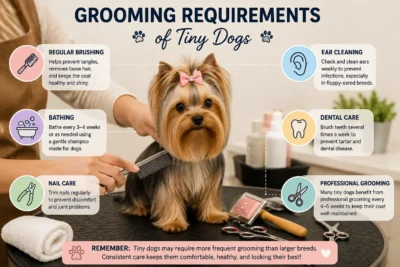
Grooming Requirements of Tiny Dogs

Grooming needs vary significantly between small breeds.

High-Grooming Breeds

Pomeranians, Maltese, Yorkshire Terriers, and Toy Poodles may require frequent brushing and professional grooming.

Moderate-Grooming Breeds

Papillons, Japanese Chins, and Brussels Griffons generally require regular coat care, although the exact routine depends on coat type.

Lower-Grooming Options

Smooth-coated Chihuahuas and smooth-coated Russian Toys generally require less coat maintenance.
Even dogs with short coats still need nail care, dental care, ear checks, and regular hygiene.

Training the Smallest Dog Breeds

Small dogs need training just like large dogs.
Owners sometimes overlook unwanted behavior because the dog is tiny.
Allowing a small dog to repeatedly bark, jump, bite, or ignore commands can create habits that become difficult to manage.
Training should include:

  • Name recognition.
  • Recall.
  • Basic commands.
  • Leash walking.
  • Toilet training.
  • Calm greetings.
  • Appropriate socialization.
    Positive reinforcement is a useful approach for many small breeds.

Small Dog Breeds and Children

Families with children should think carefully before choosing an extremely small dog.
A tiny dog can be injured accidentally if a child drops it, steps on it, hugs it too tightly, or plays too roughly.
Children should learn:

  • Never to pull the dog’s tail or ears.
  • Not to disturb the dog while sleeping.
  • Not to take food away.
  • How to pick up a small dog safely if an adult allows it.
  • How to recognize when the dog wants space.
    Adult supervision is especially important with very young children.

Small Dog Breeds and Other Pets

A small dog can live successfully with other pets, but introductions should be gradual and supervised.
The dog’s personality, previous socialization, and the other animal’s temperament all matter.
Never assume that two animals will automatically become friends simply because both are small.

Health and Care Considerations for Very Small Dogs

Extremely small dogs may require careful management.
Owners should discuss appropriate nutrition, preventive healthcare, vaccinations, dental care, and exercise with a veterinarian.
Because small dogs can be physically delicate, owners should also make the home safer by reducing opportunities for dangerous falls or accidental injuries.
Regular veterinary checkups can help identify health problems early.

Smallest Dog Breeds in Hot Climates

Owners in hot regions such as the UAE should consider the local climate when choosing any dog.
Small size does not make a dog immune to heat.
Exercise should generally be scheduled during cooler parts of the day, and the dog should have access to fresh water and a comfortable indoor environment.
Some tiny breeds can also be sensitive to temperature changes, so owners should avoid prolonged exposure to extreme heat.

How to Choose the Right Tiny Dog

Choosing among the 10 smallest dog breeds in the world should begin with your lifestyle.

Choose a Chihuahua If:

You want an extremely small companion with a confident and alert personality.

Choose a Pomeranian If:

You want a fluffy, lively dog and are prepared for regular grooming.

Choose a Yorkshire Terrier If:

You want a tiny dog with a long coat and an energetic personality.

Choose a Maltese If:

You prefer a small, affectionate companion and can maintain a long coat.

Choose a Toy Poodle If:

You want a very intelligent, trainable, and active small dog.

Choose a Papillon If:

You want a tiny but energetic and intelligent companion.

Choose a Japanese Chin If:

You prefer a quieter small companion with relatively modest exercise needs.

Choose a Chinese Crested If:

You want a distinctive small breed and are prepared for its specific skin or coat care.

Choose a Brussels Griffon If:

You want a small, expressive companion with a lively personality.

Choose a Russian Toy If:

You want a very small, playful companion with smooth- or long-haired coat options.

Find out: 10 best dog breeds for families

Extremely Small Does Not Mean Low Maintenance

One of the most important lessons when choosing from the top 10 smallest dog breeds is that physical size does not determine the amount of care required.
A Toy Poodle can be tiny but needs regular grooming and mental stimulation.
A Pomeranian may weigh only a few kilograms but needs coat care and training.
A Chihuahua may require less physical exercise but still needs socialization, dental care, and responsible handling.
The right dog is the one whose needs you can meet consistently.

What to Check Before Buying a Small Puppy

If you are planning to buy one of the smallest dog breeds, ask for clear information about:

  • Date of birth.
  • Expected adult size.
  • Vaccination records.
  • Veterinary records.
  • Microchip information where applicable.
  • Parents and family history when available.
  • Current diet.
  • Socialization.
  • Any known health concerns.
    Be careful with sellers who advertise puppies as “extra tiny” or make unrealistic promises about adult size.
    Responsible puppy selection should focus on health, welfare, and suitability rather than simply choosing the smallest possible puppy.


The smallest dog breeds can be wonderful companions for people who want a compact dog, but tiny size should never be the only reason to choose a breed.
The 10 smallest dog breeds in the world discussed in this guide include Chihuahua, Pomeranian, Yorkshire Terrier, Maltese, Toy Poodle, Papillon, Japanese Chin, Chinese Crested, Brussels Griffon, and Russian Toy.
Each breed has its own personality, exercise requirements, grooming needs, training style, and care considerations.
Before choosing one of the 10 smallest dog breeds, consider the dog’s adult size, temperament, health needs, grooming requirements, exercise level, and compatibility with your home.
A tiny dog still needs responsible ownership, proper training, socialization, veterinary care, and plenty of attention.

how to find cheap puppies for sale in Dubai

FAQ About the Smallest Dog Breeds

What are the smallest dog breeds?

Some of the smallest recognized breeds include the Chihuahua, Pomeranian, Yorkshire Terrier, Maltese, Toy Poodle, Papillon, Japanese Chin, Chinese Crested, Brussels Griffon, and Russian Toy.

What are the 10 smallest dog breeds?

A practical list includes Chihuahua, Pomeranian, Yorkshire Terrier, Maltese, Toy Poodle, Papillon, Japanese Chin, Chinese Crested, Brussels Griffon, and Russian Toy.

What is the smallest dog breed in the world?

The Chihuahua is widely recognized as one of the smallest dog breeds. Individual dogs vary in size, so not every Chihuahua will be the same height or weight.

Are small dogs easier to care for?

Not necessarily. Small dogs may be easier to transport and may require less physical space, but they can have significant grooming, training, dental, and handling requirements.

What are the smallest dog breeds for apartments?

Chihuahuas, Maltese, Yorkshire Terriers, Toy Poodles, Japanese Chins, and other small companion breeds can adapt to apartments when their exercise and mental needs are met.

Do the smallest dog breeds need exercise?

Yes. Small dogs still need daily physical activity and mental stimulation, although their exercise requirements are usually different from those of large working breeds.

Are the smallest dog breeds good with children?

Some can be suitable for families, but extremely small dogs can be fragile. Young children should always be supervised around tiny dogs.

Which small dog breeds need the most grooming?

Pomeranians, Maltese, Yorkshire Terriers, and Toy Poodles can require significant grooming because of their coats.

Can tiny dogs be difficult to train?

Yes. Their small size does not mean they are automatically easy to train. Consistency, socialization, and positive reinforcement remain important.

Does a tiny puppy always become a tiny adult dog?

No. Puppy size does not provide a perfect prediction of adult size. Genetics, family lines, and other factors influence growth.

Find the Right Small Puppy

If you are looking for one of the smallest dog breeds in the UAE, take time to compare breeds and understand their adult needs before making a decision.
Looking for a small and adorable puppy? Explore Puppies Nest to discover available breeds and find a companion that matches your home, lifestyle, and experience.