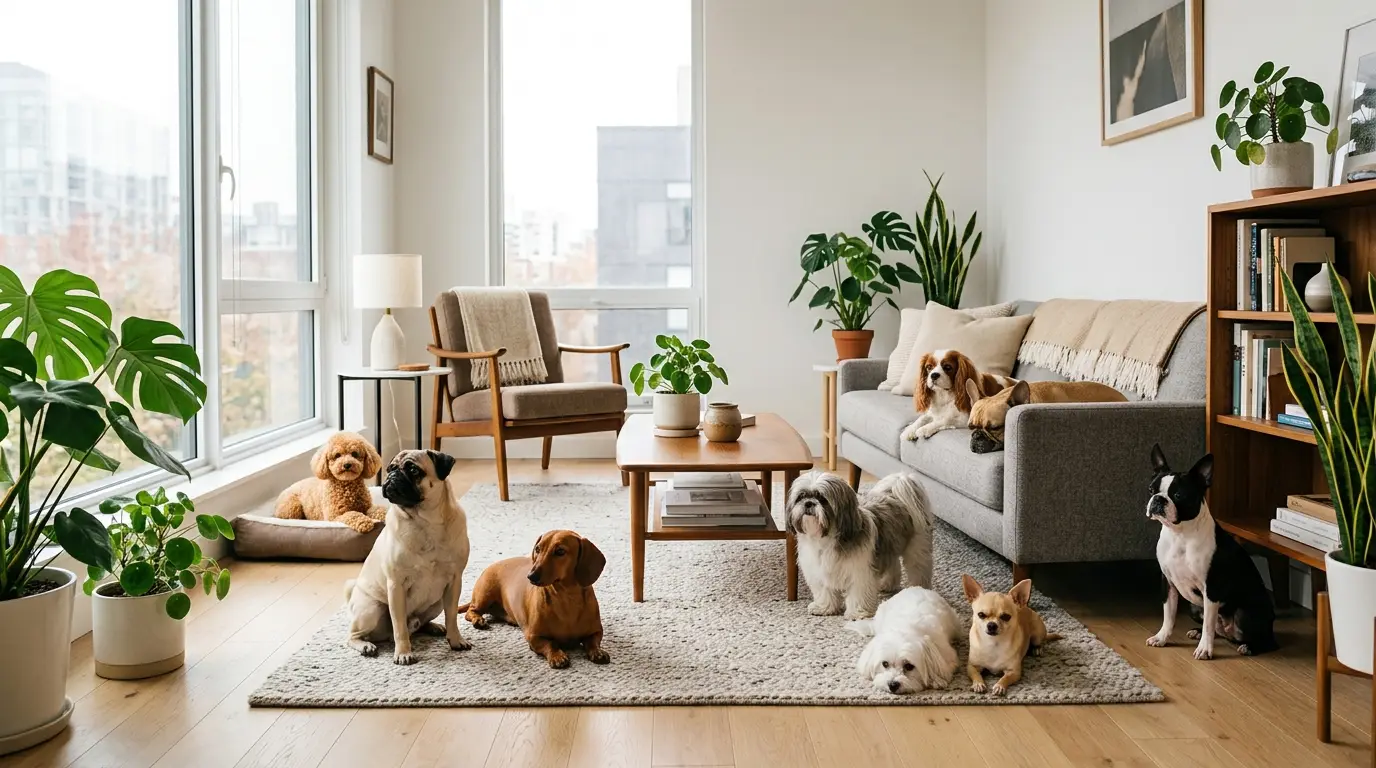

Dog breeds for apartments, best dog breeds for apartments, and what are good dog breeds for apartments are most common questions for people who want a dog but live in an apartment, condo, or other compact home.
The good news is that apartment living can work very well for many dogs when the breed’s temperament, energy level, exercise needs, barking habits, grooming requirements, and trainability match the owner’s lifestyle.
Importantly, apartment suitability is not determined by size alone. A small, energetic dog may need more daily activity than a larger, calmer breed, while a well-trained medium-sized dog can sometimes adapt better to indoor living than a tiny dog with excessive barking or high exercise demands.
What Makes a Dog Suitable for Apartment Living?
Choosing a dog for an apartment requires looking beyond physical size. Although smaller breeds are often convenient because they require less indoor space, several other characteristics can have an even greater effect on whether a dog feels comfortable in an apartment environment.
A suitable apartment dog generally needs to be able to relax indoors, adapt to a predictable routine, and receive enough physical and mental stimulation outside the home. Noise is another major consideration, especially if you share walls with neighbors.
When comparing breeds, consider these factors:
- Size: A smaller body can make indoor movement easier, but size should never be the only deciding factor.
- Energy level: Dogs with moderate energy are often easier to manage in compact homes.
- Barking: Frequent barking can become challenging in buildings with close neighbors.
- Exercise: Every dog needs exercise, but some breeds require substantially more daily activity.
- Grooming: Coat type affects the amount of maintenance required inside the home.
- Trainability: Dogs that respond well to training can learn apartment manners more easily.
- Adaptability: A dog that can settle indoors is often better suited to apartment routines.
The best match depends on the individual dog as well as the breed. Age, personality, socialization, training, and previous living conditions can all influence apartment behavior.
1. French Bulldog
The French Bulldog is one of the most popular choices for apartment households because it generally has a compact body and does not require the same amount of intense exercise as many working or sporting breeds.
French Bulldogs can enjoy short walks and indoor play, making them practical for owners who have a busy schedule. They are also typically happy spending time near their family rather than constantly looking for strenuous activities.
However, prospective owners should pay attention to temperature, exercise intensity, and overall health management. Their short facial structure means owners should be particularly careful during hot weather and avoid excessive physical exertion.
Apartment suitability: Excellent
Energy level: Low to moderate
Barking: Usually moderate
Exercise: Short daily walks and play
Grooming: Low to moderate
Trainability: Moderate
2. Cavalier King Charles Spaniel
The Cavalier King Charles Spaniel can be an excellent companion for apartment residents who want an affectionate and adaptable dog. Its relatively manageable size makes it comfortable in smaller homes, while its social personality makes it well suited to households that enjoy spending time with their pet.
This breed still needs regular walks and mental stimulation. Apartment owners should not assume that living in a small space eliminates the need for outdoor activity.
Cavaliers can also be sensitive to being left alone for extended periods, so they may be a better match for owners who can provide regular companionship and interaction.
Apartment suitability: Excellent
Energy level: Moderate
Barking: Low to moderate
Exercise: Daily walks and interactive play
Grooming: Moderate
Trainability: Good
3. Pug
Pugs are compact companion dogs that can adapt well to indoor environments. Their playful personalities can provide plenty of entertainment without requiring a large yard.
A Pug can often meet its exercise needs through moderate walks and indoor activities. However, owners should be cautious about strenuous exercise and hot weather because of the breed’s short muzzle.
Their short coat is relatively easy to maintain, although regular cleaning and general care are still necessary. Pugs can also be vocal in some situations, so early training can help establish appropriate apartment behavior.
Apartment suitability: Excellent
Energy level: Low to moderate
Barking: Moderate
Exercise: Moderate daily activity
Grooming: Low
Trainability: Moderate
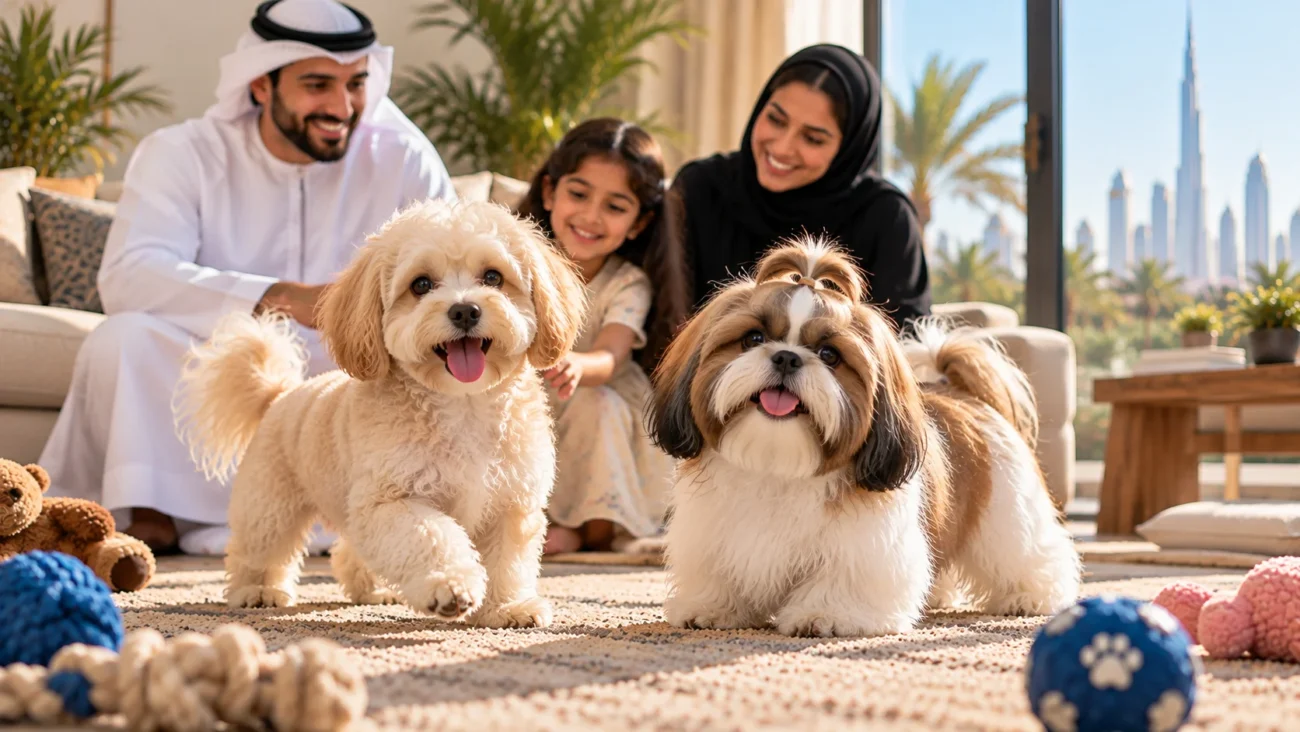
4. Shih Tzu
The Shih Tzu was developed primarily as a companion dog, making its lifestyle particularly compatible with indoor households. Its small size allows it to move comfortably around an apartment, while regular walks and play can provide sufficient daily activity for many individuals.
One of the biggest considerations is grooming. The long coat can require significant maintenance if it is kept long, so owners should be prepared for brushing and regular professional grooming or choose a shorter practical haircut.
Shih Tzus can also become strongly attached to their owners, which means gradual alone-time training can be important.
Apartment suitability: Excellent
Energy level: Low to moderate
Barking: Moderate
Exercise: Short walks and indoor play
Grooming: High
Trainability: Moderate
5. Maltese
The Maltese is a small companion breed that can fit naturally into apartment living. Its compact size means it does not require a large indoor area, and its exercise requirements can often be met with walks and interactive indoor games.
Despite its small body, the Maltese should not be treated like a decorative pet. It benefits from training, socialization, mental stimulation, and a consistent daily routine.
Its coat is another important consideration. Regular grooming is necessary, particularly if the coat is kept long. Owners should also work on barking habits early because some small companion dogs can become vocal when excited or alert.
Apartment suitability: Excellent
Energy level: Moderate
Barking: Moderate to high
Exercise: Daily walks and play
Grooming: High
Trainability: Good
6. Bichon Frise
The Bichon Frise is another small companion dog that can adapt successfully to apartment environments. It is energetic enough to enjoy play and walks but generally does not need a huge outdoor area to stay active.
Its cheerful personality can make it a rewarding household companion. Training should begin early because teaching basic commands, calm behavior, and appropriate responses to visitors can make apartment life considerably easier.
The coat requires regular grooming, so prospective owners should include grooming time and costs in their overall ownership plan.
Apartment suitability: Excellent
Energy level: Moderate
Barking: Moderate
Exercise: Daily walks and play
Grooming: High
Trainability: Good
7. Boston Terrier
The Boston Terrier is a compact breed with an adaptable personality and a relatively easy-care coat. It can enjoy playtime and walks while also spending substantial time relaxing indoors.
Boston Terriers can be playful and energetic, so they should not be chosen simply because of their size. A daily routine that combines outdoor activity with mental stimulation can help them remain settled at home.
Because they have a short muzzle, owners should also be mindful of heat and avoid pushing exercise too far in warm conditions.
Apartment suitability: Excellent
Energy level: Moderate
Barking: Low to moderate
Exercise: Moderate daily activity
Grooming: Low
Trainability: Good
8. Dachshund
Dachshunds are small dogs with distinctive personalities and can adapt to apartment life when their exercise and training needs are properly managed. Their compact size makes them convenient indoors, but their energetic and sometimes independent nature should not be underestimated.
Daily walks and play are important. Owners should also pay attention to jumping and activities that may place unnecessary strain on the back, particularly because the breed has a long body and short legs.
Early training is valuable because Dachshunds can be determined and may develop excessive barking if alert behavior is not managed.
Apartment suitability: Very good
Energy level: Moderate
Barking: Moderate to high
Exercise: Daily walks
Grooming: Low to moderate
Trainability: Moderate
9. Miniature Schnauzer
The Miniature Schnauzer is a small but active dog that can live successfully in an apartment when its physical and mental needs are addressed. It is intelligent, alert, and often enjoys learning new commands.
This breed can be a good option for owners who want a smaller dog but are willing to provide regular exercise and training. Its alert personality means barking should be considered carefully, especially in apartment buildings.
The coat also requires routine grooming, making maintenance an important part of the ownership decision.
Apartment suitability: Very good
Energy level: Moderate to high
Barking: Moderate to high
Exercise: Daily walks and mental stimulation
Grooming: Moderate to high
Trainability: Excellent
10. Toy Poodle
The Toy Poodle combines a small physical footprint with high intelligence, making it an interesting option for apartment households. It can learn commands quickly and can often adapt well to indoor routines when it receives appropriate stimulation.
However, intelligence also means the breed needs mental engagement. Puzzle toys, short training sessions, interactive games, and walks can help prevent boredom.
Its curly coat requires consistent grooming, and owners should consider this commitment before choosing the breed.
Apartment suitability: Excellent
Energy level: Moderate
Barking: Moderate
Exercise: Daily walks and mental stimulation
Grooming: High
Trainability: Excellent
11. Yorkshire Terrier
The Yorkshire Terrier is a tiny companion breed that can live comfortably in limited indoor space. Its small size makes navigating an apartment easy, but its personality can be much bigger than its body.
Yorkies can be alert and confident, which may contribute to barking if they are not properly socialized and trained. Establishing boundaries around door sounds, visitors, and hallway activity is particularly useful in apartment buildings.
Regular walks and interactive play can provide exercise without requiring a large yard.
Apartment suitability: Excellent
Energy level: Moderate
Barking: Moderate to high
Exercise: Short walks and play
Grooming: High
Trainability: Good
12. Chihuahua
Chihuahuas are among the smallest domestic dogs and can fit easily into compact homes. Their size makes them convenient for apartment owners, but their temperament still needs to be considered carefully.
Some Chihuahuas can be highly alert and vocal, making training particularly important in shared buildings. Socialization can also help them become more comfortable around unfamiliar people, sounds, and environments.
They generally need regular but manageable exercise and can enjoy interactive indoor activities.
Apartment suitability: Excellent
Energy level: Moderate
Barking: High
Exercise: Moderate
Grooming: Low to moderate
Trainability: Moderate
For owners comparing particularly compact companions, exploring the Top 10 smallest dog breeds can provide additional ideas, but physical size should always be considered alongside temperament, energy, and barking behavior.
13. Havanese
The Havanese is a small companion dog known for being social and adaptable. It can work well in apartment households when its need for companionship, exercise, and interaction is properly addressed.
Its moderate activity level can be managed through walks and indoor play, while its intelligence makes basic training achievable with consistency.
The main challenge for some owners is grooming. The coat needs regular maintenance, and the breed can also prefer being around people rather than spending long periods alone.
Apartment suitability: Excellent
Energy level: Moderate
Barking: Low to moderate
Exercise: Daily walks and play
Grooming: Moderate to high
Trainability: Good
14. Corgi
The Pembroke Welsh Corgi is larger and more active than many dogs on this list, but it can still live in an apartment when the owner is committed to meeting its exercise and training needs.
This is an important example of why apartment suitability is not determined by size alone. A Corgi can adapt to indoor life if it receives sufficient daily activity, structured training, and mental stimulation.
Owners should be prepared for shedding and should establish good manners early, particularly around barking, herding tendencies, and interactions with people or other pets.
Apartment suitability: Good with proper exercise
Energy level: High
Barking: Moderate to high
Exercise: Daily walks and active play
Grooming: Moderate
Trainability: Excellent
15. Greyhound
The Greyhound may seem like an unusual apartment choice because of its height and athletic background. Yet individual Greyhounds are often capable of spending much of their time relaxing indoors after receiving appropriate exercise.
This makes the breed an excellent reminder that body size does not automatically determine apartment suitability. A calm, larger dog may sometimes be easier to manage indoors than a small dog with very high energy.
Owners should still provide regular walks and opportunities for safe physical activity, while ensuring that the home environment is comfortable and secure.
Apartment suitability: Good
Energy level: Moderate
Barking: Low to moderate
Exercise: Regular walks and controlled activity
Grooming: Low
Trainability: Good
Apartment Dog Comparison Table
The following comparison provides a quick way to evaluate the 15 breeds according to the factors that matter most for apartment living.
| Breed | Size | Energy | Barking | Exercise | Grooming | Trainability |
| French Bulldog | Small | Low–Moderate | Moderate | Moderate | Low–Moderate | Moderate |
| Cavalier King Charles Spaniel | Small | Moderate | Low–Moderate | Moderate | Moderate | Good |
| Pug | Small | Low–Moderate | Moderate | Moderate | Low | Moderate |
| Shih Tzu | Small | Low–Moderate | Moderate | Low–Moderate | High | Moderate |
| Maltese | Small | Moderate | Moderate–High | Moderate | High | Good |
| Bichon Frise | Small | Moderate | Moderate | Moderate | High | Good |
| Boston Terrier | Small | Moderate | Low–Moderate | Moderate | Low | Good |
| Dachshund | Small | Moderate | Moderate–High | Moderate | Low–Moderate | Moderate |
| Miniature Schnauzer | Small | Moderate–High | Moderate–High | Moderate–High | Moderate–High | Excellent |
| Toy Poodle | Small | Moderate | Moderate | Moderate | High | Excellent |
| Yorkshire Terrier | Tiny | Moderate | Moderate–High | Moderate | High | Good |
| Chihuahua | Tiny | Moderate | High | Moderate | Low–Moderate | Moderate |
| Havanese | Small | Moderate | Low–Moderate | Moderate | Moderate–High | Good |
| Corgi | Medium | High | Moderate–High | High | Moderate | Excellent |
| Greyhound | Large | Moderate | Low–Moderate | Moderate | Low | Good |
How to Choose the Right Apartment Dog
Instead of choosing the smallest breed available, evaluate how the dog’s needs fit your daily routine.
Consider Your Daily Schedule
Ask yourself how many hours the dog will spend alone. A breed that strongly prefers constant companionship may not be ideal for someone who works long hours away from home.
Your schedule should also determine when walks, feeding, training, grooming, and playtime will happen.
Think About Noise
Apartment living means neighbors may hear barking through walls, doors, and shared hallways. If quiet living is important, prioritize dogs that tend to be less vocal and invest in early training regardless of breed.
A dog that barks at every hallway sound may create difficulties even if it is physically small.
Evaluate Exercise Honestly
Before choosing a breed, determine how much exercise you can consistently provide rather than how much exercise you hope to provide.
A high-energy dog may need longer walks, structured games, training, and mental stimulation every day. If your routine is more relaxed, a moderate-energy companion may be a better match.
Consider Grooming Requirements
Grooming affects both time and household maintenance. Long or curly coats can require frequent brushing and professional grooming, while short coats generally need less coat maintenance.
However, every dog still needs basic hygiene, nail care, dental care, and regular attention.
Indian Dog Breeds and Apartment Living
Climate and local conditions can also influence the choice of an apartment dog. Owners interested in native breeds may compare top 10 Indian dog breeds while considering factors such as climate adaptability, exercise needs, coat maintenance, temperament, and available living space.
The same principle applies here: a breed’s origin or size should not automatically determine whether it will be comfortable indoors. The individual dog’s behavior and the owner’s ability to provide appropriate care remain important.
Training Tips for Apartment Dogs
Training is particularly important when several households share the same building. A well-trained dog is easier to manage around elevators, hallways, visitors, neighbors, and other animals.
Start with basic commands such as:
- Sit
- Stay
- Come
- Leave it
- Down
- Quiet
- Wait
House training should also be a priority. Establish a predictable bathroom schedule and reward appropriate behavior consistently.
Another useful skill is teaching your dog to settle on a bed or designated area. This helps create a clear difference between active periods and quiet indoor time.
Socialization is equally important. Gradually introduce your dog to common apartment experiences, including elevator sounds, doors closing, unfamiliar people, traffic, other dogs, and different indoor noises.
Best Apartment Dogs for Families
Families should evaluate additional factors when choosing a dog. Children, other pets, visitor frequency, household noise, and adult supervision can all affect the right choice.
A family should look for a dog whose temperament fits the household rather than selecting a breed based solely on appearance.
Families considering best Indian dog breeds for home should similarly evaluate temperament, exercise, training, grooming, and compatibility with the home’s daily routine rather than relying on popularity alone.
Exercise Ideas for Apartment Dogs
Limited indoor space does not mean your dog has to be bored. Owners can combine outdoor walks with indoor activities to create a balanced routine.
Useful options include:
- Short obedience-training sessions.
- Food puzzles and interactive toys.
- Indoor scent games.
- Controlled tug or fetch games.
- Regular neighborhood walks.
- Visits to appropriate dog-friendly outdoor areas.
- Social activities suited to the dog’s temperament.
Mental stimulation can be especially valuable for intelligent breeds. Five to ten minutes of focused training can provide meaningful engagement without requiring a large room.
Grooming and Cleanliness in an Apartment
Grooming can have a noticeable impact on apartment life. Dogs with heavy shedding coats may leave more hair around furniture and floors, while long-haired breeds may require more frequent brushing.
A practical grooming routine should include:
- Regular brushing based on coat type.
- Routine bathing when appropriate.
- Nail trimming.
- Ear cleaning when needed.
- Dental care.
- Cleaning bedding and sleeping areas.
- Keeping food and water areas hygienic.
Owners should choose grooming expectations they can realistically maintain. A beautiful coat is only an advantage if the household can manage the required care.
How Different Breed Groups Compare
There are many names of different dog breeds that can potentially work in apartments, but breed groups alone cannot guarantee suitability.
Companion breeds often have lifestyles naturally compatible with indoor households, while working and herding breeds may require more structured activity. Sporting breeds can also demand substantial physical exercise.
This does not mean an active breed can never live in an apartment. It means the owner needs to be realistic about the time and effort required to meet its needs.
Common Apartment-Dog Mistakes to Avoid
Several mistakes can make apartment ownership more difficult than necessary.
Choosing Only by Size
A tiny dog is not automatically an easy apartment dog. Energy, barking, temperament, and training requirements may matter more than weight.
Skipping Exercise
A dog still needs physical activity even when it lives in a small home. Lack of exercise can contribute to boredom and unwanted behavior.
Ignoring Barking
Noise can quickly become a problem in a shared building. Address barking early rather than waiting for it to become an established habit.
What Should You Prepare Before Bringing a Dog Home?
An apartment should be prepared before the dog arrives. This makes the transition easier and helps establish good habits from the beginning.
A basic preparation list includes:
- Comfortable sleeping area.
- Food and water bowls.
- Appropriate food.
- Collar or harness.
- Leash.
- Identification information.
- Safe toys.
- Grooming supplies.
- Cleaning products suitable for pet accidents.
- Training treats.
- Secure storage for food and supplies.
It is also useful to decide where the dog will sleep, eat, relax, and play before bringing it home.
Buying or Adopting an Apartment Dog
Whether you choose adoption, a breeder, or a professional pet seller, the same principle applies: evaluate the individual dog and ask relevant questions before making a decision.
Potential owners should ask about:
- Age.
- Current feeding routine.
- Previous living environment.
- Vaccination and health records where applicable.
- Socialization.
- Temperament.
- Daily routine.
- Grooming requirements.
- Exercise needs.
- Any known behavioral concerns.
If you are specifically searching for a dog through a commercial source, searches such as Buy dogs UAE should still be followed by careful evaluation of the seller, the dog’s condition, documentation, and the overall buying process.
FAQ?
What is the best dog breed for apartment living?
The best breed depends on your lifestyle rather than apartment size alone. French Bulldogs, Cavalier King Charles Spaniels, Shih Tzus, Pugs, Toy Poodles, and Bichon Frises can be good choices because they can adapt well to indoor environments when their exercise, training, and companionship needs are met.
Are small dogs always better for apartments?
No. Size is only one factor to consider. A small dog with high energy or frequent barking may be more difficult to manage in an apartment than a larger, calmer dog. Energy level, temperament, exercise needs, barking, and trainability should all be considered.
What are good dog breeds for apartments?
Good options can include French Bulldogs, Pugs, Shih Tzus, Cavalier King Charles Spaniels, Maltese, Bichon Frises, Boston Terriers, Toy Poodles, and Havanese. The right choice depends on your daily schedule, available time for exercise, grooming expectations, and household environment.
Can a large dog live comfortably in an apartment?
Yes. Some larger dogs can adapt well to apartment living if they receive enough exercise and mental stimulation. Greyhounds are a good example of a larger breed that can spend significant amounts of time relaxing indoors when its activity needs are properly managed.
How much exercise does an apartment dog need?
Exercise requirements vary significantly by breed and individual dog. Some dogs may be comfortable with shorter daily walks and indoor play, while more energetic breeds need longer walks and additional mental stimulation. Owners should research the specific breed’s needs before choosing a dog.
How can I stop my apartment dog from barking?
Start with early training and identify what triggers the barking. Common triggers can include hallway sounds, visitors, other dogs, or unfamiliar noises. Reward calm behavior and teach commands such as “quiet” while avoiding practices that unintentionally reinforce excessive barking.
Are apartment dogs difficult to train?
Not necessarily. Many dogs can learn excellent apartment manners with consistent training. Basic commands, house training, calm behavior around visitors, and appropriate responses to building noises are especially useful for dogs living in shared residential buildings.
What should I consider besides a dog’s size?
Consider energy level, barking tendencies, exercise requirements, grooming, trainability, temperament, ability to settle indoors, and how well the dog’s routine matches your own. These factors can be more important than physical size when determining apartment suitability.
Final Thoughts
The best apartment dog is not necessarily the smallest, quietest, or most popular breed. The right choice depends on how well the dog’s needs fit your home, schedule, experience, and ability to provide exercise, training, companionship, grooming, and mental stimulation.
Ultimately, choosing among the best dog breeds for apartments should be based on compatibility rather than appearance alone. Take the time to compare energy level, barking, exercise, grooming, trainability, and adaptability, then choose the dog whose everyday needs you can consistently meet. With the right match, thoughtful preparation, and responsible training, apartment living can provide a comfortable and rewarding home for both you and your dog.